
Build Strength and Power at Any Age
Sarcopenia, also known as age-related muscle loss, is a natural part of the aging process that begins in the third decade of life. Disease, inflammation, and health changes at the cellular level all can contribute to sarcopenia, but a lack of physical activity and poor nutrition are major contributing factors.
“Sarcopenia can’t be stopped,” says exercise physiologist Ernie Sacco, DPT Manager of Cardiac and Pulmonary Rehabilitation, UCLA Medical Center. “But with exercise, we can forestall it.”
Regular exercise benefits physical and mental health in many ways. While you won’t recapture the same slim, svelte muscle tone you may have had in your 20s, you don’t have to settle for being a weak marshmallow either. Even sedentary older adults can significantly reduce disability through relatively small increases in physical activity.
It Works If You Work It
In her more than 20 years of experience working with older adults, physical therapist Michelle H. Tan, UCLA Department of Rehabilitative Services, has seen the profound difference that exercise can make. She works with all kinds of people in various situations, including postsurgical patients, people in skilled nursing facilities, and people aging in place at home. Not long ago, Tan worked with Nancy, a 68-year-old woman who complained of feeling weak. Nancy worried that as she got older she would continue to decline and end up in a wheelchair. But Tan assured her that physical therapy/exercise could make a difference physically and energetically. After 12 weeks of twice-weekly physical therapy sessions, Nancy reported that she felt better as soon as she stepped out of bed in the morning, and she continued through her day with more ease than before she devoted time to regular exercise.
“We worked on posture, core strength, and strength training for her arms and legs using dumbbells, leg weights, and gym machines. To better protect and compensate for her low- back arthritis, we modified some of her household and gardening activities,” says Tan.
Since her work with Tan, Nancy has camped with her grandkids and returned to gardening. Exercise is now a priority and regularly scheduled into her weekly calendar.
Maintenance for Life
A series of landmark studies published in the 1990s highlighted the profound role progressive resistance training can have on increasing muscle mass, muscle size, and functional capacity in older adults. The study showed that individuals ages 90 to 99 were able to increase their muscle strength, on average a whopping 174 percent in their mid-thigh muscles, with just eight weeks of high-intensity progressive resistance training exercises. In short, muscle can be strengthened at any age.
“Older people may experience smaller absolute strength gains than younger people, but they have similar percentage strength increases,” says Tan. “Resistance training also may offset some of the hormonal contributors to sarcopenia and combat inflammatory cells associated with aging.”
Indeed, research shows that muscle tissue does more than just enable movement. Important chemical reactions take place inside muscle cells, which is part of the reason why muscle loss can lead to insulin resistance (a precursor of diabetes) and may be involved in the development of high cholesterol and high triglycerides, markers of cardiovascular disease.
How Often to Exercise
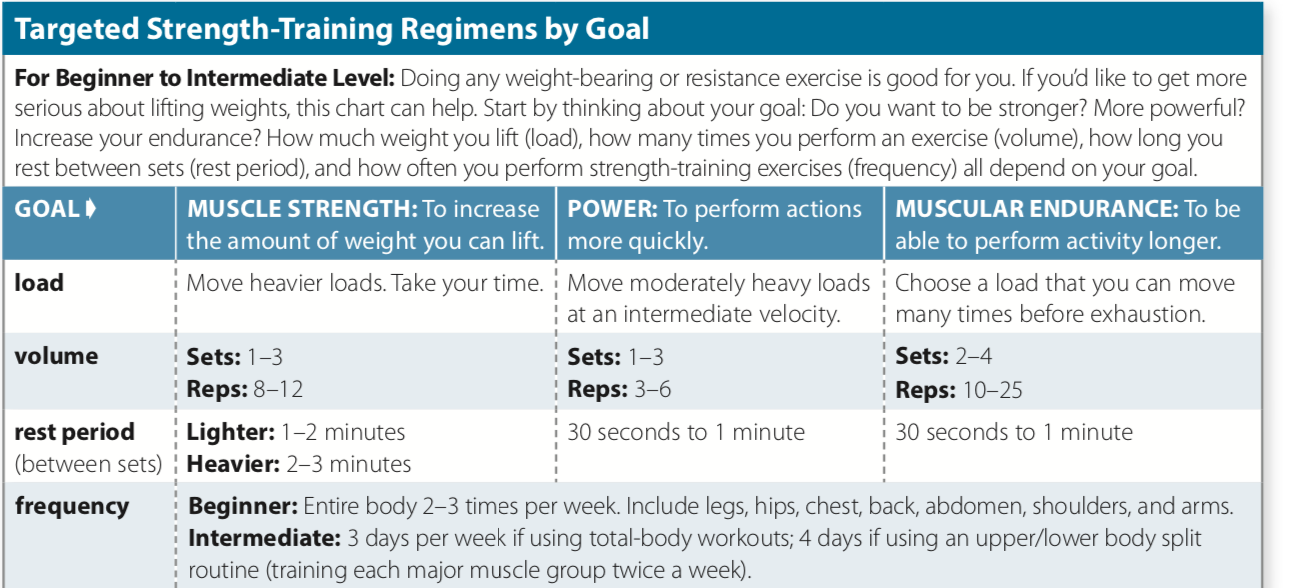
The American College of Sports Medicine recommends strength training two to three times per week. In general, each exercise should be performed eight to 12 times, in two to four sets. Whether it’s resistance bands, barbells, or body weight doesn’t matter. What does matter is exhausting a muscle through repetition or load—because muscle builds when it’s pushed out of its comfort zone.
The development of muscle strength and endurance is progressive over time. When what you’re doing becomes easy, add more repetitions. When you can do three sets of 10 to 15 reps fairly easily, it is time to increase the weight or resistance you are using. If it’s been awhile since you’ve worked out, book a few sessions with a physical therapist or personal trainer experienced in working with older adults.
Types of Exercise
Muscle-strengthening exercises include push-ups, pull-ups, sit-ups, arm circles, lifting weights (free weights), using strength-training machines, working with resistance bands, and even climbing stairs, carrying heavy loads, and heavy gardening. Anything that provides something for your muscles to push or pull (i.e. resist against) can be used to increase muscle strength. Machine-based exercises are regarded as the safest form of resistance exercise for beginner exercisers.
It’s recommended that you target each of the major muscle groups (legs, hips, chest, back, abdomen, shoulders, and arms) two to three times a week. The key is to perform each muscle-strengthening exercise until it would be difficult to perform the movement again without help.
Include develoment of your core muscles. They help you stand, bend, twist, reach, stoop, and turn. These are the muscles that surround your torso like a corset and include your abdominals, back, shoulders, and hip muscles. When these muscles are strong, they help you stand up straight (rather than hunch over), and they promote good posture and balance and help prevent falls. A strong core also helps reduce the likelihood of injuring your lower back.
When core muscles are weak, not only is physical activity more difficult, but eventually daily activities, such as getting dressed, carrying groceries, or vacuuming, can become a challenge. Signs of a weak core include poor posture, lower back pain, and muscle weakness in your arms and legs.
Clues you may have poor posture include a head that’s commonly thrust forward, slouching, rounded shoulders, and excessive arching of your lower back with your stomach protruding. Take a look yourself in the mirror and see what your normal position is. While it can be scary, you’ll get a reality check.
Core muscles can and should be used during all physical activities. When the core is strong, it automatically supports what you are doing. Pilates, in particular, is designed to strengthen the core by challenging the muscles during a wide variety of movements.
The Importance of Power Training
Muscle power is the combination of strength and speed that determines how quickly your muscles can produce a desired movement. It’s muscle power that gets you across a street before the light changes, allows you to hit the brakes quickly when another driver cuts you off, and helps you react swiftly when you trip so you don’t fall.
While strength-training exercises are traditionally performed relatively slowly, power training often involves doing the same exercises but contracting the muscles as quickly as possible (for example, bending your arm quickly in a bicep curl and straightening it more slowly, or rising from a chair as quickly as you can and then slowly sitting back down). Research has found high-velocity power training is safe and effective, even for frail elderly exercisers.
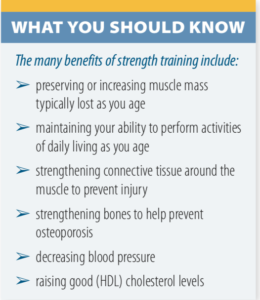
In a study of 45 older adults with self-reported mobility limitations, 12 weeks of high-velocity training improved muscle power approximately twice as much as a traditional strength-training program. Other research shows that high-velocity resistance training also results in greater improvement in physical functioning in older adults, which is the key to remaining active and independent.
Living in a toned, strong body is a wonderful place to be, and it’s available to virtually everyone. Start where you are, and in a few weeks of dedicated, consistent practice, you will feel (and likely see) the difference.
The post Build Strength and Power at Any Age appeared first on University Health News.
Read Original Article: Build Strength and Power at Any Age »
