
A Healthy Lifestyle Today Can Make Up for Past Behaviors
If you’re a woman over 50 who’s recently embraced a healthy lifestyle, you might wonder if damage from earlier choices can be undone. What if you smoked during your 20s or enjoyed frequent cocktail parties in your 30s? While some effects of earlier habits may linger, the good news is science shows that making healthy changes now can significantly enhance your quality of life and lower your risk of chronic diseases.
Common Misconceptions
“The most common misconception about reversing past counterproductive health and lifestyle habits is that it’s already too late, and the second-most common misconception is that a person can always stop later,” says Keith W. Roach, MD, Associate Professor of Clinical Medicine, Weill Medical College of Cornell University. Dr. Roach says these fallacies are often used as excuses to do nothing, and that the best time to make a change is now. “It doesn’t have to be a complete change in behavior— sometimes it’s OK to start small,” he says.
Quit Smoking
Of all the behaviors discussed in this article, smoking is the most damaging, and smoking cessation offers the greatest reward. “Nothing else damages your body so much. Quitting immediately is the best thing a smoker can do for their health,” says Dr. Roach. Smoking takes a toll on the lungs, heart, and DNA, increasing the risk of lung cancer, heart disease, and chronic obstructive pulmonary disease (COPD). However, your body starts to heal almost immediately after you quit. According to the American Cancer Society, within one year of quitting smoking a person’s risk of coronary heart disease drops by 50 percent. Over 10 to 15 years, your risk of lung cancer and heart disease approaches that of someone who has never smoked.
Effects of Drinking
Heavy drinking, particularly over extended periods, can lead to liver damage, such as fatty liver disease, hepatitis, or cirrhosis.
Fortunately, the liver has a remarkable ability to regenerate. Research shows that (except in the case of cirrhosis), even after years of heavy drinking, quitting alcohol can lead to significant improvements in liver function within months.
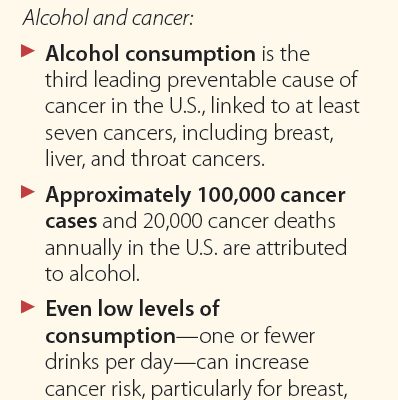
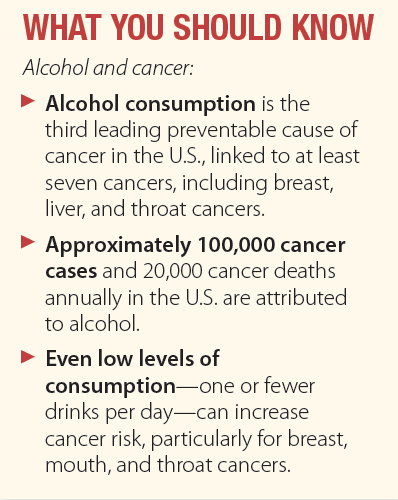
Alcohol also affects brain health. Chronic heavy drinking can impair memory, cognition, and emotional regulation. However, research in the Journal of Neuropsychology reveals that cognitive and emotional improvements occur within a year of sobriety in former heavy drinkers. While some risks, such as those for certain cancers (see more information in the What You Should Know box), persist even after quitting, avoiding alcohol now prevents further damage.
Diet and Exercise
Perhaps your diet wasn’t the healthiest for decades, or exercise wasn’t a priority. The effects of poor dietary habits and inactivity—such as high cholesterol, obesity, and insulin resistance— can increase the risk of chronic diseases like diabetes and heart disease.
Research shows that adopting healthy eating and exercise habits later in life can reverse many of these risks. For example, a study in the New England Journal of Medicine showed that older adults who followed a Mediterranean diet—rich in healthy fats, whole grains, and leafy greens—reduced their risk of heart disease by up to 30 percent. Similarly, regular exercise improves cardiovascular health, builds muscle mass, and reduces inflammation. Even starting in your 60s, activities like walking, yoga, or strength training can lead to significant improvements in physical and mental health.
Biomarkers and Motivation
It’s natural to rely on evidence of improved behavioral changes for motivation—such as a lower number on the bathroom scale—but it’s not a great idea. “I often see people getting frustrated at slow progression of biomarkers—especially weight. It’s important to recognize that making changes in diet and exercise will improve a woman’s health even if she doesn’t lose a single pound,” says Dr. Roach. He said he frequently sees women gain weight as they exercise, due to increased muscle mass, even if they improve their diet. “More muscle mass, less body fat, and better cardiovascular and muscle conditioning all mean better health, so ignore the scale. While it’s true that blood markers like cholesterol may improve, they are only a small part of the story,” he says.
Never Too Late
Ultimately, it’s never too late to prioritize your health. While you can’t rewrite your past, the choices you make today can have a profound impact on your future and the quality of life you want to have.
The post A Healthy Lifestyle Today Can Make Up for Past Behaviors appeared first on University Health News.
Read Original Article: A Healthy Lifestyle Today Can Make Up for Past Behaviors »
