
Personalized Nutrition: Are We There Yet?
Trying to lose weight, lower your blood sugar or cholesterol levels, or figure out why certain foods make you feel unwell? Your genes may offer important tips on what to do. Scientists are learning more about how the interaction between your genes and what (and when) you eat can impact your health. To find out more about this growing field of research, we spoke to José Ordovás, PhD, a lead scientist at the Human Nutrition Research Center on Aging whose research focuses on the interplay between diet and genetic factors.
How would you explain the concept of ‘personalized’ nutrition?
Dr. Ordovás: Personalized nutrition is the idea that your diet can be tailored to your unique genetic makeup, lifestyle, and health goals. Think of it like a custom diet plan based on what your body specifically needs and how it works. Instead of general advice like “eat more vegetables” or “cut down on sugar,” personalized nutrition uses tools like DNA testing, health data, and sometimes even gut microbiome analysis to recommend foods that are best for you. The goal is to optimize your health, manage weight, and even prevent diseases by considering how your body uniquely processes nutrients.
Why do our genes matter when it comes to what we eat?
Dr. Ordovás: Genetics play a significant role in how our bodies respond to the foods we eat. Your genes influence traits like how well you digest certain foods, how your body absorbs nutrients, and even your risk for developing conditions like diabetes, heart disease, or obesity. For instance, some people might have a genetic variation that causes them to process caffeine more slowly, making them more sensitive to coffee and other sources of caffeine. Essentially, our genetic makeup helps determine how our bodies handle different types of food.
Can you share some examples of specific genes that have already been discovered?
Dr. Ordovás: Yes, there are several wellstudied genes that affect nutrition. For example:
➧ LCT: This gene controls lactase production, which determines whether or not you are lactose intolerant.
➧ FTO: Variations in this gene, known as the “fat mass and obesity-associated gene,” can influence appetite and how the body stores fat.
➧ MTHFR: This gene impacts how your body handles folate (vitamin B9), which is important for DNA repair and other processes. Some people with variations in this gene might need more folate-rich foods or supplements.
➧ APOE: This gene affects how your body processes cholesterol and can impact your risk for heart disease.
➧ APOA2: This gene is linked to how your body metabolizes dietary fats, particularly saturated fats. People with certain variations in APOA2 may gain more weight if they consume a diet high in saturated fat, suggesting that reducing saturated fat intake could be particularly beneficial for them.
These are just a few examples, but they highlight how understanding your genes can provide clues about your nutritional needs. On its own, however, what we know about these and other genes provides very limited information on what drives our biological response to dietary intake.
Are we ready to use personalized nutrition?
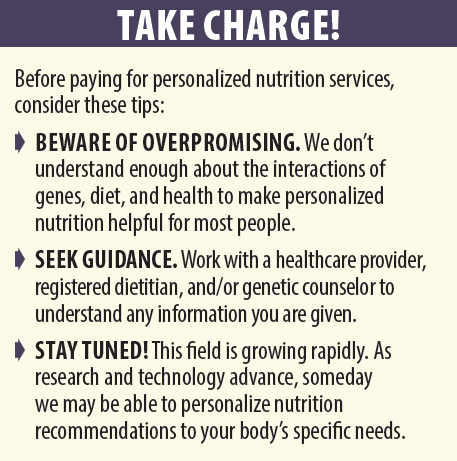
Dr. Ordovás: Personalized nutrition is an exciting and rapidly growing field, but it’s still in its early stages. DNA tests and other tools are available to give insights about your nutrition, but they aren’t perfect yet. Many recommendations are based on preliminary research, and we still don’t fully understand the complex relationship between genes, diet, and overall health. That said, personalized nutrition is already being used in certain areas, like weight management programs or helping people with food intolerances. Over time, as research improves, it could become a routine part of healthcare, but for that we need to take a more holistic approach that spans from genes to the environment.
It’s important to remember that, while it can offer valuable insights, genetics is just one piece of the puzzle. Lifestyle factors like physical activity, stress levels, sleep, and overall eating habits also play a huge role in your health. Personalized nutrition is not a one-size-fits-all solution, and working with a registered dietitian or healthcare provider is essential to creating a plan that works for you. Finally, be cautious of companies promising ‘miracle’ results based on DNA tests—science is still catching up, and a balanced, evidence-based approach is always best.
What else would you like our readers to know?
Dr. Ordovás: Another area people should keep an eye on is precision chrononutrition. This fascinating area of research combines personalized nutrition with the science of our body’s biological clock, or circadian rhythms. The idea is that not only what you eat but also when you eat can impact your health.
Our bodies are programmed to follow a natural 24-hour cycle that affects everything from metabolism to hormone levels. Precision chrononutrition tailors eating patterns to align with these rhythms and your individual biology. For example, eating larger meals earlier in the day, when your metabolism is more active, might help with weight management and blood sugar control. Conversely, eating late at night, when the body is less prepared to process food, could increase health risks for some people.
By combining genetic data and circadian biology, precision chrononutrition aims to optimize meal timing and composition for each person to improve energy levels, digestion, and long-term health. It’s a promising approach, but still a developing field! To fully realize the potential of precision chrononutrition, we’ll increasingly rely on continuous health monitoring using advanced biosensors and wearables. These devices will track real-time data, such as blood sugar levels, heart rate, and even stress markers. Combined with the power of artificial intelligence (AI), this data will be able to provide personalized insights and meal recommendations tailored to your individual needs and daily rhythms.
This approach has the potential to revolutionize how we eat, focusing not just on what and how much, but also on when—helping us optimize health in ways we’re only beginning to understand. However, advancing this field will require significant progress in wearable technologies and AI-driven analysis tools.
The post Personalized Nutrition: Are We There Yet? appeared first on University Health News.
Read Original Article: Personalized Nutrition: Are We There Yet? »
