
Unlock Rapid Fitness Gains with HIIT Training
Given that lack of time is one of the most-often cited excuses for not exercising, high-intensity interval training (HIIT) just might be the ideal exercise. It might sound like an exercise program for elite athletes, but this approach is appropriate for anyone who wants significant gains in a short period of time. The goal is to push the body near its limit during the high-intensity intervals, followed by a brief recovery period. That pattern is repeated several times. “The key is to start slowly,” says UCLA physical therapist Karen Hamill. “The biggest mistake is doing too much too soon.”
High intensity is defined as 80-100 percent effort from your current state of physical fitness. It is different for everyone. “HIIT can be modified greatly depending on your current physical level or other health conditions,” explains UCLA physical therapist Michael Desrosiers. For example, you can modify the length of work to rest intervals. You can even do it in a chair. The key point is alternate from intense to light activity throughout a HIIT session.
Getting Ready for HIIT
Before jumping into a HIIT session, warm up for five to 10 minutes with light cardiovascular activity (e.g., marching in place, walking on a treadmill) and stretching the muscles and joints you’ll be using. A warmup prepares your body for the physical demands of more intense activity. It gradually increases heart rate and blood flow to your muscles, which can help prevent a sudden spike in blood pressure and reduce the risk of heart-related issues during strenuous activity. As you warm up, your muscles become more pliable and therefore less prone to injury.
Use this time to also prepare for your workout mentally: Clear your mind and focus on your goals.
Moving with HIIT
HIIT doesn’t require equipment, but you need a timer to measure busts of challenging activity followed by lower levels of activity for active recovery. The work-to-rest ratio can vary, but usually starts with a 1:2 ratio (e.g., your maximum effort is 30 seconds followed by a rest period of 60 seconds). The combined work-to-rest intervals are usually 20 minutes or less.
Most cardio machines allow you to easily change intensity and monitor time. The built-in heart monitors are helpful, but they aren’t the most accurate. Another way to judge how hard you are working is by noticing your breathing pattern. The higher the intensity, the more difficult it is to breathe. With moderate intensity, you can still carry on a conversation, but with high-intensity you can’t.
HIIT requires timing interval phases and controlling effort levels. That kind of focus can make an exercise session fly by quickly. This mindful process also helps you become more aware of your body in motion. Once the routine becomes easy, it’s time increase your effort. “Set appropriate goals by increasing time or intensity (not both) by about 10% per week,” advises Hamill.
Be sure to cool down by slowing your activity of choice for five minutes and then stretching for at least five minutes while your muscles are still warm.

© JackF | Getty Images
HIIT is an effective and efficient exercise protocol.
HIIT Benefits
At least 150 minutes per week of moderate-intensity aerobic activity or 75 minutes per week of vigorous aerobic activity, or a combination of both, preferably spread throughout the week is recommended for basic health needs. Doing three weekly 20-minute HIIT sessions with a 10-minute warm-up and 10-minute cooldown puts you well within those recommendations.
But more importantly, pushing yourself (safely) out of your comfort zone will improve your strength and endurance. “Monitor how you feel. It’s ok to be tired, but one should not be exhausted after exercise,” says Hamill.
HIIT has been shown to decrease cholesterol, improve kidney function, increase cardiorespiratory fitness and muscle endurance, and mitigate metabolic diseases. For example, one study reported that HIIT improved cholesterol, blood sugar and weight among people with Type 2 diabetes more effectively than 30 minutes of sustained, lower-intensity exercise. The study included 76 people with Type 2 diabetes, 70% male, average age 67.
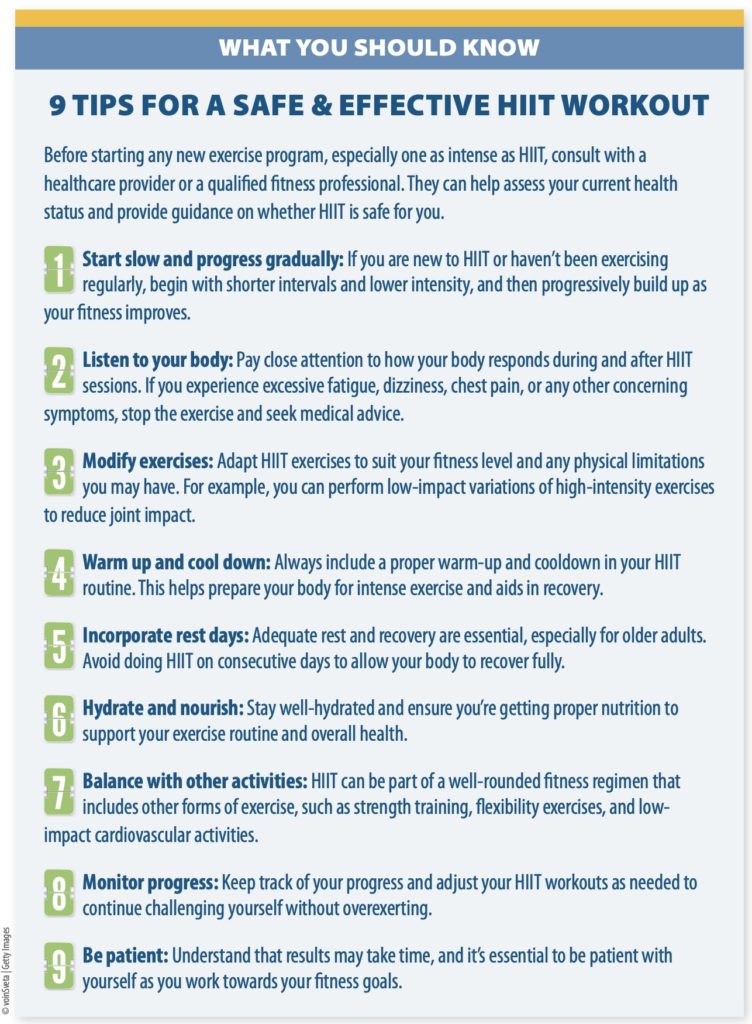
“HIIT training in older adults seems to be the most effective when done in conjunction with other exercise routines such as resistance training,” adds Desrosiers. “Doing HIIT two to three times per week is plenty.”
A physical therapist or personal trainer knowledgeable in HIIT can create the ideal protocol for you and help track your progress. If you haven’t exercised in many months, are overweight, and/or take multiple medications, see your doctor before you begin any type of new exercise, especially one calling for high intensity.
The post Unlock Rapid Fitness Gains with HIIT Training appeared first on University Health News.
Read Original Article: Unlock Rapid Fitness Gains with HIIT Training »
