
Make Smart Cheese Choices
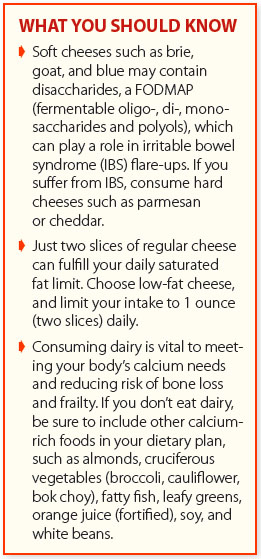
Cheese is rich in protein (at 6 to 8 grams per serving) and calcium (at 200 to 450 milligrams per serving), and is part of a healthy, wholesome diet. But in addition to these two all-important nutrients, an ounce of full-fat cheese contains about 7 or 8 grams of saturated fat, which equates to about 50 percent of your daily saturated fat limit. Just two slices of full-fat cheese can max out your daily limit of saturated fat, at 16 grams. When consumed in excess amounts, saturated fats are known to increase inflammation and unhealthy LDL cholesterol levels in the body.
That’s why dietary guidelines call for limiting cheese to one 1-ounce serving per day. But saturated fat isn’t the only problem. Eating cheese is like eating a salty snack. It’s hard to take just one slice or one dip and feel satisfied.
“Cheese is calorically dense, and since it’s easy to eat a large portion, there’s potential for it to lead to weight gain,” says Rachel Lustgarten, a registered dietitian nutritionist with Weill Cornell Medicine.

Beware of Sodium
Cheese also is high in sodium. One ounce of cheddar cheese contains about 175 milligrams of sodium. But some cheeses can contain as much as 474 milligrams in a single ounce. “So people who have or are at risk for hypertension should limit consumption of cheese,” says Lustgarten.
One study even linked cheese consumption with increased arthritis progression. And beware of highly processed cheese products that come in a can or as “singles,” Lustgarten cautions, as they contain more additives and less beneficial nutrients than other cheeses.
Your dining atmosphere can also play a negative role. “Many people enjoy cheese with crackers, nuts, and alcoholic beverages, which can contribute excessive calories while not being considered a full meal,” Lustgarten says.
Limit Consumption
Dietary guidelines for consuming dairy are 3 cups per day for adults, and 80 percent of Americans fall short in meeting that recommendation. But it is advised that you fulfill that requirement more with low-fat milk and low-fat yogurt than cheese, primarily because of cheese’s sodium and saturated fat content, and the fact that milk and yogurt have more potassium, vitamin A, and vitamin D than cheese. And when you do consume cheese, it is recommended that you stick with low- or reduced-fat versions.
In general, softer cheeses such as ricotta or cottage cheese have fewer calories than hard cheeses such as Parmesan or cheddar. Mozzarella has a higher water content and lower total calories. But since some hard cheeses are more flavor-packed, you may be able to consume less. If you are buying sliced cheese from the deli counter, request that the slices are extra thin and use one or two only.
Cheese contributes 90–120 calories per 1-ounce serving. An ounce of cheese looks like 2 small cubes (think dice) or 1–2 slices of deli cheese. Choose your amount of cheese based on what else you are eating at that meal or throughout the day.
“Ask yourself if the cheese is serving as your protein source at the meal or if it is in addition to another protein source, such as meat, and how that fits into your overall meal plan and goals,” explains Lustgarten. “For people following a vegetarian diet, cheese might be their main protein source at meals. But if you already have a protein on your plate, consider doing away with the cheese.”
The post Make Smart Cheese Choices appeared first on University Health News.
