
Choose the Best Plant-Based Milk for You
When it comes to plant-based milks, you’ve got a lot of choices, including soy, nut, rice, pea, coconut, and oat. Plant-based milks are loaded with nutrients. They contain calcium, potassium, magnesium, and vitamins A, D2, E and B vitamins. Some contain selenium, zinc, and traces of iron. These nutrients don’t all come naturally; in some plant-based milks, calcium, potassium, and B vitamins are added.
Protein Amounts Vary
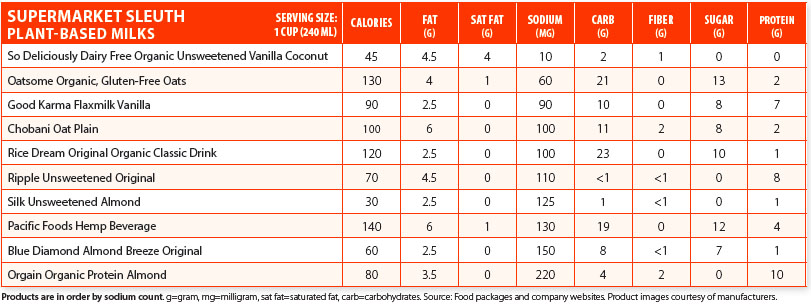
Dairy milk has about 8 grams (g) of protein. Plant-based milks range from 10 g to 1 g. Women should consume 0.36 grams of protein per pound of body weight. The higher your weight, the more daily protein you need.
“Almond milk contains vitamin E, which is not found naturally in dairy milk,” says Morgan Dickison, a registered dietitian nutritionist at Weill Cornell Medicine’s Comprehensive Weight Control Center. “Vitamin E is an antioxidant which can help protect against damage from free radicals.”
A study published in the American Journal of Clinical Nutrition found that when calories from full-fat dairy products were replaced with carbohydrates from plant-based whole grains, the risk of heart disease dropped by 28 percent.
What’s Best for Bone Health?
“Calcium, vitamin D and magnesium are important to consume in adequate quantities for bone health,” says Dickison. These nutrients come in both dairy and plant-based milks. “Also, potassium, phosphorus and vitamin A play a role in bone health, and these nutrients may not always be found in plant-based milks. So if you rely entirely on plant-based milks, look for one with these nutrients, or consume these nutrients in other foods to maintain a balanced diet and strong bone health.”
Beware of Added Sugars…
One glass of Chobani Plain Oat Milk contains 8 grams of added sugar, as does the Good Karma Flaxseed Vanilla Milk. Oatsome Organic has 13 g, while Pacific Foods Hemp Beverage has 12 g and the Organic Rice Dream Original Classic Drink has 10 g (both considered milk substitutes and not milks). The two almond milks suggested in our chart below have zero added sugars, but that doesn’t mean all almond milks have zero added sugars, so be sure to check the label before you buy.
…and Saturated Fats
Of all the plant-based milks, it’s important to note that coconut milk is the only one with a significant amount of saturated fat. In fact, almost 90 percent of the fatty acids in coconut milk are saturated fats, whereas, the fats in dairy milk contain about 60 percent saturated fat. “Plant-based milks generally contain monounsaturated and polyunsaturated fats as their fat source, which are a healthier fat source than saturated fats,” Dickison says.
Make Your Own!
“Make almond milk at home by soaking almonds overnight, then adding them to a blender with water and straining,” Dickison suggests. “This would be a better alternative to store-bought almond milk because it does not include preservatives and is less processed. However, it will only last three to five days in the fridge. Ricemilk can be made in a similar way, using cooked rice in a blender with water and then strained.” She cautions that homemade plant-based milks have fewer vitamins and minerals than store-bought fortified plant-based and dairy milks.
The post Choose the Best Plant-Based Milk for You appeared first on University Health News.
Read Original Article: Choose the Best Plant-Based Milk for You »
