
Alcohol and Your Health
Drinking alcohol may be a regular part of your diet—perhaps a glass of wine or beer with dinner, or maybe a cocktail if you’re feeling festive. But alcohol consumption comes with health risks—and some debated benefits. Here’s what you need to keep in mind before you pick up that glass.
What’s in Your Drink?
The spirits in your hand can be a source of fat, sugar, carbohydrates, and excessive calories that can lead to weight gain if you drink too much or too often. “A 5-ounce glass of wine or 12-ounce full-bodied beer has about 140-150 calories per serving,” notes Gabrielle Gambino, a registered dietitian nutritionist with Weill Cornell Medicine.
Liqueur is loaded with sugar and sometimes fat. “For example, a White Russian has 33 grams of sugar and 18 grams of saturated fat—as much as one-and-a-half regular-sized Snickers bars,” Gambino points out.
Standard alcohol bases (such as gin, vodka, or whiskey) don’t have sugar or carbohydrates. But the sugary drink mixes do. “A margarita can contain a whopping 800 calories. Without realizing it, you could unintentionally drink 50 percent of your day’s worth of calories— or more,” Gambino says.
Risks and Benefits
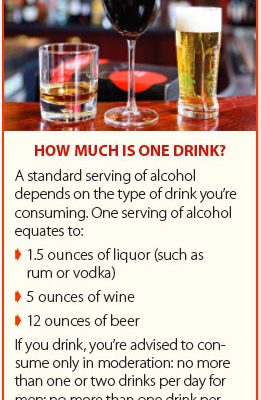
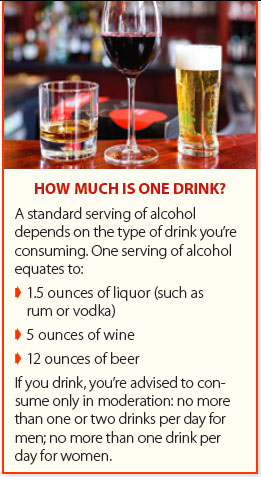
For many years, research has suggested that moderate alcohol intake (see “How Much Is One Drink?”) has heart-health benefits. “It’s not just that red wine has antioxidant properties. Any kind of alcohol has ethanol, which has an antiplatelet effect on the blood and in theory may help reduce the risk for blood clots,” Gambino says. (If you’re on a blood thinner, check with your doctor before imbibing.)
Moderate alcohol use also has been shown to improve HDL (“good”) cholesterol, reduce inflammation, improve blood sugar control, and reduce the risk for heart attack, stroke, and diabetes.
Heavy alcohol use (eight or more drinks per week for women and 15 per week for men) has long shown to increase risk of heart disease, heart muscle damage, high blood pressure, many cancers, liver disease, depression, anxiety, and dementia. “Excessive binge drinking is one of the leading causes of global mortality,” says Gambino.
A number of recent studies have suggested that even moderate alcohol consumption may be dangerous for your health. A 2019 study published in Cancer suggested that light drinking was associated with a 5 percent increase in cancer risk, and a 2018 study in The Lancet suggested moderate alcohol use might be tied to an increased risk of premature death from all causes.
What Should You Do?
“If you’re already an alcohol consumer, talk to your doctor to make sure moderate consumption is safe, and stick with less-sugary drinks,” Gambino advises. “And if you’re not a drinker already, don’t start for the health benefits
The post Alcohol and Your Health appeared first on University Health News.
