
Reduce Your Risk of Osteoporosis with Healthy Lifestyle Habits
Osteoporosis weakens bones, making them more prone to fractures, particularly in the spine, hips, and wrists. This condition affects one in five women and typically doesn’t cause symptoms until a fracture occurs. Understanding osteoporosis, and how to reduce your risk, can minimize the fear that affects many women who worry about how a broken bone would impact their lives. In this article, we’ll explore proactive steps you can take to strengthen your bones and what to expect if you’re diagnosed with this common condition.
Signs, Symptoms, and Risk Factors
Pay attention to subtle signs that may signal osteoporosis, such as loss of height and back pain. Compression fractures in the spine can cause a gradual loss of height, which may result in a stooped posture. These compression fractures can also lead to back pain, which may be sudden or develop gradually over time. If you experience any of these symptoms, bring them to the attention of your primary care provider or a rheumatologist. “Certain women are at a higher risk of osteoporosis due to genetics,” says Alana Serota, MD, an osteoporosis expert at the Weill Cornell-affiliated Hospital for Special Surgery. “But aging, illness, medications, poor nutrition, and other lifestyle factors can significantly increase the risk of osteoporosis, as well, particularly in the first five years after menopause.”
Reducing Your Risk
There are steps you can take to reduce your risk of osteoporosis. Weight-bearing exercises such as walking, jogging, dancing, and strength training help stimulate bone formation and increase bone density. “Women over 50 should focus on maintaining a healthy diet and weight, engaging in regular exercise, getting sufficient sleep, and ensuring adequate intake of calcium, vitamin D, and protein. The goal is to consume 1,200 milligrams of calcium per day. Any not obtained through diet should be made up with supplements,” says Dr. Serota. Generally, the daily recommended amount of vitamin D is 600 international units (IU) for women ages 51 to 70 and 800 international units (IU) for women over 70.
Diagnosis and Treatment
If you are diagnosed with osteoporosis there are several treatment options available. “When osteoporosis is treated, women can expect to maintain or even improve their bone density, depending on the medication used. This significantly reduces the risk of fractures. However, if osteoporosis is left untreated, bone density will continue to decrease, leading to a higher risk of fractures,” says Dr. Serota.
Available osteoporosis medications include:
Bisphosphonates: These medications are typically taken orally, usually as a once-weekly or once-monthly tablet.
Hormone therapy: This typically involves the use of estrogen or a combination of estrogen and progestin. Estrogen therapy can be administered orally in the form of tablets, or it can be delivered transdermally through patches or gels applied to the skin.
Selective estrogen receptor modulators (SERMs): Medications such as raloxifene are taken orally as a daily tablet. SERMs act like estrogen in some parts of the body, such as bone, but have anti-estrogen effects in others, such as the breast and uterus.
Monoclonal antibody medications: These medications, such as denosumab, are administered as an injection, and are typically given once every six months by a health-care provider in a clinical setting.
Anabolic Agents: These drugs, which stimulate bone growth, include PTH-analogues—teriparatide (Forteo) and abaloparatide (Tymlos), as well as the sclerostin antagonist romosozumab-aqqg (Evenity). “All of these approved treatments prevent fractures, and their benefits far outweigh their risks. Ultimately, the choice of treatment is a shared decision between the patient and doctor,” says Dr. Serota.
What to Expect
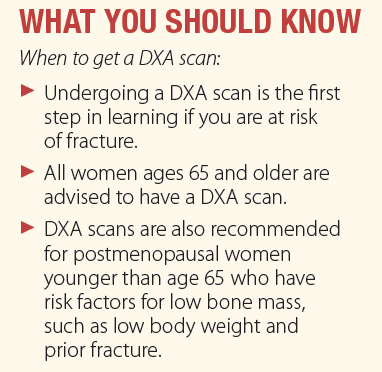
Medicare generally covers bone density testing DXA (dual energy X-ray absorptiometry) scans every other year for women over the age of 65. The Bone Health and Osteoporosis Foundation recommends that scans can begin as early as age 50 for women who have risk factors for fractures. For women who are diagnosed with osteoporosis, regular monitoring and follow-up appointments with health-care providers are crucial to ensure the effectiveness and safety of prescribed treatments.
The post Reduce Your Risk of Osteoporosis with Healthy Lifestyle Habits appeared first on University Health News.
Read Original Article: Reduce Your Risk of Osteoporosis with Healthy Lifestyle Habits »
