
MIND Diet Puts Focus on Brain Health
Two separate diet plans— each associated with cognitive benefits on their own—have an even greater impact when combined. The MIND diet, which stands for Mediterranean- DASH Diet Intervention for Neurodegenerative Delay, is a hybrid of the Mediterranean and DASH diets, and is specifically designed to promote brain health. The MIND diet emphasizes anti-inflammatory foods such as leafy greens, berries, nuts, and whole grains, while discouraging the intake of red meat, butter, and sweets. It has been shown to lower the odds of developing conditions like Alzheimer’s disease and dementia.
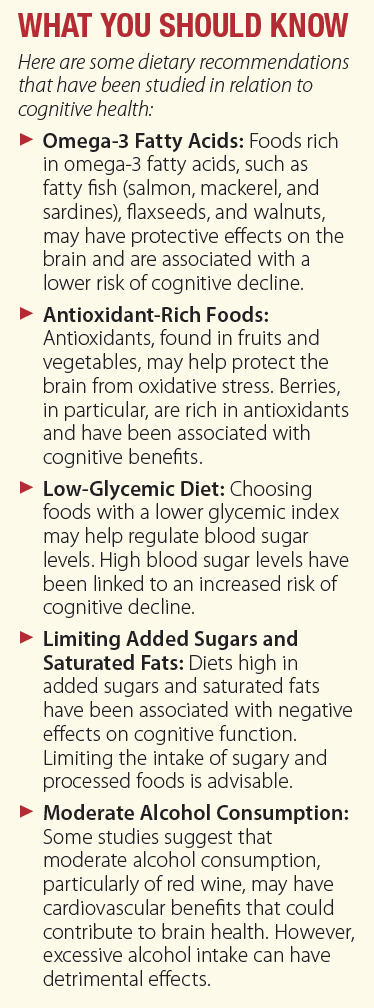
There is growing evidence of a link between a high intake of sugar and processed foods and an increased risk of Alzheimer’s disease and cognitive decline. The Mediterranean diet, which is rich in fruits, vegetables, whole grains, fish, nuts, and olive oil, has been consistently associated with a lower risk of cognitive decline and a reduced risk of Alzheimer’s disease. The DASH diet, which emphasizes fruits, vegetables, lean proteins, and low-fat dairy, has been linked to better cognitive function and a lower risk of cognitive decline. The MIND diet takes the Mediterranean and DASH diets to the next level by focusing specifically on foods known to boost brain health.
MIND Diet Benefits
One study found that those who followed the MIND plan strictly cut their chances of developing Alzheimer’s by more than half, and those who adhered to it moderately still benefited—their odds of developing Alzheimer’s dropped by more than a third. “The message here is that you don’t
have to be perfect—even if you try to incorporate some of the plan’s elements into your diet it can bring on benefits,” says Gabrielle Gambino, MS, RD, a senior clinical dietitian at NewYork Presbyterian/Weill Cornell.
Brain Food
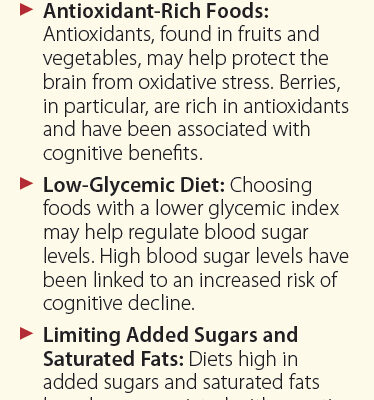
The MIND diet emphasizes foods that are believed to be beneficial for brain health, such as:
- Leafy greens: Rich in vitamins and antioxidants.
- Berries: High in antioxidants, particularly flavonoids.
- Nuts: Good source of healthy fats, antioxidants, and vitamin E.
- Olive oil: Rich in monounsaturated fats.
- Fish: High in omega-3 fatty acids.
- Whole grains: Steady source of energy and nutrients.
- Beans and legumes: Good sources of fiber, protein, and nutrients.
- Poultry: Excellent lean protein source.
- Wine (in moderation): The resveratrol in red wine is an antioxidant. (Note: resveratrol is also found in grapes and grape juice.)
Dark leafy greens should be eaten every day on the MIND diet. Those include arugula, collards, dandelion greens, endive, grape leaves, kale, mustard greens, romaine lettuce, spinach, Swiss chard and turnip greens. Berries are stressed over other fruits, on this plan. Blackberries, blueberries, raspberries, or strawberries should be eaten at least five days a week. Research shows blueberries are one of the more potent foods in terms of protecting the brain, and strawberries have also performed well in studies of the effect of foods on cognitive function. In addition, three servings of whole grains should be eaten daily. Beans should be included in four meals a week, poultry in two, and fish at least once a week. In addition, nuts should be eaten five times a week.
Foods to Avoid
Butter, cheese, red meat, fried food/ fast food, and sweets are deemed unhealthy on the MIND diet, and consumption is limited. Followers of the diet are directed to limit butter to less than 1 tablespoon a day. Cheese and fried or fast food are to be eaten no more than once per week. There is no specific limit on red meat, but the general recommendation is to eat it in moderation and opt for lean cuts.
Long- and Short-Term Benefits
So far, studies show that the longer a person follows the MIND diet, the less risk they have of developing Alzheimer’s. Does this mean it’s too late for an older person who has spent the majority of their life eating processed and sugar-laden foods to benefit from the MIND diet? “It is absolutely not too late. This diet is anti-inflammatory and can lead to so many benefits above and beyond the cognitive ones associated with it, many of which can be seen in the short term—such as better glucose control, a healthier gut, improved satiety, and increased energy,” says Gambino.
While no specific dietary approach can guarantee the prevention of cognitive decline, nutritional choices such as those reflected in the MIND diet are associated with a lower risk of cognitive decline. Before making significant changes to your diet, especially if you have existing health conditions, it’s advisable to consult with a physician or registered dietitian for personalized guidance.
The post MIND Diet Puts Focus on Brain Health appeared first on University Health News.
Read Original Article: MIND Diet Puts Focus on Brain Health »
