
Thyroid Diseases Can Produce a Wide Variety of Symptoms
Thyroid disorders aren’t a top health concern for most women, but they are very common: One in eight women will develop a thyroid disorder during her lifetime. And untreated thyroid abnormalities can put you at higher risk of heart disease, osteoporosis, and nerve damage, so it is important to have thyroid disease diagnosed and treated.
Common Thyroid Disorders
Hypothyroidism (underactive thyroid), hyperthyroidism (overactive thyroid), and thyroid nodules (growths in the thyroid) are the most common thyroid disorders.
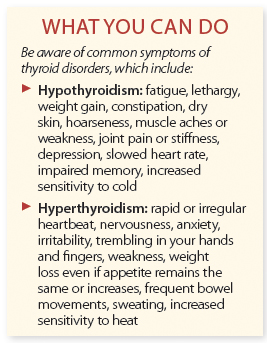
“The most common cause of hypothyroidism in the U.S. is Hashimoto’s thyroiditis, which is an autoimmune condition,” says Aaron Schulman, MD, assistant professor of medicine at Weill Cornell Medical College. “Hypothyroidism can cause many symptoms, including fatigue, constipation, weight gain, depression, and muscle and joint pain. When it is severe, it can cause high cholesterol, high blood pressure, and impaired heart function.”
The most common cause of hyperthyroidism is Graves’ disease, another autoimmune condition. Symptoms of hyperthyroidism include unintentional weight loss, weakness, irritability, and anxiety. When it is severe, it can cause abnormal heart rhythms (atrial fibrillation), heart failure, or osteoporosis.
“Other causes include ‘toxic nodules,’ which are benign growths that produce too much thyroid hormone even when it is not needed, and thyroiditis, which is a transient inflammation of the thyroid,” explains Dr. Schulman.
Diagnosing a Thyroid Disorder
If a woman has symptoms that suggest thyroid disorder, her thyroid hormone levels should be checked. Some medications and supplements can affect thyroid hormone levels, so make sure your doctor knows about all prescription drugs and over-the-counter products you are taking.
“The best test we have to determine your thyroid’s activity is a blood test that measures your level of thyroid stimulating hormone (TSH). It is often the first test that shows an abnormality when there is a thyroid condition,” explains Dr. Schulman. A high TSH indicates hypothyroidism, and a low TSH indicates hyperthyroidism.
The definition of a “normal” TSH level is an issue of ongoing debate. Some say the normal range is between .5 and 5.0, while others believe the normal range should be as low as .3 to 3.0.
Normal levels depend on the individual patient, says Dr. Schulman. “For example, in older women, a ‘high’ TSH (4.5 to 6.0) may, in fact, be normal for their age, and may indicate completely normal thyroid function.”
Treatment Options
Hypothyroidism is usually treated with the medication levothyroxine (Synthroid), which increases the thyroid hormone level. If you take levothyroxine, your doctor will monitor your thyroid levels periodically with blood tests to determine whether the medication dose needs to be adjusted. Some medications, supplements, and foods can affect your body’s ability to absorb levothyroxine, so patients are usually advised to take it on an empty stomach first thing in the morning.
Hyperthyroidism may be treated with drugs such as methimazole (Tapazole) or propylthiouracil (PTU). An overactive thyroid gland may be treated with radioactive iodine, which may slow hormone production so much that the thyroid becomes underactive and requires treatment with medication. Some patients require surgical removal of the thyroid gland and then need to take medication to provide the hormones their bodies need. If you have hyperthyroidism, see a doctor who specializes in thyroid disorders to discuss the pros and cons of the various treatment options.
The bottom line: Getting a thyroid disorder diagnosed and treated can lower your risks of chronic conditions such as heart disease and osteoporosis, as well as stopping bothersome and potentially harmful symptoms.
The post Thyroid Diseases Can Produce a Wide Variety of Symptoms appeared first on University Health News.
Read Original Article: Thyroid Diseases Can Produce a Wide Variety of Symptoms »
