
Make Every Bite Count
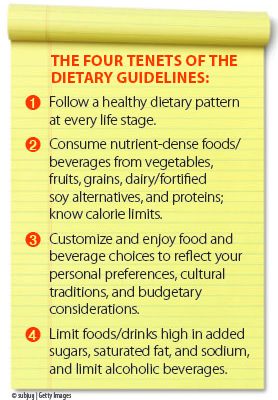
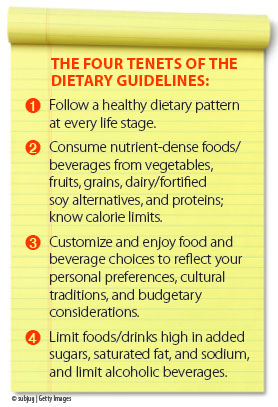
In December 2020, the U.S. Department of Agriculture (USDA) and the U.S. Department of Health and Human Services (HHS) released the 2020‑2025 Dietary Guidelines for Americans. A scientific report drafted by health professionals and policy makers, the Guidelines provide recommendations on what the average American should eat and drink to promote health and help prevent chronic disease. We spoke with registered dietitian nutritionist Marisa Silver to find out more about how we can make every bite count.
Q: What do you think we know now that we didn’t know five years ago?
A: “Nutrition research is incredibly dynamic. Today, I think we can confidently say that a calorie is not a calorie. The way our bodies process food is complicated and individualized, involving hormones and various metabolic processes. Eating a candy bar will spike your blood sugar, raise insulin levels, and promote fat storage more so than eating the same amount of calories in carrots. A diet of minimally processed foods low in sugar is linked with better health outcomes.”
Q: Why is variety important across our food groups and meals?
A: “By eating a diverse diet, you can ensure that you are getting all of the nutrients your body needs without having to supplement much. In particular, we are now learning that eating a diversity of plant foods can have positive impacts on the composition of the gut microbiome. Species of bacteria differ in their ability to hydrolyze certain types of resistant starch and dietary fiber. Therefore, consuming different types of vegetables, fruits, nuts, and seeds provides a favorable environment for a variety of bacteria to thrive. The composition of the microbiome, impacted by dietary choices, can alter the host’s metabolism and gene expression, which may support or hinder health outcomes, such as weight loss. So, opt for a mix of broccoli, spinach, and peppers instead of just the broccoli at your next meal.”
Q: What do the scientists mean when they say to consume nutrient-dense foods?
A: “Nutrient density is the amount of nutrients in proportion to the energy content of a food. Nutrient-dense foods are high in nutrients relative to their caloric content. Some of the most nutrient-dense foods include egg yolks, sardines, salmon, and fruits and vegetables such as blueberries, broccoli, and dark leafy greens.”
Q: Is it OK to treat ourselves to bad food-and-drink choices occasionally?
A: “Of course it’s OK to have treats, as long as the rest of your diet is consistently full of nutrition. The limit depends on what keeps you satisfied and back to your healthy routine. It can be unhealthy to continuously restrict more indulgent foods as this can lead to overeating them. For some folks, that means having a small treat at the end of each day. Others may like to enjoy an ice cream sundae once a week. The idea is that most of your diet should consist of proteins, vegetables, fruits, and healthy fats.”
Q: What do you think we as consumers can do better?
A: “Consumers need to flip packages over and read labels more closely. First, always look at the ingredients list. It isn’t necessarily healthier to eat a meatless burger instead of a beef burger. A meatless burger may contain a dozen unrecognizable ingredients, while the regular burger is all beef that your body can recognize. Then, pay attention to serving size, sugar, protein, and fiber content.”
Q: Is there anything I haven’t asked you that women over 50 should know?
A: “Women over 50 should think about optimizing bone health, brain health, and maintaining muscle mass. Aim for 1,200 milligrams per day of calcium. Sources include dairy products, dark greens, and fish with bones. Eating 1 to 1.5 grams of protein per kilogram of body weight a day (46 grams) can help maintain lean muscle mass. For brain health, focus on sources of vitamin B12, including eggs, milk, meat, and fatty fish (for omega-3s). Antioxidant-rich foods can reduce inflammation and protect against neurodegenerative diseases. Berries, chocolate, coffee, tea, red cabbage, and spinach are good sources.”
The post Make Every Bite Count appeared first on University Health News.
