
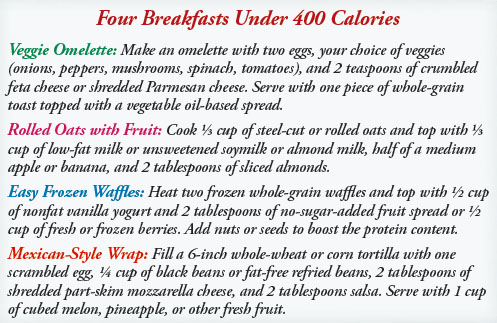
Four Ways to Begin Your Day with a Healthy Breakfast
Why is breakfast routinely touted as the most important meal of the day? It’s because numerous health benefits have been linked to eating breakfast, including lower blood pressure, LDL cholesterol, and triglyceride levels, improved focus and concentration, and better weight control. Other research suggests that bypassing breakfast may increase the risks of chronic diseases, including heart disease, obesity, and type 2 diabetes. Breakfast eaters also tend to consume more fiber, vitamins, and minerals than breakfast skippers.
However, not all breakfasts are equal in nutrition.

A Healthy Morning Meal
“Eating breakfast is commonly promoted as a healthy habit, but it’s not just eating in the morning—it’s what you eat in the morning,” says Jenna Rosenfeld, MS, RD, CDN, CNSC, a dietitian at NewYork-Presbyterian/ Weill Cornell. In general, pair proteinrich foods such as eggs, legumes, tofu, low-fat dairy products, or nuts with nutrient-dense, fiber-rich carbohydrate foods, such as whole grains, fruits, and vegetables. The protein promotes satiety (fullness) to help tide you over until lunch, while the carbohydrates help supply energy and replenish blood sugar levels after an overnight fast.
Between 15 and 25 percent of your daily calories should be consumed at breakfast, assuming you eat three meals and at least one snack daily. On average, women need about 1,800 calories daily to maintain their weight, which means most women should consume 270 to 450 calories at breakfast.
Worried About Weight Gain?
Often, people who are attempting to lose weight skip breakfast to reduce their calorie intake, but studies have shown that people who eat healthy breakfasts are less likely to be overweight and less likely to gain weight than people who go without food in the morning. One reason for this may be that going without food for 12 or 14 hours signals your body to go into starvation mode, meaning that, when you finally do eat, it will store some calories as fat in preparation for the next stretch without food.
Another common result of skipping breakfast is eating more calories later in the day to make up for what your body interprets as a calorie deficit. When you haven’t eaten for a long period of time, your hunger hormones are more likely to signal that you’re still hungry, even when your stomach is full.
Your Morning Appetite
If you’re not hungry when you get out of bed, you don’t have to eat breakfast immediately, but aim to eat within two to three hours of getting up. If you’re not used to eating breakfast, try eating a small morning snack for a few weeks; this may help you develop an appetite for breakfast. Also consider your snacking habits in the evening hours; if you tend to eat at night, that may be why you’re not very hungry the next morning. Moreover, many typical nighttime snacks are “empty-calorie” foods that are high in saturated fat and/or refined flour and added sugar.
The post Four Ways to Begin Your Day with a Healthy Breakfast appeared first on University Health News.
Read Original Article: Four Ways to Begin Your Day with a Healthy Breakfast »
