
EN on Foods: Crazy for Corn!
The Folklore. Corn is one of the most anticipated joys of summer, along with long warm days and outdoor barbecues. Corn has been a celebrated staple for over 9,000 years. This native to central Mexico was tied to its cultural identity, as it was for Native Americans, who considered corn sacred. Today, only five percent of corn crops grown today are fresh, sweet corn. The majority of acreage is devoted to animal feed, ethanol fuel production, and processed ingredients, like high fructose corn syrup, corn starch, and corn oil. Fresh, sweet corn is packed with fiber, vitamins, minerals, and beneficial plant compounds, a worthy addition to a summer meal.
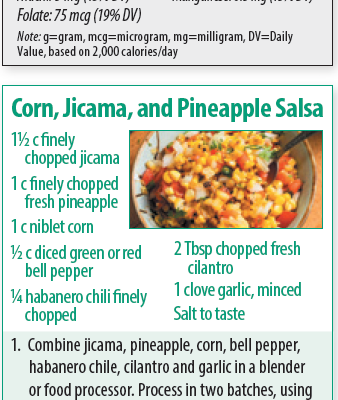
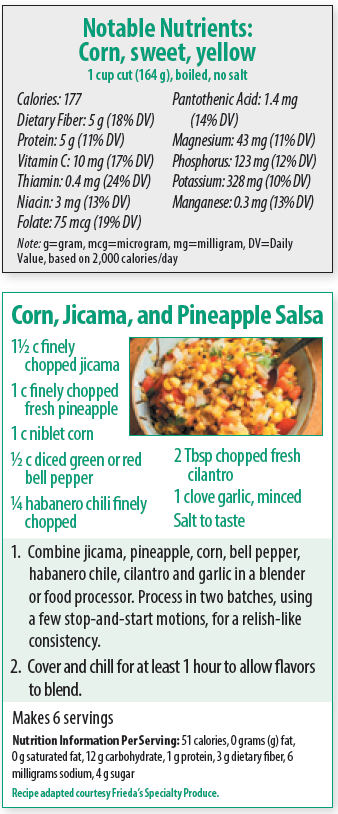
The Facts. Corn (Zea mays) is a member of the grass family, along with wheat, rice, oats, and barley. Officially classified as a cereal grain, it is also considered a vegetable when eaten fresh. A one-cup serving serves up 18% DV (Daily Value, based on 2,000 calories/ day) of filling dietary fiber, 24% DV and 19% DV of B vitamins thiamin and folate, respectively, which promote healthy cells and energy levels, as well as the eye-health compounds lutein, zeaxanthin, and beta-carotene.
The Findings. A whole grain, regular consumption of corn has been shown to lower risk of several chronic diseases, including cardiovascular disease, type 2 diabetes, and obesity, and it improves digestive health (Food Science and Human Wellness, 2018). Higher dietary intakes of foods that contain the antioxidant carotenoids lutein and zeaxanthin may help protect against age-related macular degeneration. To make these fat-soluble carotenoids more available to the body, be sure to eat them with a healthy fat, such as extra virgin olive oil (Nutrients, 2017) and steam corn to retain the highest levels of lutein and zeaxanthin (Journal of Food Science and Technology, 2017).
The Finer Points. A favorite summer crop, fresh corn is best in June through September, but frozen and canned are available anytime. For the freshest—and tastiest—corn on the cob, choose those with a brown, slightly tacky tassle (skip dry, black, or wet silks) and bright green tightly wrapped husks. Kernels should be plump and firm. Corn tastes best the day of purchase, but will last a few days tightly sealed and refrigerated. Cut off the cob, it freezes well for a few months. A quick steam or boil with a touch of healthy fat and seasonings are all it needs, but do try corn in salads, salsas, veggie sautes, soups, and chilis.
The post EN on Foods: Crazy for Corn! appeared first on University Health News.
