
Maintain Hearing and Vision to Keep Your Brain Limber and Engaged
As we grow older, keeping our minds sharp becomes essential, and one of the most effective ways to do that is by addressing factors that increase the risk of cognitive decline. Studies show a strong link between age-related vision and hearing loss and a heightened risk of dementia, including Alzheimer’s disease. This is especially relevant for women, who are disproportionately affected: Of the 6.9 million Americans ages 65 and older with Alzheimer’s, 4.2 million are women. About 30 percent of adults over 50 experience some degree of hearing loss, and roughly 40 percent report vision issues. Almost one-quarter of all older adults face both challenges, which may accelerate cognitive decline and impact overall mental function. As this article explains, prioritizing sensory health is a vital step in safeguarding cognitive well-being.
Vision and Hearing Screening
Regular eye exams and hearing screenings are about more than maintaining vision and hearing clarity. They’re a key step in protecting brain health, too. Leading ophthalmology organizations, including the American Academy of Ophthalmology, stress the importance of annual check-ups for women over 50. Studies show that treating vision issues like cataracts or macular degeneration can support cognitive health and may even help delay dementia. Similarly, the American Academy of Audiology encourages routine hearing assessments and timely adoption of hearing aids for those who need them, and stresses that hearing care is integral to a holistic approach to aging well and preserving cognitive abilities.
“So many factors impact cognition. What we do during a cognitive evaluation is try to identify all of those possible contributing factors. Even if each specific issue is not the sole cause of the cognitive impairment, they tend to add to the overall presentation,” says Lisa D. Ravdin, PhD, associate professor and director of the Weill Cornell Medicine Neuropsychology Service.
Hearing Aid Use
Auditory experts say the connection between untreated hearing loss and an increased risk of dementia is due to several issues. For instance, hearing loss can reduce social interaction, limit cognitive stimulation, and place extra strain on the brain to interpret sounds, potentially accelerating mental fatigue and cognitive decline. The Aging and Cognitive Health Evaluation in Elders (ACHIEVE) study suggests that using hearing aids can help slow this decline, particularly for seniors already at risk for cognitive issues. Hearing interventions can reduce cognitive decline by up to 48 percent in some older adults with hearing loss. Audiologists recommend that older adults follow medical advice to use hearing aids if prescribed, as they not only improve daily communication but may also contribute to long-term brain health by maintaining auditory input and cognitive engagement. When the brain receives less auditory input, certain regions of the brain shrink or become less active over time, potentially making it harder to understand speech and weakening overall cognitive health. “Cognitive issues related to aging are often multifactorial. Sensory issues are common contributors. For instance, if someone can’t hear well, they may miss vital information, which affects memory and reaction,” says Dr. Ravdin.
Clear Vision Is Critical
On the vision front, corrective lenses or procedures like cataract surgery can significantly boost cognitive performance by enhancing visual clarity. Research from the Aging and Vision Study found that people who underwent cataract surgery had a lower risk of cognitive decline, likely because clearer vision allows for more engagement in activities like reading, driving, and socializing.
Stay Socially Connected
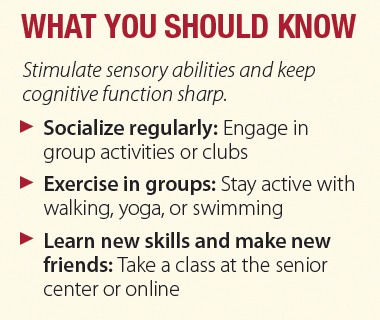
Social engagement is essential for brain health. Participating in group conversations can provide critical cognitive stimulation. Staying socially connected reinforces both hearing and vision, engaging the brain in tasks of communication and recognition that keep it active. “Many people withdraw socially when they struggle to hear or see their surroundings. This type of isolation can reduce cognitive function, yet it’s often improved with aids like hearing aids and glasses. Staying engaged is vital. The pandemic taught us how social isolation harms mental health, showing that interaction is key to cognitive wellness,” says Dr. Ravdin.
Maintaining good vision and hearing helps keep the brain engaged. A yearly eye exam can determine if you need corrective lenses, a new prescription, cataract surgery, or treatment for conditions like macular degeneration and glaucoma. Likewise, an annual hearing exam can catch auditory issues early, allowing for timely access to a suitable hearing aid, if necessary. Addressing sensory issues early and consistently supports cognitive health. Additionally, it makes socializing more enjoyable, which supports overall quality of life.
The post Maintain Hearing and Vision to Keep Your Brain Limber and Engaged appeared first on University Health News.
Read Original Article: Maintain Hearing and Vision to Keep Your Brain Limber and Engaged »
