
Your Genetic Profile: A Guide to Disease Prevention and Treatment
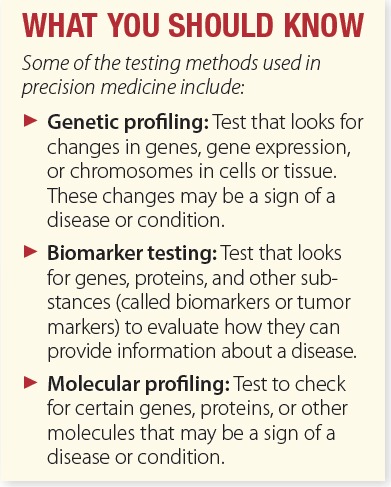
Precision medicine is a type of health care that involves basing a patient’s treatment on their genetic makeup and other unique physical characteristics. While the term precision medicine is relatively new, the practice has deep roots in modern health care. For instance, the careful matching of blood types between donors and recipients is a longstanding practice aimed at minimizing potential risks during blood transfusions. You may have already undergone treatment that involves precision medicine, but your health-care provider probably didn’t use those words. Instead, they might have talked about checking for biomarkers or getting a genetic profile. Information gained from those tests can help doctors shift their focus away from reacting to symptoms and aim it, instead, at preventing illness by predicting a patient’s susceptibility.
Aging and Personalized Care
Precision medicine has the potential to foster healthy aging by pinpointing genetic factors that impact specific diseases in their earliest stages—or before onset. “Precision medicine techniques, such as genomic testing and biomarker analysis, can help identify genetic predispositions to diseases like cancer, heart disease, and Alzheimer’s disease at an earlier stage. Early detection allows for timely interventions and better management of chronic conditions, potentially improving outcomes for older patients,” says Keith Roach, MD, associate professor of clinical medicine at Weill Cornell Medicine.
Targeted Cancer Therapy
The use of precision medicine has so far shown the most benefit in high-risk situations, such as cancer treatment. Oncologists use genetic testing and molecular profiling to identify targeted therapies and personalized treatment plans for cancer patients. “Molecular profiling can be performed on the tumor (known as somatic testing) or on blood or sputum, (known as germline profiling),” says Cora N. Sternberg, MD, Clinical Director, Englander Institute for Precision Medicine, Weill Cornell Medicine.
Older women are at increased risk for certain types of cancer, such as breast and ovarian cancer. Precision medicine allows for targeted therapies that are tailored to the specific genetic mutations driving the cancer. “Targeted therapies can selectively attack specific mutations responsible for growth of the tumor. In addition, in patients with positive germline testing, family members, including children and siblings, should also be tested. This is known as cascade testing,” says Dr. Sternberg.
Heart Health and Genetics
Genetic profiling can also help doctors put preventive cardiovascular treatment plans in motion for certain high-risk patients. “For example, the identification of the biomarker lipoprotein(a) in people with a strong family history of cardiovascular disease may lead to more aggressive lifestyle modification recommendations and preventive treatments to prevent a first heart attack,” says Dr. Roach. Elevated levels of Lp(a) in the blood are associated with an increased risk of coronary artery disease, peripheral arterial disease, and other cardiovascular events. Unlike other lipid markers, such as LDL cholesterol, Lp(a) levels are largely genetically determined. Another cardiovascular condition where precision medicine offers benefits is familial hypercholesterolemia (FH). People who have FH have high LDL-cholesterol starting from birth, so when one family member is diagnosed with FH, genetic testing is recommended for family members of all ages.
Metabolism and Drugs
Pharmacogenomics—or the way a person’s genes affect how their body processes certain drugs—is a growing area of precision medicine. “Many older adults have multiple chronic conditions that require complex management and multiple medications. Precision medicine has the potential to identify genetic markers that may predispose people to certain adverse reactions, and this in turn may enable health-care providers to prescribe medications more cautiously and avoid potential complications,” says Dr. Roach.
Precision Medicine Empowers Patients
Precision medicine techniques such as genetic testing can identify people at increased risk of certain diseases and potentially help health-care providers better predict disease progression. Familiarizing yourself with this area of medicine may enable you to be better prepared if your doctor suggests undergoing genetic tests to manage your care in the future.
The post Your Genetic Profile: A Guide to Disease Prevention and Treatment appeared first on University Health News.
Read Original Article: Your Genetic Profile: A Guide to Disease Prevention and Treatment »
