

Exercises That Improve Balance Reduce Falls and Boost Confidence
Falls are the leading cause of injuries among older adults, according to the Centers for Disease Control and Prevention (CDC), and due to factors such as osteoporosis and decreased muscle mass, older women tend to have a higher risk of falling than men. Falls can lead to serious injuries, such as fractures, head trauma, and sprains, but the good news is falls can often be prevented.
One of the most effective ways to reduce the risk of falling is to improve balance, which also enables greater freedom of movement and helps protect against strained muscles and joint injuries. What’s more, some studies suggest that activities aimed at improving balance can also have positive effects on cognitive function and brain health in older adults. Engaging in balance exercises may help stimulate neural pathways and improve cognitive abilities such as memory and attention. The benefits of better balance make it easier to remain active, and can contribute to a better quality of life for women in their postmenopausal years. Here are some activities you can incorporate into your routine to improve balance.
Activities with Balance Benefits
Strength training, tai chi, yoga, and walking can help improve balance. Strength training, including squats, lunges, leg lifts, and planks, can build strength in the legs, core, and other muscle groups that are crucial for maintaining balance. Tai chi and yoga, which incorporate slow, controlled movements, deep breathing, and mindfulness, can improve balance and overall well-being. For those who prefer to stick with a more familiar activity, walking is a simple yet effective way to improve balance and coordination. “Walking can help improve your balance because it forces you to focus on maintaining your center in the proper upright position,” says Jaclyn H. Bonder, MD, Medical Director, Women’s Health Rehabilitation, Weill Cornell Medicine.
Better Balance Exercises
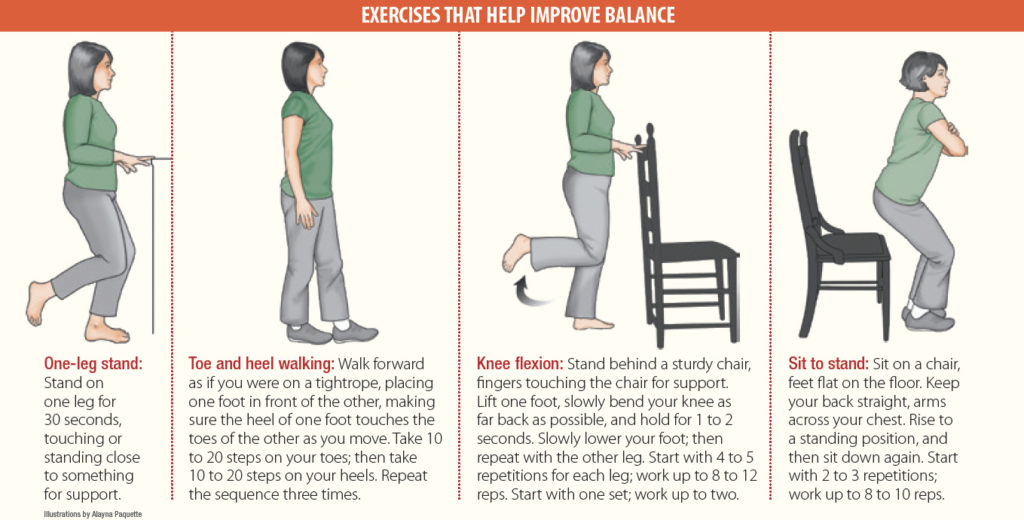
There are also exercises designed specifically to improve balance, such as those that target the body’s proprioceptive system. Simply put, the proprioceptive system enables the joints and muscles to send messages to the brain to help coordinate movement. Examples of balance exercises include standing on one leg, heel-to-toe walking, and standing on
one leg with the other knee bent. “You should always be cleared by your doctor and/or physical therapist before starting these exercises. Your muscles and brain are adaptable for your entire life, so it’s never too late to start, but sometimes assistance from a trained professional is helpful to ensure you are doing the exercises correctly and to help you progress in difficulty as the exercises get easier,” says Dr. Bonder. Balance aids such as balance balls, balance boards, and stability cushions can provide additional support while performing balance exercises. These tools help engage the core muscles and improve proprioception.
Balance and Independence
With improved balance, older people can maintain greater independence and autonomy in their daily lives. A good sense of balance enables people to move more confidently and efficiently, and improves the ability to walk, climb stairs, and perform daily activities without fear of stumbling. “Having good balance and working to maintain it regularly can make you feel more confident about yourself. It also helps with doing functional activities at home such as cleaning, cooking, and taking a shower. Together these things will help you feel more empowered, secure, and stable on your feet so that you can rely less on the assistance of others as you get older,” says Dr. Bonder.
If you have specific balance issues or concerns, consult with a physical therapist, who can provide personalized recommendations and exercises to address your individual needs. Whether through balance training exercises, regular physical activity, or other interventions, better balance can improve your quality of life by helping you stay flexible, active, and independent.
The post Exercises That Improve Balance Reduce Falls and Boost Confidence appeared first on University Health News.
Read Original Article: Exercises That Improve Balance Reduce Falls and Boost Confidence »
