
Be Sure to Shovel Snow Safely This Winter
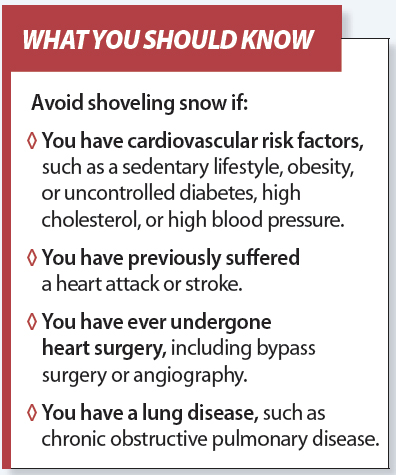
Snow is for sledding, snowball fights, and snowmen. It’s not for your driveway— but unfortunately, snow doesn’t know that. This means that unless you have a helpful local teen or a grandchild you can enlist to do the job for you, you may be among the many Americans wielding a shovel and trying to find your car out there this winter. But while that carpet of soft white may look harmless, clearing a path through it is a potentially dangerous chore, especially if you have cardiovascular issues. It has been estimated that hundreds of older Americans die each year during or just after shoveling snow. “The risks come through a combination of the effects cold weather has on the body and engaging in deceptively strenuous activity you may not be used to,” says David C. Thomas, MD, professor of medicine and rehabilitation medicine at Mount Sinai.
Cardiovascular Risks
When you are exposed to very low temperatures, your nervous system responds by narrowing your blood vessels to insulate your core against the cold and conserve energy. This narrowing—known as vasoconstriction— likely won’t bother that helpful local teen or your grandchild. But older adults are more likely than younger people to have cholesterol deposits narrowing their arteries. “This means that their hearts already have to work harder to pump blood through their narrowed arteries, and their blood pressure is higher than is healthy,” Dr. Thomas explains. “Vasoconstriction in response to cold weather raises blood pressure still higher and places the heart under even greater stress.”
Alongside these risk factors, cold weather makes your blood more viscous, which makes blood clots more likely. As such, research suggests that the risks for heart attack and stroke are increased by shoveling snow, with one study finding that the cardiac demands of shoveling heavy snow include increases in heart rate and blood pressure that equaled and, in some cases, exceeded the upper levels achieved during maximal treadmill testing in sedentary men. The least-fit participants demonstrated the highest heart rates during snow shoveling.
Staying Warm and Safe
If your cardiovascular health is good, you don’t have back problems, and you are used to moderate- to-vigorous physical activity, it may be safe for you to clear away light snow— but check with your doctor first. “If you get the go-ahead, dress warmly and wear a hat to prevent heat loss through your head,” Dr. Thomas advises. “Warm up first by marching on the spot and swinging your arms for five minutes.”
You can cut down the exertion and limit aches and pains afterward by using a proper show shovel (preferably with a curved handle), bending at the knees, and keeping your back straight. Don’t overload the shovel—it should be no more than half full. Better yet, slide the loaded shovel along the ground to push the snow out of the way rather than lift it. “Take a rest every couple of minutes, and if you feel any pain or discomfort, get a feeling of tightness in your chest, or experience a rapid heart rate or shortness of breath, immediately stop what you are doing and call your doctor,” Dr. Thomas says.
The post Be Sure to Shovel Snow Safely This Winter appeared first on University Health News.
Read Original Article: Be Sure to Shovel Snow Safely This Winter »
