

Reduce Your Risk of Stroke by Making Healthy Lifestyle Choices
A stroke, also known as a brain attack, happens when blood flow to the brain is blocked or when a blood vessel in the brain bursts. Stroke is the fifth-leading cause of death for women in the United States, and one in five women between the ages of 55 and 75 will have a stroke, according to the Centers for Disease Control and Prevention. The possibility of death or disability from stroke is alarming, but the good news is four out of five strokes are preventable, according to the American Stroke Association, and if you have one, the sooner you get to emergency care, the better your chances of recovery.
Healthy lifestyle choices can help you control conditions and reduce your risk for stroke. For example, high cholesterol and high blood pressure increase your chances of having a stroke. Eating foods low in saturated fats, trans fat, and cholesterol and high in fiber can help prevent high cholesterol, and limiting sodium in your diet can lower your blood pressure.
“The chief risk factors for stroke include high blood pressure, high cholesterol, and diabetes,” says Dana Leifer, MD, a neurologist at Weill Cornell Medicine. “People who control these factors through diet, exercise, and medication can significantly reduce the risk of stroke.” Cigarette smoking and the use of other forms of tobacco or nicotine are also major risk factors. “Smoking cessation is the single most important way of preventing strokes in anyone who smokes,” explains Dr. Leifer.
Stroke Risk Reduction
Maintaining a healthy weight and getting regular exercise also can reduce your stroke risk. Physical activity can help you stay at a healthy weight and lower your cholesterol and blood pressure levels. For adults to maintain health, the Surgeon General recommends 2 hours and 30 minutes of moderate-intensity physical activity, such as a brisk walk, each week, but any amount of exercise is a step in the right direction.
Limiting alcohol consumption and taking the medications prescribed by your doctors are also instrumental in reducing the risk of stroke. Because alcohol can raise blood pressure, the CDC recommends that women have no more than one drink per day. If you have heart disease, high cholesterol, high blood pressure, or diabetes and you have been prescribed a regimen of daily medications, be sure to follow your doctor’s orders. Set an alarm on your smartphone to help you remember to take medicine at the same time every day. It’s a simple way to lower your risk of stroke.
If you take estrogen supplements, talk to your doctor about your risk of stroke. “Estrogen supplements increase the risk of clotting and therefore of stroke and should be used with caution, especially in women who use tobacco or nicotine or have other risk factors or a prior history of stroke,” warns Dr. Leifer. “In addition,” he says, “an irregular heart rhythm such as atrial fibrillation is also a risk factor for stroke. Therefore strong bloodthinning drugs should be considered in patients who have atrial fibrillation.”
Stroke Warning Signs
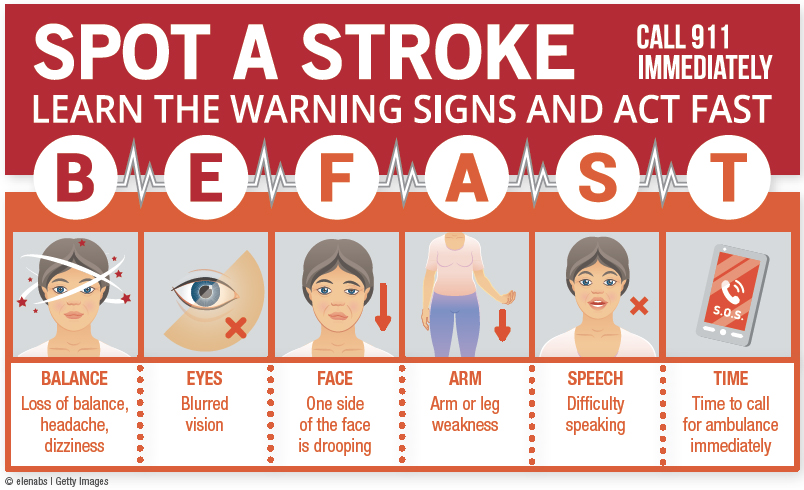
Dr. Leifer describes the warning signs of stroke as sudden onset of any of the following:
• Facial droop
• Limb weakness on one side
• Difficulty speaking
• Loss of vision in one eye or one side
• Double vision
• Numbness or tingling on one side
• Dizziness • Unsteady gait
• Decreased coordination
• Severe headache
“Sudden onset of these problems is a reason to go to an emergency room immediately. Even if these symptoms last only a short time, they should be evaluated urgently because they may be transient ischemic attacks (TIAs),” he explains. A TIA is the same as a stroke, but the symptoms last a short time. People get stroke symptoms when experiencing a TIA because a clot is blocking the blood supply in the brain. When the clot moves away, the stroke symptoms stop. Having a TIA is a warning that a stroke may be imminent. “The same things that cause TIAs can also cause strokes. TIAs are a risk factor for stroke, and the greatest risk of stroke is probably within 24 to 48 hours after a TIA,” explains Dr. Leifer.
Importance of Quick Treatment
Stroke patients who are taken to the hospital in an ambulance may get diagnosed and treated more quickly because emergency treatment starts on the way to the hospital. The quicker someone gets treated, the better the chance for recovery, which is why recognizing the signs and symptoms of stroke is vital.
While stroke poses a significant risk of death and disability, making healthy lifestyle choices reduces the risk considerably, and recognizing the signs of stroke—and acting quickly if they occur—can increase the likelihood of survival.
The post Reduce Your Risk of Stroke by Making Healthy Lifestyle Choices appeared first on University Health News.
Read Original Article: Reduce Your Risk of Stroke by Making Healthy Lifestyle Choices »
