
Tomato Time
The Folklore. Ripe tomatoes, plump with the flavor and fragrance of summer, tug heavily on the vine. Native to South America, tomatoes were first cultivated in Mexico by the Aztecs, who named it tomatl, which means “the swelling fruit.” Though shunned when it arrived in medieval Europe where it was thought to be poisonous. its reputation has certainly improved. This hot weather darling stars in our favorite summertime repasts from cool gazpacho to a sizzling burger, serving up tradition, flavor, and good nutrition.
The Facts. Tomatoes (Solanum lycopersicum) are members of the nightshade family, along with eggplants, potatoes, and peppers. Though we eat them as a vegetable, they are not only a fruit, but a berry! There are more than a thousand tomato varieties in different colors—from red, orange and yellow to purple, brown and black, shapes—round, oval, pear, and sizes—tiny grape tomato, medium Roma, large beefsteak. Tomatoes are packed with antioxidant vitamins A and C (a 1-cup serving contains 30% DV (DV=Daily Value, based on 2,000 calories/day) and 38% DV respectively), which, along with beta-carotene and lycopene, help protect cells from harmful free radicals.
The Findings. Tomatoes are rich in lycopene and beta carotene, both of which have been linked with tomatoes’ anticancer properties, particularly in prostate 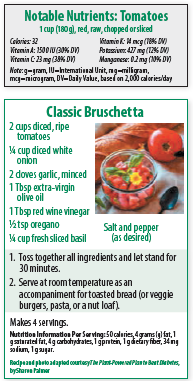 cancer. Consumption of tomatoes has also been associated with reducing cancer cell growth in breast cancer, which may reduce cancer risk in pre-menopausal women (International Journal of Food Science & Technology, 2020). A tomato-rich diet is also associated with reduced risk of heart disease. A review of more than 25 studies reported that high lycopene consumption significantly reduced overall mortality from and risk of cardiovascular disease and stroke (Nutrition, 2019). Tomato consumption has also been linked with reduction in diabetes, neurodegenerative diseases, like Alzheimer’s disease, and improved skin health for its protection against sun damage (Biology, 2022).
The Finer Points. Enjoy superior taste with fresh, in-season (July through September) tomatoes. Ripe tomatoes are fragrant, deeply colored, smooth skinned, and are firm, but give to gentle pressure. They’ll keep up to a week at room temperature, but refrigerate if you’re not ready to use when they’re ripe. Canned and jarred tomatoes and tomato products, such as tomato paste and sauce, are convenient options. Summer is the perfect time to enjoy beat-the-heat, no-cook tomato recipes, like salsa, salads, sliced with a drizzle of olive oil, balsamic vinegar and a sprinkle of chopped basil, or atop a whole grain cracker with soft cheese, red onion and a dash of pepper.
The post Tomato Time appeared first on University Health News.
