
Fit Easy, Effective Exercises Into Your Daily Routine
Even if you don’t make New Year’s resolutions, at this time of year, you probably think about things you could do to make yourself healthier and happier. For many women, getting more exercise is one of the top items on the “to-do” list, but it can be challenging to carve out time for exercise.
Here’s a different approach to exercise that will make it easier: Integrate exercise into the routine you already have. Many exercises can be done in just a few minutes, so there’s no need to block off a chunk of time.
“For many women, the best exercise program doesn’t require props, special equipment, or large amounts of time: The fewer the obstacles, the easier it is for women to stick to a program and achieve their goals,” says Alyssa Padial, PT, OCS, PRPC, a physical therapist in the department of rehabilitation medicine at Weill Cornell Medicine.
Why Exercise Is Key
Being physically active is essential for good health for everyone, but it’s even more important for women once they’ve gone through menopause.
“During the postmenopausal years, reduced levels of estrogen and other hormones have a significant influence on bone, soft tissue, and brain health,” explains Padial. “Also, as the muscles in the legs, pelvis, and abdomen lose some of their tone, balance reactions tend to become slower, which can increase the risk of falls and other injuries.”
An exercise program for postmenopausal women needs to help protect the cardiovascular system (the heart and blood vessels), support bone health, strengthen muscles, and improve balance.
Exercise Your Heart
After menopause, a woman’s risk of cardiovascular disease increases. Activities that get and keep the heart rate up—often called “cardio” or “aerobic” exercises—help counteract that risk.
The benefits of aerobic exercise go beyond your cardiovascular system, notes Padial: “One to two minutes of vigorous exercise and high-intensity bursts are linked to better bone health and injury prevention in women, as well as a lower risk of osteoporosis in postmenopausal women.”
“Walking is an excellent form of cardiovascular exercise. Aim for a minimum of 30 minutes of brisk, purposeful walking every single day,” recommends Padial. If you can’t walk outside due to weather conditions or other factors, consider getting a treadmill. You don’t need to invest in a top-of-the-line model; a basic model will meet your needs. Listening to some upbeat music, an audiobook, or a podcast will help the time pass quickly while you walk.
You can also head to your local shopping mall or market to get some exercise. Other examples of aerobic exercise include cycling, dancing, hiking, running, and swimming.
Keep Posture In Mind
Padial notes that it’s important to pay attention to your posture while you’re walking and exercising, as well as any time you’re standing or sitting.
“As soon as you get out of bed in the morning, think about maintaining good posture. Your abdominal, pelvic, hip, and leg muscles will automatically kick in and start getting stronger if you sit and stand up straight,” advises Padial. “Think of yourself as being two inches taller than you are; this will result in an immediate lengthening of your torso and activation of your abdominal and pelvic muscles.”
Strengthen Your Bones
At age 50, women are about 10 years into the process of losing bone mass, which happens gradually over the years. You may have heard that exercises for bones should be “weight bearing.”
“This doesn’t mean you must lift weights to get benefits; it means that putting weight on your long bones will make them stronger,” explains Padial.
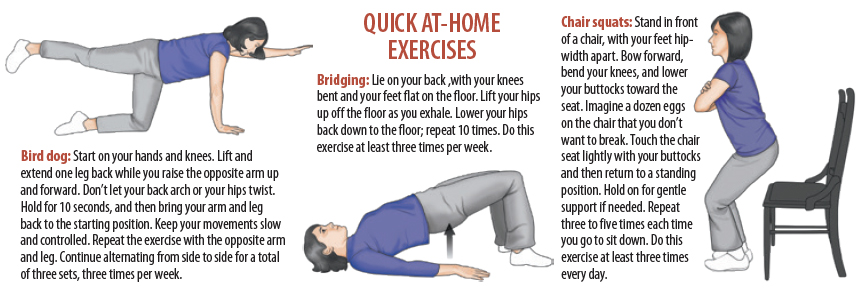
Resistance is the key to effective weight-bearing activities; resistance puts stress on your bones that stimulates bone formation. Two weight-bearing exercises Padial recommends are bridging and “bird dog” (see below for exercise instructions). She also says that standing on one leg is a weight-bearing activity that helps improve balance. Other weight-bearing exercises include squats, lunges, and push-ups.
Simple Exercises at Home
There’s no need for a trip to the gym; you can do a number of brief exercises in your home throughout the day.
“Often, people say they don’t have time to exercise, but with these exercises, there really is no excuse,” says Padial. “For example, before you get out of bed each morning, do a few bridges. Stand on one leg for 30 to 60 seconds while you brush your teeth, do the dishes, or talk on the phone. Do a few chair squats before you sit down [see below for exercise instructions].”
Also, don’t overlook the importance of following a healthy diet and getting enough sleep.
“Your body will do a much better job of giving you energy and strength when you give it adequate rest and nourishment,” explains Padial.
Sticking With It
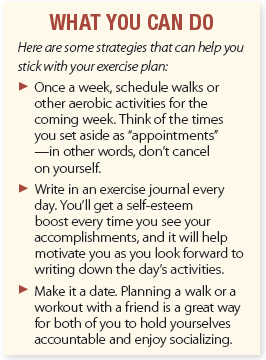
If you find it challenging to stay motivated, remind yourself that physical activity can improve your health in countless ways. Exercise strengthens your heart, improves blood flow, lowers blood pressure, and reduces LDL cholesterol and blood sugar levels. Regular exercise also helps decrease stress, improves sleep, increases energy, and may ease symptoms of depression and/or anxiety.
The post Fit Easy, Effective Exercises Into Your Daily Routine appeared first on University Health News.
Read Original Article: Fit Easy, Effective Exercises Into Your Daily Routine »
