
Get Relief from Heartburn and Acid Reflux
Most people experience occasional heartburn from time to time, but when that burning sensation in your chest occurs frequently, it may be more than just the spicy food you ate or the caffeinated or alcoholic beverages you drank. Frequent heartburn is the most common symptom of gastroesophageal reflux disease (GERD), a condition in which acid in the stomach refluxes, or backs up, into the esophagus.
If you haven’t been diagnosed with GERD but you have heartburn at least twice a week for several weeks, ask your primary care physician for a referral to a gastroenterologist. This is especially important if antacids or OTC medications don’t relieve your symptoms or you can’t wean yourself off of them.
“If you have GERD, you should be followed by a gastroenterologist to make sure you’re being treated with the correct medications for the correct duration of time. In addition, he or she can explain the lifestyle changes that can possibly resolve your GERD,” explains Carl Crawford, MD, a gastroenterologist and assistant professor of clinical medicine at Weill Cornell Medical College.
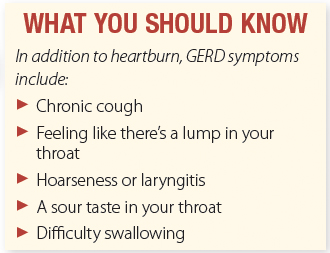
Possible Complications of GERD
While heartburn may seem like more of a short-term annoyance than a serious health problem, if left untreated, GERD can cause potentially serious complications.
“The stomach is designed for acid, but the esophagus is not. Acid can damage the esophageal walls and cause inflammation that leads to stricturing (narrowing); this may cause dysphagia (difficulty swallowing) and increases the risk of food getting stuck,” says Dr. Crawford.
GERD also can lead to Barrett’s esophagus, a condition marked by changes in the cells lining the esophagus, which increases the risk of esophageal cancer.
GERD Drugs and Side Effects
Millions of Americans treat heartburn and GERD with medications called proton pump inhibitors (PPIs, such as Nexium, Prilosec, Prevacid, and Aciphex), which are available over the counter (OTC) and by prescription. These drugs usually are very effective, but studies have shown that long-term use of PPIs increase your risk of other health problems, such as osteoporosis and bone fractures. “
In addition, since PPIs block acid production, they may decrease the absorption of several nutrients, including vitamin B12, iron, and calcium,” explains Dr. Crawford. Other possible effects of long-term PPI use include low magnesium levels, memory problems, and abnormal kidney function.
The labels on OTC PPIs specify they are intended as a short-term treatment for heartburn and other GERD symptoms, and that, if symptoms continue, a physician should be consulted.
How to Reduce Reflux
Fortunately, there are several actions you can take to ease your GERD symptoms. Researchers who analyzed data collected from more than 42,000 women who participated in the Nurses’ Health Study II identified five lifestyle choices that reduced frequent heartburn and other symptoms of GERD. The women who engaged in all five behaviors (which researchers called “the anti-reflux lifestyle”) experienced the most improvement in symptoms. The behaviors were:
- Being at a normal weight, defined as a body mass index (BMI) of 18.5 to less than 25.0
- Eating a prudent diet high in fruit, vegetables, whole grains, legumes, fish, and poultry, and low in concentrated sweets (added sugars), red meat, and refined grains
- Doing moderate-to-vigorous physical activity for at least 30 minutes a day
- Consuming no more than two cups of coffee, tea, or soda daily
- Never smoking (if you smoke, quitting will also help)
Weight Loss Is Key
In the study, being at a normal weight was the factor associated with the greatest reduction in GERD symptoms.
“If you have GERD and you’re overweight or obese, losing weight is probably the most important step you can take,” says Dr. Crawford. “GERD occurs because the pressure inside the stomach exceeds the pressure it takes to keep the lower esophageal sphincter closed. Excess weight increases the pressure in the stomach, which causes the sphincter to open and allow acid and other stomach contents to reflux into the esophagus.” (Normally, the sphincter opens only to allow foods to move into the stomach.)
If you’ve already tried to lose weight on your own, you know it can be challenging. Ask your doctor for a referral to a registered dietitian who specializes in weight loss. The dietitian will create a diet based on your preferences and lifestyle and then help monitor your progress. If regular exercise isn’t part of your routine, see a physical therapist or other health-care professional who can set up a safe, effective exercise program for you. You can also ask your doctor if there are any weight-loss programs in your area he or she would recommend.
Modify Diet and Eating Patterns
In addition to following the “anti-reflux lifestyle,” Dr. Crawford suggests these steps you can take to reduce heartburn and other GERD symptoms:
- Stop eating at least two to three hours before going to sleep; this allows food and acid to move out of your stomach and into your small intestine.
- Eat smaller meals; your stomach cannot accommodate a large amount of food and a large amount of acid at the same time, and overeating will often trigger a bout of symptoms.
- Eliminating certain foods from your diet also may help prevent reflux. Common triggers of GERD symptoms include: acidic foods, including citrus and tomatoes; spicy foods; highfat foods, including fried foods; coffee, tea, and soda; chocolate; peppermint; and alcohol.
- “To identify which foods trigger your GERD symptoms, keep a written record of what you eat and drink, including the amount and time of day, and note when you have any GERD symptoms. In a few weeks, you’ll start seeing common patterns that bring on the symptoms; then, you can make changes to those patterns,” says Dr. Crawford.
- If you often have heartburn when you lie down in bed, eat less food at dinnertime, avoid high-fat foods, try eating dinner earlier, and don’t snack before going to bed.
Another strategy that can help is elevating the head of your bed a minimum of 6 to 8 inches; this will help keep food and acid out of the esophagus. (This isn’t the same as propping your head up on pillows—your entire upper body needs to be elevated.)
You now have plenty of nonpharmacological tools in your arsenal to help you fight heartburn and GERD. If you do combine medications with lifestyle measures, keep the potential for problematic side effects of GERD drugs in mind, and make sure you see your gastroenterologist regularly for proper medication management.
The post Get Relief from Heartburn and Acid Reflux appeared first on University Health News.
Read Original Article: Get Relief from Heartburn and Acid Reflux »
