
The Negative Effects of Narcissism
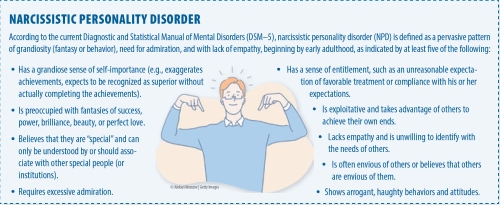
Bully, braggart, drama queen, entitled, condescending. These are some terms used to describe those who are narcissistic. Narcissistic personality disorder (NPD) is the term used when someone has been diagnosed by a mental health professional. As with most disorders, narcissism exists on a spectrum. According to Sarah Nguyen, MD, Assistant Clinical Professor and Associate Director of the UCLA Integrative Psychiatry Clinic, some individuals with narcissistic traits are more “high functioning” than others and use these traits to succeed, while others can be more vulnerable to anxiety and distress.
Are You a Narcissist?
Narcissism has captured headlines lately, which may cause some people to contemplate if they are narcissists. You might wonder: Do I brag about myself too much? Am I too quick to criticize others? Pondering those kinds of questions points to a certain sense of self-awarenss that narcissists often lack. There is a difference between feeling proud of yourself and occasionally boasting about an accomplishment versus firmly believing you are better than others and constantly needing validation and attention. The former is an appropriate response; the latter is more suggestive of narcissism.
“Narcissists are characterized by a fragile ego, thin skin, and self-loathing behavior,” says Dr. Nguyen. “They take everything extremely personally, because underneath their grandiosity is a profound self-hatred that needs to be bolstered by constant external praise. When there is perceived criticism, they tend to become impatient or angry if they feel slighted or don’t receive special treatment. They react with rage or contempt, try to belittle others to feel superior, and have difficulty coping with stress and change.”
Being in the constant presence of someone with narcissistic characteristics, be it a boss, sibling, coworker, friend, spouse, or lover, can be destabilizing, demoralizing, and very stressful. And chronic stress, says Dr. Nguyen, can lead to a prolonged inflammatory response, which has been linked to many health problems, including high blood pressure, heart disease, and diabetes. It can also result in panic attacks, anxiety, and depression.
Recognizing how narcissists operate within the context of a relationship can be useful in minimizing the impact of this destructive personality disorder.
Interactions with Narcissists
As Dr. Nguyen explains it, individuals with narcissistic traits tend to have superficial and exploitive relationships based on a predominant need for personal gain. These individuals can be master manipulators. Characteristics include changing their minds and later denying what they have said. This may leave you to second guess yourself (maybe I misunderstood or misheard something?). Denying or altering the truth is known as gaslighting. The term comes from a 1944 movie, Gaslight, in which a husband dims and brightens the gaslights in their home and denies that the lights are changing. The wife becomes quite confused, self-doubting, and eventually goes insane. Arguing with someone with narcissistic tendencies or appealing to logic simply does not work and is, in fact, counterproductive.
“It is extremely difficult to disagree with someone with narcissistic traits or narcissistic personality disorder, as they are typically unable to see your point of view and often get extremely defensive,” says Dr. Nguyen. “This extreme defensiveness makes them unable to be open to others or even consider others’ well-being.”
Narcissists feed off of attention, including negative attention. They may pick a fight, just to “get a rise out of you.” The relationship becomes a push/pull drama, leaving victims feeling like they’re walking on eggshells. Victims may never know what will provoke or irritate, so they keep their heads down so as not to rock the boat.
To cope with their feelings of insecurity, shame, and vulnerability, narcissists project their bad feelings onto others. They tend to find scapegoats for their own feelings because they do not embrace or deal with their own emotions. As a result, they often seek someone else to blame when things go wrong. They will explode in a rage and leave their own children, family members, coworkers and employees shaking in the wake of their angry outbursts—without seeing the harm done to others. Or, if they are aware, they won’t care how others are affected by their rage, as they often lack guilt, remorse, and empathy.
“Narcissists will have impairments in maintaining and sustaining their relationships,” says Dr. Nguyen.
Love Bombing and Other Tactics
Narcissists and those with narcissistic tendencies are often quite charming and tend to easily attract romantic partners with grandiose promises of a great life together. It can be quite a heady ride in the early days of a romance. If you’re new to a relationship, watch out for “love bombing,” which is defined by excessive texting, constant phone calls, and wanting to know where you are and who you are spending time with.
Narcissists will often malign their exes and blame them for all that was wrong in the relationship. For example, the ex was crazy, or no longer took care of himself or herself, or put the dog’s needs first. They will blame everyone and rarely, if ever, accept any responsibility.
Narcissists need to be number one. Because of this they may try to isolate romantic partners, asking them to forgo family outings to spend time with them instead. What once seemed like deep interest, quickly turns into unfounded jealousy. Moreover, you may be accused of cheating when the reverse is more likely true. They are often quick to point that other prospects are lining up to be with them and/or that no one will ever love you as much as they do. If you discover they are cheating, they will blame you for the affair, saying if you had paid more attention them, they would not have had the chance to stray. Or they may accuse you of not being as fun as you used to be or belittle you for gaining a few pounds (even if you didn’t). They may become cold and withholding of emotion, or resort to verbal abuse, which easily could escalate into physical abuse.
Giving them a second chance may seem like a good idea, especially if you are suddenly showered with affection. They will promise the world, but never actually apologize for their behavior. It’s an endless cycle of abuse and reconciliation.
“It’s emotionally exhausting to constantly reassure and build up the narcissist’s self-esteem, often at your own expense,” says Dr. Nguyen.
Protecting Yourself
Whether it’s a romantic partner, family member, or other person in your life, there are many ways to protect yourself against narcissistic abuse. No one should accept being shouted at or belittled.
Because narcissists thrive on chaos and drama, be the opposite of that. For example, there’s rarely a need to respond immediately to each and every phone call, email, or text. The angry outbursts will come, but resist responding—it’s a ploy for attention. Instead let your emotions cool, collect your thoughts, and if you choose to respond keep it cool, short, and impersonal. In addition, Dr. Nguyen recommends the following:
- Know your self-worth: You are absolutely allowed to walk away from an emotionally abusive relationship and to seek help when needed.
- Trust your own judgment: Narcissists can be very charming initially, which makes it difficult to trust your own judgment, as you may also be emotionally manipulated into questioning your own perception and reality.
- Set clear and firm boundaries: When you communicate, set clear boundaries and say what you mean directly and stick with it.
- Ignore and disengage: Because narcissists get satisfaction from bullying others, not reacting or engaging with them gives them no satisfaction. Do not personalize their criticism and do not try to engage in justifying or defending your actions to them.
- Educate yourself: Understand that their criticism is not about you, but rather their disorder, and they need to put others down to feel better about themselves.
Narcissistic behavior is abusive, hurtful, and health-harming. A mental health professional knowledgeable about narcissism can help you further recognize how it may have affected you and what you can do about it. Those who recognize themselves in these narcissistic traits would also be wise to seek out a mental health professional. Those who get help are more likely to find greater peace and life satisfaction
The post The Negative Effects of Narcissism appeared first on University Health News.
