
Get Relief From Constipation
Bowel movements may not be a common topic of polite conversation, but most people suffer from constipation from time to time. Constipation, which is usually defined as having fewer than three bowel movements in a week, is a problem that is often linked to diet and hydration issues, but sometimes, it may signal an underlying medical condition.
“For most people, eating a wide variety of high-fiber plant foods, exercising, and drinking plenty of water will help with constipation,” says Colleen Webb, RDN, CDN, a registered dietitian with the Jill Roberts Center for Inflammatory Bowel Disease at Weill Cornell. “However, there are situations when these interventions are not enough, and a more thorough evaluation may be required.”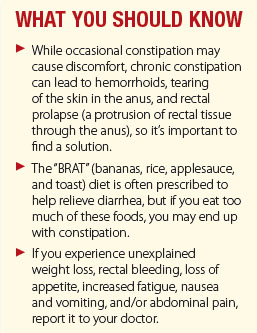
Dietary Causes
Constipation may be the result of your eating habits. The typical “Western” diet is full of animal products and highly processed foods and lacks nourishing high-fiber foods, which is one reason why so many people in the U.S. suffer from constipation. Animal fats and proteins, especially in dairy foods, are common triggers for constipation.
Inadequate fluid intake is another common cause of constipation. Webb advises the average woman to aim for at least 64 ounces of water a day unless otherwise instructed by her doctor.
The Role of Fiber
Following a dietary pattern that is rich in high-fiber foods, including fruits, vegetables, legumes, nuts, seeds, beans, and whole grains, can be especially helpful in alleviating constipation.
There are two main types of dietary fiber. Soluble fiber (found in foods such as fruits, oats, barley, and legumes) allows more water to remain in the stool, which makes the stool softer and easier to pass. Insoluble fiber (found in wheat, rye, and other grains) does not dissolve in water. “It adds bulk to the stool, which will turn mild, alternating diarrhea and constipation into regular, soft stool,” explains Meira Abramowitz, MD, also with the Jill Roberts Center for Inflammatory Bowel Disease at Weill Cornell.
You must drink a lot of water when eating fiber-rich foods, especially if you eat a lot of insoluble fiber, to keep the stool moving and prevent constipation.
Your Fiber Needs
For average, healthy women over age 50, Webb recommends consuming at least 25 grams of fiber daily. While some processed foods, such as cereals and granola bars, are touted for being high in fiber, Webb says they are not as effective at combating constipation as the fiber in whole foods, including fruits, vegetables, beans, and lentils.
However, there are exceptions: Certain gastrointestinal conditions, such as diverticulitis, previous abdominal surgery, or irritable bowel syndrome, might require a low-fiber diet. If you have any of these conditions, talk with your doctor about the diet that’s best for you.
Over-the-Counter Remedies
If more water and fiber in your diet don’t relieve constipation, Dr. Abramowitz says that some over-the-counter (OTC) remedies may be helpful, but they should be used only for a few days.
You can try a high-fiber supplement, such as psyllium husk. If that’s not effective, try OTC osmotic laxatives, such as polyethylene glycol (Miralax), or stimulant laxatives, such as senna or bisacodyl (Dulcolax, Correctol). “If your constipation does not improve after a short period of using OTC laxatives, you need to see a physician for evaluation,” advises Dr. Abramowitz.
Underlying Causes
If changing your diet and taking laxatives doesn’t alleviate constipation, your doctor will need to look for other possible causes. Constipation can be a symptom of low thyroid function or high calcium levels in the bloodstream. Your physician should check for both conditions with blood tests and a physical exam.
“You also need to be on the lookout for signs of possible colon cancer that may masquerade as constipation. These include unintentional weight loss, rectal bleeding, and anemia,” explains Dr. Abramowitz.
The post Get Relief From Constipation appeared first on University Health News.
