

Some Diabetes Medications Provide Multiple Benefits
The defining characteristic of diabetes is an abnormally high level of sugar (glucose) in the bloodstream. If diabetes patients aren’t able to get and keep their blood sugar in a healthy range, they run the risk of serious complications, including loss of vision, nerve damage, kidney damage, and cardiovascular disease.
For many decades, diabetes medications worked either by increasing insulin production or decreasing glucose absorption, but in recent years, newer medications that target different parts of the process that regulates glucose and insulin have been developed.
Modern Medicines for Diabetes
“The past five to 10 years has been a prolific and exciting time in drug development for type 2 diabetes,” says Rekha Kumar, MD, assistant professor of medicine at Weill 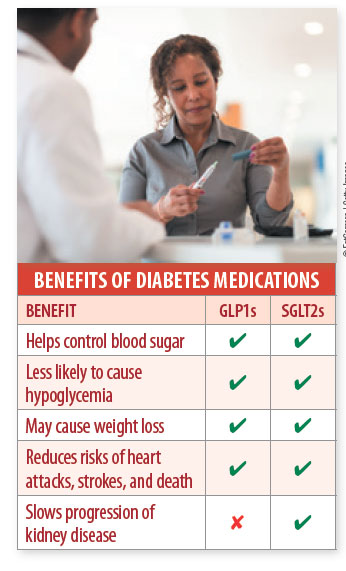 Cornell Medicine. “The two most recent classes of medicines that have been developed are the glucagon-like peptide-1 receptor agonists (GLP1s) and the sodium-glucose transporter 2 inhibitors (SGLT2s). These medicines have new and/or separate mechanisms of action than the older diabetes medicines.
“These medicines are considered game-changers because they have other benefits beyond lowering blood sugar. Both the GLP1s and SGLT2s provide cardiovascular protection with a reduced risk of heart attacks, strokes, and death, and the SGLT2s have been shown to reduce the progression of kidney damage in patients with diabetes.”
GLP1 medications include Trulicity, Ozempic, Victoza, and Byetta, and SGLT-2 medications include Invokana, Farxiga, and Jardiance.
“Another benefit of these new medicines is that they are less likely to cause hypoglycemia (low blood sugar) than older classes of diabetes medicines. This is important, since hypoglycemia can be very dangerous, especially for elderly patients,” says Dr. Kumar. “Additionally, the new diabetes medicines tend to cause weight loss versus older medicines that often caused weight gain. We are seeing increasing insurance coverage on the new medicines due to these additional beneficial properties.”
Do You Need a Medication Change?
If you have type 2 diabetes and you’re taking one (or more) of the older medications, how do you know if a medication change might benefit you?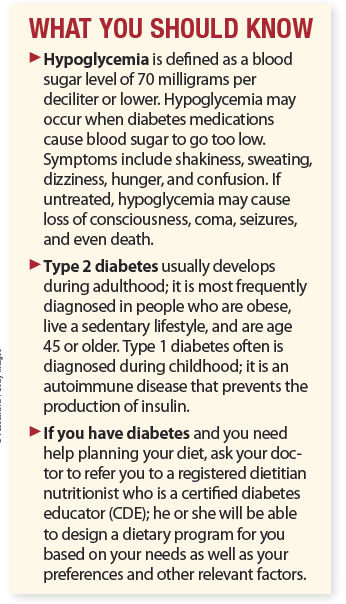
“We need to ask three questions: Is the patient’s blood sugar controlled? Is the patient having symptoms of low blood sugar? Is the patient’s weight controlled? If the answer to any of these questions is ‘No,’ then an adjustment or change of medications needs to be considered,” explains Dr. Kumar.
More Than Medications
The foods you consume have a direct impact on your blood sugar, so diet is a key component of diabetes treatment.
“Focus on whole, fiber-rich foods, including plenty of fruits and vegetables, and choose minimally processed carbohydrates, such as whole grains,” advises Dr. Kumar. “Avoid foods made with white flour: White flour is high in carbs but low in fiber, so your body breaks it down rapidly and causes your blood sugar to rise quickly. And avoid foods and beverages high in added sugar; they will cause your blood sugar to spike.”
Another dietary strategy that helps control blood sugar is eating foods with protein and fat along with high-carb foods; the other foods mediate the effect of the carbs, resulting in a slower breakdown and release of glucose into the bloodstream.
Finally, if you have diabetes, should you see a specialist? “If you have diabetes and several other medical conditions, it’s reasonable to have a consultation with an endocrinologist, especially if your blood sugar is not well controlled,” says Dr. Kumar
The post Some Diabetes Medications Provide Multiple Benefits appeared first on University Health News.
Read Original Article: Some Diabetes Medications Provide Multiple Benefits »
