
7. Rethinking Protein Needs
You Might Need More
Most Americans get plenty of protein, despite the marketing hype suggesting otherwise, but an emerging scientific consensus says older adults may need even more. Evidence also is mounting that the timing of older adults’ protein consumption may be important; the traditional, protein-heavy dinner might need to give way to a more even intake throughout the day, starting at breakfast.
“Although the RDA for protein is substantively the same for all adults, older adults tend to consume less protein than younger adults, primarily due to reduced energy needs,” according to Paul F. Jacques, DSc, director of Tufts’ HNRCA Nutritional Epidemiology Program. “Approximately one-third of adults over 50 years of age fail to meet the RDA for protein, and an estimated 10 percent of older women fail to meet even the lower Estimated Average Requirement for protein.”
The RDA for protein is 46 grams for women and 56 grams for men, while the Daily Value percentage (% DV) used on nutrition labels is based on 50 grams. However, experts say those general numbers should be adjusted for body weight. Most adults should aim for about 0.36 grams of protein per pound, so a person weighing 150 pounds needs about 54 grams of daily protein, while a 120-pound person requires 43 grams, and a 180-pound person needs 65 grams. Endurance runners and strength-training athletes need more—up to 0.8 grams per pound.
In an article entitled “Protein and Healthy Aging,” Dr. Jacques and colleagues noted that aging adults might need more protein than the current RDA recommends. Many experts have argued that older adults actually should aim for 0.45 grams to 0.68 grams of protein per pound of body weight. For a 150-pound person, that translates to between 67.5 and 102 grams of protein daily—substantially more than the 50-gram % DV used in the Nutrition Facts panel.
Timing is Key
Dr. Jacques and colleagues also suggest that when you eat your daily protein may be as important as how much you consume: “Meeting a protein threshold of approximately 25 to 30 grams per meal represents a promising yet relatively unexplored dietary strategy to help maintain muscle mass and function in older adults.” In one seven-day trial, they note, muscle protein synthesis was 25 percent higher when the same quantity of protein was evenly distributed across breakfast, lunch, and dinner, compared with the typical pattern that skews toward a protein-heavy dinner.
Breakfast, Dr. Jacques adds, may provide the greatest opportunity to more evenly distribute the day’s protein. Smart snacking can also add protein at times other than dinner. One study found that older adults who snack consume about 6 grams more protein daily than their non-snacking peers.
Quality Counts
The quality of the protein you consume also counts. Dr. Jacques and colleagues cite research showing that protein quality affects how the protein is digested and absorbed, as well as influencing whole-body and muscle metabolic processes in older adults.
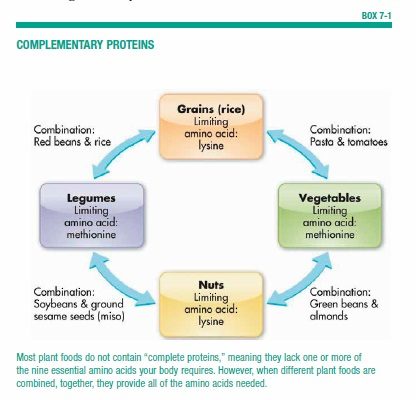
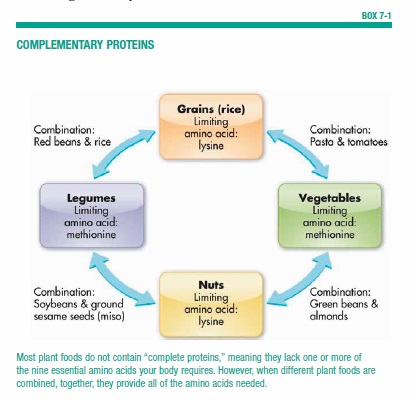
For nutritional benefits, protein quality depends on the digestibility of the protein source and its amino-acid contents. The most important thing to remember about protein quality is whether a food delivers all nine “essential” amino acids—the building blocks of protein—that the body can’t make itself. Foods that meet this requirement are called “complete” proteins.
You don’t have to obtain all of the essential amino acids at a single meal; it’s the balance over a whole day that matters. The importance of “complete” proteins, however, is why people often eat rice with beans—together, they deliver all of the essential amino acids, as do peanut butter plus whole-grain bread. Some foods, including meat, poultry, fish, eggs, dairy products, soybeans, and quinoa, are complete proteins that need no nutritional partners. Grains (with the notable exception of quinoa) are usually not an adequate source of the amino acids lysine and isoleucine, so they are not complete proteins (see Box 7-1, “Complementary Proteins”).
Muscle Mass Matters
Why should older adults in particular pay extra attention to protein? Sarcopenia, the gradual loss of lean muscle mass that can occur with aging, affects 15 percent of people older than age 65, and 50 percent of people older than age 80. Skeletal muscles reach peak mass by the third decade of life; with each subsequent decade, muscle fibers decrease in size and number. This process speeds up in the later years of life; by age 80, up to 30 percent of muscle bulk may be lost.
“Low muscle mass is a cause of poor muscle strength,” says Martha Savaria Morris, PhD, an adjunct scientist with Tufts’ HNRCA Nutritional Epidemiology Program. “One risk of having weak muscles is the inability to carry out activities of daily living and, consequently, a lack of independence. Another risk is falls, which often result in serious injury among older adults.”
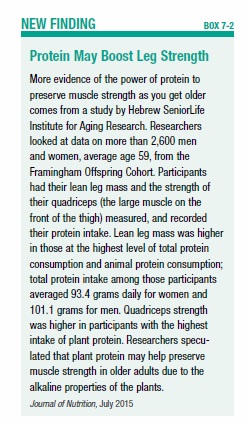
The Health, Aging and Body Composition Study compared dietary protein intake with lean muscle mass in 2,066 men and women, ages 70 to 79. Over three years, participants consuming the highest amount of protein—an average of 91 grams daily—lost 40 percent less lean muscle mass than those in the bottom one-fifth of protein intake, who averaged 57 grams a day. Researchers concluded, “Dietary protein may be a modifiable risk factor for sarcopenia in older adults and should be studied further.”
Another study revealed an association between eating more protein and greater lean leg mass and muscle strength (see Box 7-2, “Protein May Boost Leg Strength”).
Calories and Cautions
If you incorporate more protein in your diet, be careful to avoid calorie overload. Portion control is important even if you’re trying to boost protein intake. Rather than just adding more protein to your regular diet, substitute lower-calorie sources of protein for less healthy food choices, such as refined carbohydrates, fried foods, or sugary desserts. (Keep in mind that each gram of protein contains four calories.) And, choose your protein carefully: Boosting your protein intake with a big ribeye steak or other fatty meats will also add a heaping helping of saturated fat. The Mediterranean Diet offers a useful model of healthy protein sources—get more protein from fish and plant proteins and less from red meat.
People with chronic kidney disease should avoid high-protein diets, which may further damage kidney function. Diets high in protein may also increase the risk of kidney stones, even in those with otherwise healthy kidneys.
Patients with gout should consult their physicians about protein intake. Many protein sources, including red meat, poultry, and fish, contain purines, which the body breaks down to form uric acid, the cause of the painful swelling in gout.
Overall, however, a review of the pros and cons of protein published in the journal Advances in Nutrition concluded, “The consumption of a high-protein diet appears to be more advantageous than deleterious.”
Drinking Extra Protein
While it’s important to get enough protein as you age, most experts say you don’t need to supplement your diet with protein-packed nutrition “shakes.” The American Geriatrics Society has advised against using the popular liquid supplements even for most older adults suffering unintentional weight loss. “There is no evidence that they affect other important clinical outcomes, such as quality of life, mood, functional status, or survival,” according to the society’s latest Choosing Wisely guidance for physicians and patients. The head of the Choosing Wisely work group called such products “liquid candy bars with vitamins.”
A typical nutrition shake contains roughly as much sugar—24 to 28 grams—as a regular two-ounce chocolate, caramel, and peanut candy bar, and almost as many calories (250 versus 280). While the shakes do deliver nine to 10 grams of protein, there are less expensive ways to boost protein intake.
The only place such products’ value is clear for older adults, experts say, is if they are malnourished, very sick, and in a hospital.
Picking Your Protein
A key consideration in choosing protein sources is what other nutrients, good and bad, you’re getting along with your protein. With salmon and some other fish, for example, you also get omega-3 fatty acids that may benefit your heart and brain as you age. Beans and similar plant protein sources deliver dietary fiber as well. But other popular protein choices, such as the fatty and processed meats so prominent in the typical American diet, contain saturated fat and lots of calories along with the protein you need.
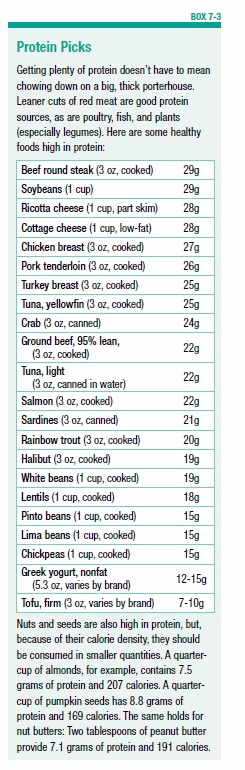
That’s one reason it’s important to broaden the protein options on your plate as you get older. Eating steak or pork chops every night for dinner, with the occasional fried chicken, isn’t a protein plan for healthy aging. In the rest of this chapter, we’ll spotlight some of the many smart protein choices for your meals—and even for snacking (see Box 7-3, “Protein Picks,” for healthy, high-protein foods). You can still enjoy an occasional steak or pork chop, but keep your portions small, and choose protein-rich foods that deliver other benefits for most of your meals.
Note that we include seafood examples in our spotlights. Sustainability issues are important but complex when choosing seafood. To align your healthy choices with the health of the planet and its fisheries, consult sources such as the Monterey Bay Aquarium’s Seafood Watch site at (www.seafoodwatch.org).
Spotlight: Salmon—Omega-3 Standout
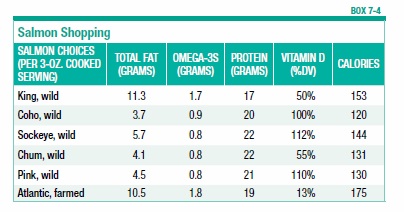
It’s no wonder salmon is America’s third most-consumed seafood (behind only shrimp and tuna), since it’s richly flavored and easy to prepare in a variety of ways. It’s also among the best sources of the heart-healthy omega-3 fatty acids found in fish oil (docosahexaenoic acid, or DHA, and eicosapentaenoic acid, or EPA). Consuming 4 to 8 ounces of salmon weekly is enough to obtain the 1,750 milligrams of omega-3s recommended for those at risk of heart disease.
In general, omega-3 levels are highest in species like king salmon that swim in the coldest waters, because these fats stay liquid at frigid temperatures and serve as a sort of “anti-freeze” for the fish, as well as a main energy source. Total fat levels are higher in salmon species with the most challenging migrations. Even within species, sockeye and king salmon that must swim against the current of the Copper River in Alaska have greater fat reserves than those whose home rivers require less strenuous migratory journeys.
Wild-caught salmon species—king (also called chinook), coho (or silver), sockeye, chum, and pink (primarily sold canned)—account for about a third of all US salmon consumption. Fish sold as “Atlantic salmon” is actually farm-raised.
The orange-pink hue of salmon flesh—like the color of flamingos’ plumage—comes from a pigment called astaxanthin, produced by tiny phytoplankton consumed by small crustaceans that are in turn eaten by salmon. Like other plant pigments, astaxanthin may have health benefits. King, sockeye, and coho salmon are the deepest-orange species. Atlantic salmon get astaxanthin in their feed, but some farms substitute a manufactured pigment, canthaxanthin, to get that rich color.
If you can’t find fresh salmon, or the fish you do find in your market is no longer so fresh, don’t give up. Flash-frozen salmon is as nutritious as fresh and keeps about four months in the freezer. Canned salmon is not only an environmentally sound choice, but, if it is canned with bones, it delivers a bonus of calcium. For more information about the nutrients in varieties, of salmon, see Box 7-4, “Salmon Shopping,” on page 72.
Spotlight: Shrimp—America’s Favorite Seafood
Shrimp bypassed canned tuna on the National Fisheries Institute list to become America’s most-consumed seafood in 2001, and, today, we consume 4.2 pounds of shrimp per capita. But is shrimp good for you?
“Shrimp is a lean source of high-quality protein. However, because it is low in total fat, it is also low in omega-3 fatty acids,” says Alice H. Lichtenstein, DSc, director of Tufts’ HNRCA Cardiovascular Nutrition Laboratory. “When preparing shrimp, it is best added to a stir-fry with lots of vegetables or to a lightly dressed salad. Avoid adding shrimp to dishes for which the base is cream or butter, because you significantly increase both the calories and saturated fat.”
Like most seafood, shrimp is relatively low in calories and high in protein, delivering 12 grams of protein with just 60 calories in three ounces of raw shrimp. A three-ounce serving also contains about 20 percent of the Daily Value (DV) of phosphorus, more than 15 percent of the DV of vitamin B12, and small amounts of other vitamins and minerals.
The big concern about shrimp has long been the fact that our favorite crustacean is also high in cholesterol. At 107 milligrams in 3 ounces, shrimp has more dietary cholesterol than a 3-ounce steak and more than half that in a large egg (185 milligrams). However, researchers have recently determined that the cholesterol you consume in foods has little effect on the cholesterol in your blood. In fact, the Dietary Guidelines for Americans 2015-2020 doesn’t limit daily intake of cholesterol as they previously did, although they still advise eating as little cholesterol as possible, since most foods that are high in cholesterol are also high in saturated fat—the main culprit behind abnormal cholesterol blood levels and high heart disease risk. The take-home message is that most people can eat shrimp without worrying about cholesterol.
Except in coastal areas that border the Gulf of Mexico and the Atlantic Ocean, “fresh” is rarely better than frozen when it comes to shrimp; almost all shrimp is frozen on the boat the day it is caught, since it deteriorates very quickly. If you see unfrozen shrimp at the seafood counter, don’t assume that it’s fresh; usually, it was previously frozen and then thawed for display. In grocery stores, look for “individually quick frozen” (IQF) bagged shrimp. For best results, thaw overnight in the refrigerator.
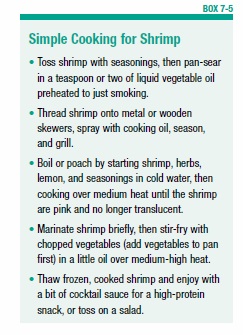
There’s no official standard for naming shrimp by size—one company’s “Jumbo” could be another’s “Large.” Instead, look for the count per pound, expressed as a range (for example, “16/20,” “21/25,” or “41/50”). Shrimp with 21 to 25 per pound, which are often labeled “Extra Large,” are a good size for cooking and serving; the higher the numbers, the smaller the shrimp. Shrimp are easy to prepare at home; for suggestions, see Box 7-5, “Simple Cooking for Shrimp.”
Spotlight: Beans—A Veggie That’s Also a Protein
Beans are the only food that the government’s Choose MyPlate puts in two different categories: the Vegetable Group and the Protein Foods Group (along with meat, poultry, and fish).
When choosing beans, you can select whatever types—black, navy, kidney, pinto, and so forth—most appeal to you, since, nutritionally, there are few important differences. Beans deliver between 6 and 8.5 grams of protein per half-cup serving, as well as soluble fiber (5 to 9.5 grams total fiber per serving), which can help reduce your body’s cholesterol levels.
One clinical trial found that healthy participants who ate one daily cup of cooked beans reduced their total cholesterol levels by eight percent. In another study that followed more than 16,000 middle-aged men in the US and other countries for 25 years, those with the highest legume consumption, including beans, were 82 percent less likely to die of heart disease.
The fiber in beans may also help encourage healthy bacteria in the lower digestive tract, which could be a reason some research has linked bean consumption to a lower risk of colon cancer. Beans’ combination of fiber plus protein also makes them a good choice for blood-sugar balance and regulation.
Eating beans can also help you get enough manganese, which is important to the body’s enzyme reactions. Beans also provide thiamin (vitamin B1), which is required for the synthesis of acetylcholine, a key neurotransmitter essential to the brain’s memory functions; low acetylcholine levels are associated with dementia and Alzheimer’s disease.
If you’re buying dried beans, look for whole, uncracked beans with no evidence of moisture or insect damage. Store in an airtight container in a cool, dry, dark place for up to a year. Pick over before cooking and remove damaged beans, small stones, or debris. To speed cooking and reduce gas production, boil dried beans in water for two minutes and then soak for two hours; alternatively, soak unboiled beans overnight in the refrigerator. After soaking beans, rinse them before cooking.
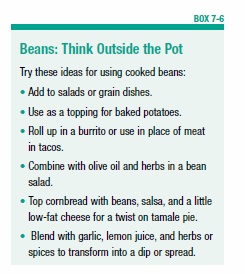
Unlike most vegetables, which lose nutrients in lengthy, high-temperature cooking, beans require such cooking to be edible. Canned, pre-cooked beans are equally nutritious; buy reduced-sodium varieties and drain and rinse thoroughly. To add more beans to your diet, include them in dishes besides chili and soup; see Box 7-6, “Beans: Think Outside the Pot” for some tips.
Spotlight: Eggs—Affordable Nutrition
Although eggs are an affordable source of protein and other nutrients, they have gotten a bad rap because the yolks are high in dietary cholesterol. But that has changed: Both the American Heart Association and the Dietary Guidelines for Americans 2015-2020 have said that it’s no longer necessary to recommend limiting dietary cholesterol to 300 milligrams daily, due to the discovery that cholesterol in food is different from the serum cholesterol in your blood, and it’s not the the source of unhealthy blood cholesterol levels.
That’s good news for nutrition: Except for fiber and carbohydrates, eggs deliver at least some of almost every important nutrient and are an exceptional source of protein. The 7 grams of protein in a large egg contain all of the essential amino acids; the World Health Organization uses eggs as the standard for evaluating the biological value of protein in all other foods.
Eggs contain small amounts of all of the B vitamins, but are most notable for choline, a nutrient usually grouped with the B-complex vitamins that is important for brain and nerve function. Most Americans get only about 300 milligrams of choline daily, short of the adequate intake (AI) of 425 milligrams (mg) for women and 550 mg for men. One large egg has about 125 mg of choline.
Although eggs are not a particularly rich source of minerals, they do contain selenium (15.3 micrograms, or 20 percent of the recommended Daily Value [DV]), which people who don’t like seafood may not get enough of. Eggs also contain iodine (24 micrograms, 16 percent of the DV), which people who don’t consume dairy products or iodized salt may lack.
Egg yolks are a source of the carotenoids lutein and zeaxanthin, which help protect your eyes against conditions such as macular degeneration. Although the amounts in eggs are relatively small, Tufts research led by Elizabeth Johnson, PhD, has shown that the carotenoids in egg yolks may be more readily used by the body than carotenoids from other foods.
The nutrients in eggs are split between the yolk and the white, with a little more than half the protein found in the white and almost all the fat in the yolk. The yolk also contains all of the carotenoids, vitamins A, D, E, and K, and most of the mineral content of the egg. The white has most of the niacin and riboflavin, while the yolk is higher in other B vitamins.
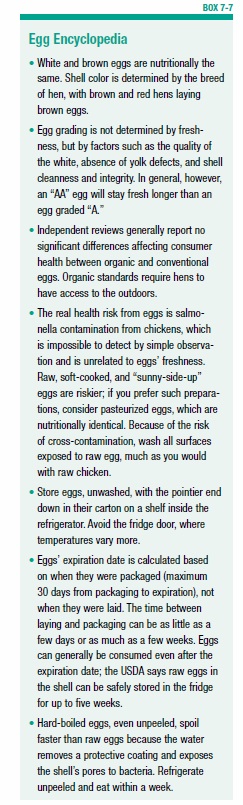
For information on buying and storing eggs and preventing foodborne illness, see Box 7-7, “Egg Encyclopedia.”
Liquid egg substitutes are made from the white only, so they have fewer calories and no fat or cholesterol. Some varieties contain added vitamins and minerals to make up for those otherwise found in the yolk; check the label.
Spotlight: Nuts—Nutritional Powerhouses
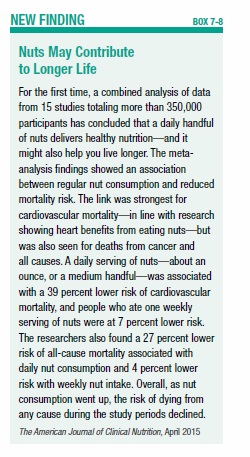
Nuts are more than just tasty snacks. Multiple studies have demonstrated cardiovascular benefits from eating nuts, especially improvements in cholesterol levels and blood-vessel function. Nuts also have antioxidant and anti-inflammatory effects, and have been found to improve insulin resistance. People who eat more nuts may even live longer (see Box 7-8, “Nuts May Contribute to Longer Life,” on page 77).
“Nuts are tiny nutritional powerhouses, which taste as good as they are good for you,” says Jeffrey Blumberg, PhD, director of Tufts’ HNRCA Antioxidants Research Laboratory. As Dr. Blumberg and colleagues noted in a review published in the Journal of Nutrition, “Nuts are an excellent source of vitamin E and magnesium [nutrients many Americans don’t get enough of]. Individuals consuming nuts also have higher intakes of folate, beta-carotene, vitamin K, lutein plus zeaxanthin, phosphorus, copper, selenium, potassium, and zinc per 1,000 calories.”
Nuts are rich in unsaturated fats, but their cholesterol benefits exceed what would be expected from heart-healthy fats alone. Nuts provide phytosterols (a type of phytonutrient), dietary fiber, and flavonoids that are also likely to contribute to cardiovascular health.
Along with nutrients, nuts are also a concentrated source of calories—160 to 200 per ounce—which is just about the amount that fits in the palm of your hand. But studies have suggested that not all of those calories may be absorbed by the body. In fact, one study actually found an inverse relationship between eating nuts and weight gain; nuts ranked second only to yogurt as a food linked to losing weight.
Instead of adding extra food, it’s always better to substitute a healthy choice like nuts for less-healthy options such as chips and cookies. Dr. Blumberg notes, “Nuts are part of the USDA MyPlate portion of protein, so you can also think about substituting them for a serving or less of red meat.”
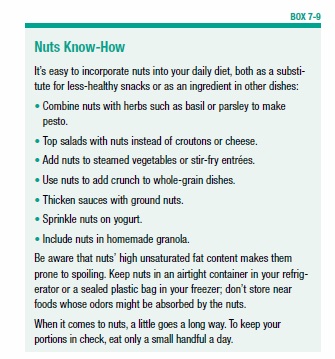
Choose whatever variety of nuts you like best, Dr. Blumberg advises, as the nutrient profiles of nuts are more similar than different. Your choices can also include peanuts, which are actually in the legume family but have nutritional properties more similar to tree nuts. For storage and serving tips, see Box 7-9, “Nuts Know-How.”
The post 7. Rethinking Protein Needs appeared first on University Health News.
Read Original Article: 7. Rethinking Protein Needs »
Powered by WPeMatico
