
6. Smart Selections in the Dairy Aisle
Dairy Pros and Cons
Tufts’ MyPlate for Older Adults includes examples of dairy products such as low-fat milk and yogurt, because these are excellent sources of nutrients you may not be getting enough of as you age. These nutrients include calcium and (in fortified dairy products) vitamin D for healthy bones, protein to keep you strong, and potassium for heart and vascular health. Dairy products such as yogurt can also help you feel full, aiding in weight control.
But dairy products do have a downside, making it important to choose wisely when shopping the dairy aisle. Full-fat milk and dairy products made with full-fat milk are high in saturated fat, which contributes to unhealthy cholesterol levels; there is some controversy over the effects of fats in dairy foods, but, at this point, it’s better to err on the side of choosing low-fat and fat-free dairy. Cutting out fat also sharply reduces calories: One cup of skim milk, for example, has only 83 calories, compared to 149 calories in whole milk. Fortunately, when the fat is removed, the nutrients remain intact; skim, 1%, and 2% milk all have as much calcium and protein as whole milk. Also make sure your dairy choices have been fortified with vitamin D—not all yogurts, for example, are good sources of vitamin D.
If you usually drink whole milk, switch gradually to fat-free milk to lower saturated fat and calories; first, try reduced-fat (2%), then low-fat (1%), and finally fat-free (skim). If you drink cappuccinos or lattes, order them with skim milk.
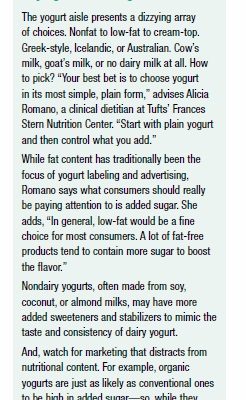
Some yogurt products also contain high amounts of added sugars, making them nutritionally more like a dessert than a healthy choice. Check the Nutrition Facts panel first: A 6-ounce container of plain, low-fat yogurt contains about 12 grams of natural sugars (from the lactose in milk), and the same serving size of plain, low-fat Greek yogurt contains about 6 grams, so numbers much higher than those indicate added sweeteners, which you can identify by checking the ingredients list (see Box 6-1, “Saying Yes to Yogurt,” for more tips on choosing the healthiest yogurt). A healthy alternative that’s also kind to your budget is to buy larger containers of plain yogurt and then customize with your own add-ins or toppings, such as fruit, nuts, and/or spices.
Benefits for Bones and Joints
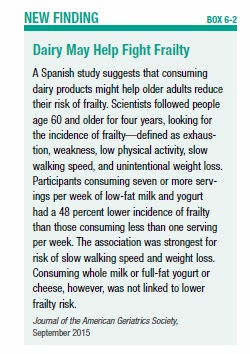
According to the USDA’s ChooseMyPlate, intake of dairy products is linked to improved bone health and may reduce the risk of osteoporosis. Consuming dairy products is also associated with a reduced risk of cardiovascular disease and type 2 diabetes, and with lower blood pressure in adults. Recent research also links low-fat dairy consumption to a reduced risk of frailty (see Box 6-2, “Dairy May Help Fight Frailty”).
Another study that included data from more than 2,000 patients with knee osteoarthritis (OA) found that consuming milk, primarily fat-free or low-fat milk, was associated with reduced progression of their OA.
In the study, researchers measured the space between bones in the knee joint—called joint space width (JSW)—with X-rays annually for four years; as OA progresses, the JSW gets narrower. In women, greater milk consumption was associated with less of a decrease in JSW, indicating slower progression of osteoarthritis. Women who averaged seven glasses of milk or more per week experienced only about two-thirds the JSW narrowing of non-milk drinkers. No significant association was observed between milk consumption and JSW changes in men. Most of the study participants who drank milk consumed low-fat or fat-free milk. No benefit was seen for other dairy products, and cheese consumption was actually linked to increased OA progression—possibly because of its high fat content.
Yogurt and Blood Pressure
Another study with good news for dairy lovers reported that eating yogurt—even just a couple of times a week—might substantially reduce your risk of developing hypertension (high blood pressure). Tufts researchers found that people who consumed at least two percent of their daily calories from yogurt were 31 percent less likely to develop hypertension over a 14-year follow-up period.
The study looked at data on 2,197 adults in a long-running study who were initially free of hypertension. Over 14 years, 913 participants developed high blood pressure. Those who ate the most yogurt—totaling more than two percent of their daily calories (equal to at least one six-ounce serving of yogurt every three days)—were significantly less likely to develop high blood pressure. Systolic blood pressure (the top number) rose less among yogurt eaters, too. When people who began taking medications for high blood pressure were excluded from the data, the apparent benefit from yogurt was
even stronger.
Consider Cheese Carefully
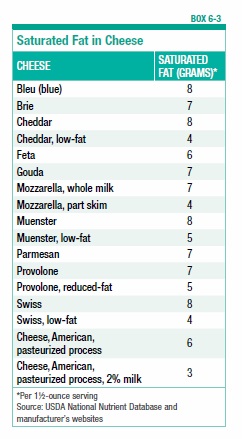
The popularity of cheese is undeniable—we use it on burgers, pizza, and sandwiches, in dips and sauces, and with crackers as hors d’oeuvres. Cheese is a good source of protein (6 to 8 grams per serving in most varieties) and calcium (most varieties provide between 200 and 450 milligrams per serving). However, if you eat regular, full-fat cheese, be mindful that one serving can eat up about 50 percent of your total recommended daily amount of saturated fat—just 16 grams for a 2,000-calorie-per-day diet, according to the American Heart Association. Most regular cheeses contain between 7 and 8 grams of saturated fat per one-and-a-half-ounce serving (see Box 6-3, “Saturated Fat in Cheese”). If you eat cheese often, opt for reduced- or low-fat cheeses, which contain 25 to 70 percent less saturated fat than full-fat versions.
Getting Enough Dairy
The scientific evidence supports consumption of dairy foods (or alternatives such as fortified soy and almond milk), since they provide calcium and vitamin D, as well as protein. Note that foods made from milk that have little or no calcium or vitamin D, such as cream cheese, cream, and butter, are not included in the recommended intake of dairy foods.
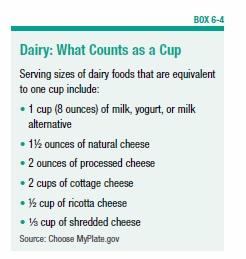
How much dairy do you need? Adult men and women of any age should aim for three cups of dairy or the equivalent per day (see Box 6-4, “Dairy: What Counts as a Cup”).
To make sure you’re including enough dairy in your diet, here are some suggestions from ChooseMyPlate:
- Include fat-free or low-fat milk or calcium-fortified milk alternatives as a beverage at meals.
- Add fat-free or low-fat milk instead of water to oatmeal and hot cereals.
- Have fat-free or low-fat yogurt as a snack.
- Make a dip for fruits or vegetables from yogurt.
- Make fruit and yogurt smoothies in the blender.
- For dessert, make chocolate or butterscotch pudding with fat-free or low-fat milk, or top cut-up fruit with flavored yogurt.
For safety, you should avoid raw (unpasteurized) milk or any products made from unpasteurized milk.
If you don’t drink milk because you can’t digest lactose, the main sugar in milk, the most reliable way to get the health benefits of dairy products is to choose lactose-free milk, yogurt, and cheese, or calcium-fortified soy, almond, or other milk alternatives.
Spotlight: Yogurt—Friendly Bacteria
Americans have reduced their milk consumption, but sales of yogurt have soared, with consumers frequently citing health benefits as the reason for purchasing more yogurt. Yogurt eaters are more likely to have lower blood pressure and lower levels of circulating triglycerides (considered an indicator of heart health) and blood sugar. Those who consume more than three servings of yogurt per week appear to be better able to manage their weight. Some studies suggest that consuming yogurt that contains “friendly” probiotic bacteria supports digestive health and may ease symptoms of irritable bowel syndrome, as well as helping treat and prevent conditions associated with antibiotic use, such as diarrhea and yeast infections.
Yogurt is also a nutrient-dense source of high-quality protein, which may be why yogurt eaters are less likely to be deficient in vitamins B2 and B12, calcium, magnesium, and zinc. The acidity of yogurt also makes it easier for the body to absorb some nutrients, including calcium, zinc, and magnesium. Another bonus is that the bacteria in yogurt break down the sugars (lactose) in the milk, making yogurt a food that can be more easily digested by those with lactose intolerance.
Yogurt is a particularly good candidate for addressing nutritional deficits with aging. Maintaining bone health is a top goal for older people, and yogurt’s rich amounts of calcium and vitamin D support that aim. Data from a large, long-term study indicate that eating more than four servings of yogurt a week is associated with greater bone mineral density and protection against hip fracture; the same was not found with similar consumption of milk or cheese.
Basically, yogurt is milk that has been fermented using bacterial cultures. For a refrigerated product to be labeled as yogurt under US Food and Drug Administration (FDA) regulations, it must be cultured using two strains of bacteria, Lactobacillus bulgaricus and Streptococcus thermophilus, although other bacteria may be included. (This criterion does not apply to frozen yogurt or “yogurt products,” such as candies or dips.) Although all yogurts begin with live bacteria, they don’t all end with them: This is because some manufacturers heat-treat their yogurt after fermentation to prolong shelf life or alter the taste, which kills the bacteria.
A trade group, the National Yogurt Association, has created a “Live & Active Cultures” seal (see Box 6-5, “Finding Live Bacteria in Yogurt”) to identify products that meet a certain threshold of the two bacteria required by the FDA. If your yogurt’s label doesn’t have this logo, it may still contain live cultures; look for names of bacteria in the ingredients list, or a blurb on the label that says something about live and/or active cultures.

The live bacteria in yogurt may affect the vast array of microbes that inhabit our intestines—and evidence is accumulating that these bacteria have an effect beyond the intestines. If the bacteria from yogurt are, indeed, able to influence the overall composition of the intestinal landscape, the result could be far-reaching, involving immune response, susceptibility to certain cancers or infectious diseases, or even cognitive functioning.
Spotlight: Greek Yogurt—Thick with Benefits
Yogurt sales are up overall, but the real boom has been in the thicker style called “Greek” yogurt. In 2008, Greek yogurt accounted for only 4 percent of US yogurt sales; today, that market share is nearing 50 percent.
Despite the name, Greek yogurt isn’t usually imported; the thicker style is simply what some Mediterranean people prefer. Greek yogurt starts out the same as regular yogurt, by adding bacteria to milk. To make it “Greek,” the yogurt is then strained to remove much of the liquid whey, leaving behind a thicker product.
That extra straining also affects Greek yogurt’s nutritional profile. Since it’s more concentrated, Greek yogurt has more protein and saturated fat per ounce, but fewer carbohydrates and sugars, since some of these are removed with the whey.
Some calcium is lost along with the whey, too. Amounts vary—check the Nutrition Facts label—but a typical plain, nonfat yogurt supplies about 300 milligrams of calcium, versus only 150 milligrams for plain, nonfat Greek yogurt.
Like other yogurt, Greek yogurt is made from milk that has not yet been fortified with vitamin D, so it’s not automatically a source of this vitamin. Some brands, however, add vitamin D to yogurt of both types.
Look for the words “active cultures,” “live cultures,” or the National Yogurt Association’s “Live & Active Cultures” seal (see Box 6-5 on page 64) on the yogurt label to make sure you’re getting probiotic benefits.
The FDA does not regulate the term “Greek yogurt,” so check ingredients carefully to make sure you’re buying the real thing. Some so-called “Greek” yogurt is actually regular yogurt that’s thickened with pectin, corn starch, and/or gelatin, rather than being strained. You may also see “Icelandic”-style yogurt, which is strained and is similar to Greek yogurt.
Greek yogurt isn’t just for snacking and spooning. Its thicker, creamy texture makes it a perfect substitute for mayonnaise, cream, or sour cream. Its acidic quality means it can stand in for buttermilk, and it works well in marinades or dips, as well as boosting the degree of leavening (how much the dough rises) in quick-bread or muffin recipes.
Spotlight: Non-Dairy Milks—Should You Switch?
Alternative types of “milk” made from soy, almonds, coconut, rice, and other plant sources have also become increasingly popular. For people who can’t digest lactose in dairy milk, opting for a plant-based alternative is a no-brainer, as plants do not contain lactose. Others have switched to non-dairy milk because they have chosen a more plant-based diet, while some people just prefer the taste.
Should you join the trend to choose non-dairy milk? Not necessarily, says Tufts’ Helen M. Rasmussen, PhD. “If you’re just looking at food to keep your body going, it’s hard to beat skim dairy milk for nutrient quality and density,” she says.
If you’re concerned about saturated fat and don’t like skim, 1%, or 2% milk, however, the alternatives might be worth a try. Soymilk (or soy milk) has 0.5 grams of saturated fat per cup, while almond milk is the lowest in saturated fat, at 0.2 grams.
Another trade-off worth calculating is protein. Soy is a good alternative to dairy milk for protein, but almond milk is much lower in protein.
Because most plant-based milk products are fortified, they deliver similar amounts as dairy milk of calcium and vitamin D for bone health. Dairy milk generally contains slightly more of other key nutrients, such as vitamin B12, phosphorus, and potassium. Calories vary between milk products, and even among types of soy and almond milk, with unsweetened varieties significantly lower—so check the Nutrition Facts label.
Soymilk: Pros and Cons
As the best-selling dairy alternative, soymilk—a milky liquid produced from pressing ground, cooked soybeans—has been most thoroughly scrutinized for its health pros and cons. The most common concern about soymilk and health centers around plant estrogens, called isoflavones, that are found in soybeans.
At one time, consuming plant estrogens was linked with the possibility of a higher cancer risk, although evidence for such concerns is mixed, and more recent research has largely dispelled these concerns. The American Cancer Society advises, “Even though animal studies have shown mixed effects on breast cancer with soy supplements, studies in humans have not shown harm from eating soy foods. Moderate consumption of soy foods appears safe for both breast cancer survivors and the general population, and may even lower breast cancer risk.” (Concerns about plant estrogens affecting sexual development or orientation, moreover, aren’t supported by any evidence in humans.)
In any case, Dr. Rasmussen advises, “Unless you’re guzzling soymilk, such concerns aren’t a deal-breaker. If you’re just using it in your coffee or on your cereal, it shouldn’t be a problem.”
Moreover, soy protein may actually fight heart disease, and studies have linked it to lower LDL (“bad”) and higher HDL (“good”) cholesterol levels. The FDA has approved a health claim stating that 25 grams of soy protein daily, as part of a healthy diet low in saturated fat and dietary cholesterol, may reduce the risk of heart disease.
On the other hand, soymilk is much higher than dairy or almond milk in phytic acid, which may reduce absorption of some minerals. Patients taking medication for an underactive thyroid (hypothyroidism) should also be aware that soy protein may inhibit the absorption of those prescription drugs. Let your doctor know if you’re making the switch to soymilk if you have any medical conditions or take any medications, so he or she can evaluate any possible interactions that may occur.
The Almond Alternative
As you eye the supermarket dairy case, the option you’re most likely to find in addition to cow’s milk and soymilk comes from almonds. To make “milk,” almonds are soaked in water until soft, and then blended with water to create a consistency similar to dairy milk; finally, any solid particles are removed.
Almond milk is low in saturated fat but contains heart-healthy mono- and polyunsaturated fats, much like the nuts from which it is made. When fortified, almond milk contains roughly as much vitamin D and vitamin A as dairy milk, and, typically, about two-thirds the amount of calcium; it has no vitamin B12, however, and less phosphorus and potassium than dairy.
Although almond milk is low in protein, its minimal calories and saturated fat make it a good choice for adults who are eating a diet that contains adequate protein and nutrients from other sources. It hasn’t been studied as much as soymilk for health benefits or downsides, although drinking almond milk may confer some of the healthy properties of eating almonds.
The post 6. Smart Selections in the Dairy Aisle appeared first on University Health News.
Read Original Article: 6. Smart Selections in the Dairy Aisle »
Powered by WPeMatico
