
3. Eat a Variety of Vegetables
Plants and Phytonutrients
When you were growing up, your mother may have told you to “eat your vegetables”—and that’s still good advice when you are older. Vegetables occupy more space on Tufts’ MyPlate for Older Adults than any other food group for good reasons. In all of the various rating systems for foods, certain groups of foods always come out on top—those that are plant-based. The health benefits are clear: People who consume more plant-based foods have a lower risk of cardiovascular disease and certain cancers.
Vegetables are excellent sources of fiber and many of the nutrients you may need more of as you age. In addition, vegetables (as well as fruits) contain natural plant compounds called phytonutrients (another common term for these compounds is “phytochemicals”). Studies have shown that these compounds have biological activity that confers health benefits, such as improving markers of chronic disease risk. Nearly all phytonutrients have antioxidant activity, but that is not necessarily their only mode of action in the body. Within cells, they may turn signals on or off, reduce inflammation, or trigger a whole cascade of events.
Thousands of different phytonutrients have been identified to date, and science continues to identify more. Experts recommend including a variety of vegetables in your diet because each provides a different array of phytonutrients. Phytonutrients work together synergistically to produce greater benefits than would result from combining the individual nutrients. This is one reason why nutrition experts advise getting nutrients from whole foods rather than supplements; the nutrients in whole foods produce an effect greater than any effect produced by getting nutrients in supplement form.
Longer Life, Less Heart Disease Risk
You don’t have to become a vegetarian to improve your diet, but studies of vegetarians provide convincing evidence of the health benefits of eating more plant-based foods. In one such study, researchers followed 73,308 adults, average age 58, for nearly six years. Participants were members of the Seventh-day Adventist church, which has long advocated a vegetarian diet. Men appeared to benefit most from adhering to any type of vegetarian diet, with a 12 percent lower risk of dying and a 29 percent lower incidence of cardiovascular mortality than men in the non-vegetarian group.
The ongoing Adventist Health Study previously reported that vegetarians tend to be at lower risk for heart disease, certain cancers, diabetes, obesity, and hypertension. The latest results showed that people who eat a vegetarian diet, along with some fish, have the lowest risk of colorectal cancer (see Box 3-1, “Pescovegetarian Diet Linked to Lower Cancer Risk”).
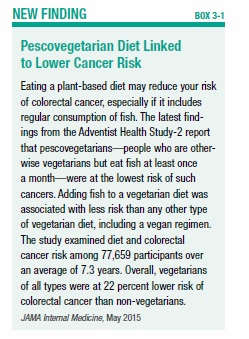
In another study, researchers examined data on 44,561 participants in England and Scotland. Among the study participants, 34 percent indicated they were vegetarians, defined as eating no meat or fish. Overall, vegetarians were 32 percent less likely to suffer ischemic heart disease (also called coronary artery disease) than non-vegetarians. The benefits were seen in recent as well as long-term vegetarians: Those who had been vegetarians for less than five years were at 30 percent lower risk, just slightly less than the 32 percent lower risk for long-term vegetarians. Vegetarians likely had reduced heart disease risk because of their lower levels of non-HDL cholesterol and lower systolic blood pressure.
Choose a Rainbow
When you think of vegetables, you probably think first of green foods; it’s no coincidence that the government’s “MyPlate” icon uses green for the wedge representing vegetables. While green vegetables deliver plenty of nutrition, they aren’t the whole story. When selecting vegetables (as well as fruits), it’s important to consume a “rainbow” of colors to ensure you’re getting a wide array of phytonutrients. Here are examples of vegetables in each color category, as well as a simple summary of their benefits from the American Institute for Cancer Research:
- Red foods (red bell peppers, tomatoes, beets, red onions) keep your heart healthy and may protect you from cancer. They also improve memory.
- Orange foods (carrots, sweet potatoes, winter squash, pumpkin) are full of vitamin C, which helps prevent cancer, as well as vitamin A and beta-carotene, which help keep your eyes and skin healthy.
- Yellow foods (yellow bell peppers, summer squash, corn) help keep your heart healthy, prevent different types of cancers, and strengthen your immune system, which helps protect you from infectious diseases.
- Green foods (broccoli, spinach, kale, lettuce, green beans, asparagus, avocados, cabbage, celery, cucumbers, sugar snap peas, zucchini) help your entire body: They give you strong bones and teeth, reduce cancer risk, boost your ability to fight off illnesses, help you see better, and keep your nails strong.
- Blue and purple foods (eggplant, purple kale, purple cabbage, some lettuce varieties) can help your memory. They contain flavonoids, a type of phytonutrient that may help reduce cancer and heart disease risk.
- White foods (cauliflower, garlic, onions, leeks, mushrooms, parsnips) help keep your heart, lungs, and blood vessels healthy. They can also lower cholesterol, fight cancer, and make your bones strong.
Supermarket Smarts
The MyPlate program serves up this advice on selecting and using vegetables:
- Buy fresh vegetables in season. They cost less and are likely to be at their peak flavor.
- Stock up on frozen vegetables for quick and easy cooking in the microwave.
- Buy vegetables that are easy to prepare. Pick up pre-washed bags of salad greens and add baby carrots or grape tomatoes for a salad in minutes. Buy packages of veggies such as baby carrots or celery sticks for quick snacks.
- Use a microwave to quickly “zap” vegetables. (Note that microwaving, much like steaming, preserves more of the nutrients in vegetables than boiling.)
- Sauces or seasonings can add calories, saturated fat, and sodium to vegetables. Use the Nutrition Facts label to compare the calories and % Daily Value for saturated fat and sodium in packaged vegetables.
- Buy canned vegetables labeled “reduced sodium,” “low sodium,” or “no salt added.”
In the rest of this chapter, we spotlight examples of vegetables that are excellent choices for helping meet your nutritional needs as you age, including tips on how to store and serve them. (We also cover foods such as tomatoes that are botanically classified as fruits but are typically sold and prepared like vegetables. Beans and other legumes will be covered in the chapter on protein foods.) Keep in mind that these are just a few examples of the many healthy choices available to you at your grocery store and farmer’s market.
Cruciferous Vegetables
If you close your eyes and think of the word “vegetable,” what image springs to mind? Odds are, it’s broccoli. When nutrition experts and moms tell us to eat more vegetables, the archetypal example on the ideal dinner plate is usually broccoli; it’s probably the best-known of the “cruciferous” vegetables (named for their cross-shaped flowers).
Those little green “branches”—the word broccoli derives from the Latin brachium, meaning “branch” or “arm”—are nutritional powerhouses. Just one 54-calorie cup of cooked broccoli delivers:
- 5 grams of fiber
- 4 grams of protein
- 50 percent of daily vitamin A
- 170 percent of daily vitamin C
- 23 percent of daily folate
- 505 milligrams of potassium.
Broccoli also packs significant amounts of riboflavin, vitamin B6, and iron. It’s a good source of lutein, which has been shown to help protect aging eyes. Broccoli stems as well as florets are nutritious, although the florets are higher in phytonutrients that may have cancer-fighting properties. Cooking sacrifices some of broccoli’s vitamin C, but the trade-off is that cooking makes its beta-carotene and lutein more readily absorbed by your body.
Young broccoli is best, before the plant converts too much sugar to lignins—which cooking can’t tenderize—and begins to smell “cabbage-y.” For best flavor as well as nutrition, look for firm, slender, almost snappable stems, and tightly packed, dark-green florets with no trace of yellow. Refrigerate broccoli when you get home from the grocery store; wait until you’re ready to use it before washing to forestall mold. Frozen broccoli tends to have a less appealing texture than fresh, but, if it’s mostly florets, its beta-carotene content is actually higher than fresh. If you’re cooking stems and florets together, split the stems about halfway up to speed cooking, or add the florets after the stems have a head start.
Brassica Benefits
All cruciferous vegetables, which belong to the botanical genus Brassica, bring a bunch of nutrients to the table that offer a wide range of health benefits. The plant compounds that give cruciferous vegetables their sometimes-bitter taste act as natural pesticides and discourage herbivores. In the human digestive system, the very compounds that make, say, cooked cabbage smell unpleasant break down into beneficial chemicals with long names like indole-3-carbinol and 3,3’-diindolylmethane. These are being studied for possible effects against cancer as well as infections, inflammation, and arterial plaque.
One study found that people who ate cruciferous vegetables at least weekly had a 72 percent lower risk of lung cancer than those who seldom ate them. Another study showed that nonsmokers who ate three or more monthly servings of raw cruciferous vegetables had a 73 percent reduced risk of bladder cancer than those who ate the least.
Cauliflower Calling
Not all cruciferous veggies are green; the other mainstay of the cruciferous family is cauliflower. One cup of cooked cauliflower contains:
- 3 grams of fiber
- 2 grams of protein
- 90 percent of daily vitamin C
- 14 percent of daily folate
- 13 percent of vitamin B6
- 176 milligrams of potassium.
Cauliflower comes in the traditional white as well as purple, an antioxidant-rich variety that turns green when cooked, and orange, which adds vitamin A to the equation and tastes more squash-like. Look for cauliflower that’s free of bruises and spots, firm, and compact; any leaves should be crisp and green.
If you boil cauliflower in water, be gentle: Heat diminishes its vitamin C content, and its B vitamins leach into the cooking water. Roasting, although hard on vitamin C, brings out an earthy sweetness that may appeal to people who think they don’t like cauliflower. The most popular way to serve cauliflower—smothered in cheese sauce—adds enough calories and saturated fat to outweigh its nutritional advantages and overwhelm its mere 29 calories per cup.
More Veggie Variety
Branching out a bit further in the produce aisle, you can discover a cartload of veggies that don’t share the florets of broccoli or cauliflower but are cruciferous—and nutritious. Brussels sprouts are high in potassium and a source of thiamin, riboflavin, and B6, antioxidant flavonoids, and potentially cancer-fighting phytonutrients. Pick bright-green sprouts with no cabbage-y odor; smaller sprouts are more tender and less likely to have the bitterness that makes people think they hate Brussels sprouts. Steam Brussels sprouts, braise them in a flavorful liquid such as stock, toss them with olive oil and roast, or lightly steam them and skewer as components in a grilled shish kabob.
Other good cruciferous choices include cabbage, bok choy, and kohlrabi. “Cooking greens” to consider include Swiss chard, collard greens, mustard greens, and turnip greens.
Spotlight: Kale—Vitamin K and Cancer Protection
The cruciferous family also includes kale, which may well be the “it” vegetable of the moment, celebrated in everything from cooking magazines to health websites. But, unlike some food fads, this nutritious, leafy green deserves the attention it’s suddenly getting: With a mere 36 calories, one cup of cooked kale delivers five grams of fiber, 200 percent of your daily vitamin C, 180 percent of vitamin A, and 40 percent of magnesium. It’s packed with at least 45 antioxidant flavonoids. Like its cruciferous-vegetable kin, it contains glucosinolates—sulfur compounds associated with a reduced risk of cancer.
One distinguishing feature of kale is its content of the important yet often-overlooked vitamin K—one cup contains more than 10 times the recommended daily value. Sarah L Booth, PhD, director of Tufts’ HNRCA Vitamin K Laboratory, says, “Among the emerging functions we’re discovering for vitamin K are bone health, cardiovascular health, reducing inflammation, cognitive health, and reducing risk for diabetes. All of these functions are still exploratory, however.”
Kale is unusually rich in one of the two main dietary forms of vitamin K, phylloquinone, or vitamin K1. (Vitamin K2, menaquinone, is found in animal foods and fermented foods.) A cup of fresh kale contains 215 micrograms of vitamin K, more than any other vegetable except collard greens. (If you take warfarin, the most common anticoagulant medication, avoid major changes in your consumption of vitamin K-rich foods, including kale, unless you first consult your doctor; an increase in vitamin K can decrease the effectiveness of the medication. If you take warfarin, try to consume about the same amount of vitamin K each day, and be sure to have regular blood tests to monitor your warfarin levels.)
The fiber in kale is good for your digestive system, and it also benefits your arteries. Research has shown that fiber-related nutrients in kale help the liver and intestines bind cholesterol and carry it out of the body. Although raw kale can help lower cholesterol, kale is especially effective when it’s been steamed for five minutes.
Kale is typically available year-round. You’ll find three common varieties:
- Curly kale, with ruffled, deep-green leaves and a pungent, bitter, peppery flavor.
- Dinosaur kale, also called Tuscan or Lacinato kale, with textured, dark blue-green leaves and a sweeter, more delicate flavor that kale newcomers might prefer.
- Ornamental kale, which is edible despite its name, is also called salad savoy. Its leaves may be purple, pink, red, yellow, cream, and/or green, and it has a mild flavor and tender texture.
Select firm, deeply colored leaves with sturdy stems, free of wilting or discolored spots; smaller leaves tend to be milder in flavor. The Environmental Working Group rates kale as one of the vegetables most prone to pesticide residue, so you may want to consider buying organic. Store unwashed kale in a zip-top plastic bag in the refrigerator and use within five days, as kale’s nutrient content declines rapidly (see Box 3-2, “10 Ways to Use Kale”).

How Green Is Your Salad?
The other most common green vegetables on the American plate are salad greens: Lettuce ranks behind only potatoes and tomatoes among the most popular vegetables. A nice, big salad can go a long way toward your recommended two to three cups (depending on your age and gender) of daily vegetables; count every two cups of raw, leafy greens as one cup toward that goal.
If you dress your greens in a homemade vinaigrette (see Box 3-3, “Basic Vinaigrette”), you will save money, get heart-healthy unsaturated fats, and avoid the salt, sugar, and saturated fat often found in pricey bottled dressings. Try topping your salad with a few chopped or sliced nuts—not too many, as they’re calorie-dense—and other veggies (onions, peppers, carrots, cucumbers) or fruit (berries, chopped apples, or pears) for an extra nutrition boost.

Unfortunately, Americans’ favorite choice of salad green—iceberg lettuce—is the least nutrient-dense option. The pale color of iceberg lettuce is your tipoff that it’s lacking when compared to other lettuce varieties. Leafy greens are good for you because they contain the energy-converting machinery and protective pigments of plants, so, in general, the more colorful, the better.
Deeply-colored greens are higher in vitamins A, C, and K, beta-carotene, the carotenoids lutein and zeaxanthin, calcium, folate, and fiber. Green and red leaf lettuce, for example, contain nearly 15 times as much vitamin A as iceberg lettuce, 6 times the vitamin K, almost 20 times the beta-carotene, and 6 times the lutein and zeaxanthin. Other popular varieties, such as Romaine, Bibb, and Boston lettuce, outshine iceberg almost as much and exceed leaf lettuce in some nutrients. Broadening your selection even further and including greens such as radicchio and arugula can turn your salads into nutritional stars.
Greens other than iceberg also score higher in measures of phytonutrients. Among popular lettuce varieties, red leaf delivers the most, followed by green leaf and Romaine, butterhead (includes Bibb and Boston), and, finally, iceberg.
Spinach deserves special mention here, as it delivers a load of nutrients in salads as well as in cooked form. Popeye was right about the power of spinach–it’s among the healthiest vegetables of any type. Two cups of raw spinach deliver more than 25 percent of your daily value for vitamins A, C and K, folate, and manganese. Baby spinach is more tender and blends more readily into mixed salads.
For practical tips on keeping your greens fresh and free of harmful bacteria, see Box 3-4, “Safe Handling and Storage of Greens.”

Spotlight: Carrots—Not Just for Eyes
You probably think of carrots as veggies for your eyes, but researchers have found that these familiar vegetables may also reduce your risk of chronic disease. In one medium carrot, for just 25 calories, you get 1.7 grams of fiber (6.8 percent of the Daily Value [DV]), 195 milligrams of potassium (5.6 percent of the DV), 3.6 milligrams of vitamin C (6 percent of the DV), and smaller amounts of calcium, zinc, and magnesium. The fiber in carrots includes pectin, which may have cholesterol-lowering properties.
Carrots are best known as a good source of vitamin A, mostly in the form of beta-carotene. A single medium carrot delivers almost twice the recommended daily value of vitamin A, which is associated with carrots’ most celebrated health benefit—protecting your vision.
One study found that women who ate more carrots had lower rates of glaucoma, and animal studies have linked nutrients in carrots to a reduced risk of cataracts.
Like all healthy foods, carrots are much more than just the sum of their individual nutrients. One study linked consumption of deep-orange fruits and vegetables—especially carrots—to a lower risk of coronary heart disease.
Phytonutrients found in carrots called polyacetylenes, including the compounds falcarinol and falcarindiol, have also attracted scientific interest for possible cardiovascular benefits. These compounds are thought to have anti-inflammatory properties and to keep blood cells from clumping together. Other studies are investigating these compounds’ ability to inhibit the growth of cancer cells.
Different-colored carrots contain different beneficial phytonutrients. Red carrots are high in lycopene, while purple carrots get their color from anthocyanins, much like berries.
Choose brightly-colored carrots that are smooth, firm, and relatively straight. Contrary to what you might expect, larger carrots are sweeter, as they’ve had more time to develop natural sugars. If tops are attached, look for bright, feathery, unwilted greens; remove the tops when you get home, as they will extract moisture and nutrients from the carrot roots.
Store carrots in the coolest part of the refrigerator for about two weeks, wrapped in a damp paper towel and placed in an airtight container or bag. Keep carrots away from foods such as apples, pears, or potatoes that release ethylene gas—the gas will cause the carrots to become bitter and to spoil more quickly. Wash carrots thoroughly before using.
If you buy organic carrots, it’s not necessary to peel them, and some studies have found that the peel is richest in nutrients. (If you’re watching your budget, however, carrots are not on the Environmental Working Group’s “Dirty Dozen” list, which names the types of produce that have the highest pesticide residue, even after the food has been washed.) A few tests have also suggested that cutting or chopping carrots after cooking, rather than before, preserves more nutrients.
While cooking destroys some heat-sensitive nutrients, such as vitamin C, it helps make others more readily absorbed by the body. Steaming or microwaving carrots, rather than boiling them, results in less nutrient loss. Roasting carrots brings out their natural sweetness.
Spotlight: Tomatoes—Heart Health, Cancer Protection
Though tomatoes are botanically classified as a fruit (technically, a berry), they are popularly considered a vegetable. A cup of chopped tomatoes provides more than 10 percent of your recommended daily value of vitamin C, vitamin K, copper, potassium, and manganese, with only 30 calories. Their high potassium content may explain why tomato consumption has been associated with a reduced risk of cardiovascular disease. One cup also contains 2.2 grams of fiber—more than some breakfast cereals.
Tomatoes are an important source of phytonutrients, including the flavonols quercetin and kaempferol, which are found primarily in the skin, as well as the carotenoids beta-carotene and lycopene.
Lycopene, an antioxidant carotenoid that gives tomatoes their rich, red color, may also contribute to cardiovascular protection. In one study, high levels of lycopene in the blood were associated with a lower risk of stroke in men. In another study, tomato juice consumption was shown to reduce markers of inflammation in overweight and obese women; inflammation is associated with an increased risk of chronic diseases related to obesity, including cardiovascular disease and cancer.
Lycopene may also improve cholesterol and triglyceride levels. By countering the aggregation of platelets in the blood, lycopene and other tomato compounds may reduce the risk of atherosclerosis (hardening of the arteries).
Tomatoes are the richest dietary source of lycopene, providing about 80 percent of the lycopene in the typical diet. Cooked tomatoes, including canned and other processed products, are actually a better source of lycopene than raw tomatoes, because heat breaks down the cell walls in the tomatoes and releases the lycopene. Because lycopene is fat soluble, combining tomatoes with a little olive oil or other healthy fat makes it easier for your body to absorb.
Lycopene may also be key to tomatoes’ possible anti-cancer benefits. In one study, after 10 weeks of a tomato-rich diet containing at least 25 milligrams of lycopene daily, concentrations of a hormone called adiponectin increased, especially among non-obese women. Higher adiponectin levels have been associated with a reduced risk of breast cancer. In another study of nearly 50,000 male health professionals, those who consumed the most lycopene over a 23-year span had a 23 percent lower risk of lethal prostate cancer than those who consumed the least lycopene.
Tomatoes are also a good source of lutein and zeaxanthin, two other phytonutrients that have been associated with protection against age-related macular degeneration.
Look for smooth, unblemished tomatoes with a sweet fragrance and no signs of puffiness. If you’re concerned about pesticides, the Environmental Working Group does list cherry tomatoes—but not other varieties—in its “Dirty Dozen” of the most pesticide-prone fruits and vegetables.
Store fresh tomatoes in a cool, dark place like a pantry—not in the refrigerator, where cell walls and volatile flavor compounds will break down. Tomatoes that must be refrigerated to prevent spoilage can still be used in a sauce; try putting them back out on the counter for a day first before cooking them.
Spotlight: Avocados—Good Fats for Better Cholesterol
Not so long ago, avocados were a seasonal delicacy in most of the country, and, when they were available, their high fat content scared away health-conscious consumers. With loosened import rules from Mexico, however, sales of Hass avocados (about 95 percent of avocados in the US market) have more than doubled in the past decade.
It’s not just a growing taste for guacamole that’s pushing avocados to record popularity. Consumers are increasingly aware that not all fat is harmful: Of the 18.6 grams of fat in a typical avocado, only 2.9 grams are unhealthy saturated fat; the rest is heart-healthy unsaturated fat—primarily monounsaturated fat (13.3 grams). Think of the fats in this healthy fruit (yes, avocados are technically a fruit) as similar to those in olives (also botanically a fruit).
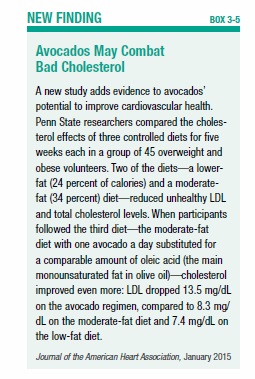
Research suggests that the unsaturated fats in avocados may have cardiovascular benefits (see Box 3-5, “Avocados May Combat Bad Cholesterol”). Avocados are also good sources of several B vitamins, dietary fiber, potassium, copper, carotenoids, and vitamins C, E, and K. However, consume avocados in moderation—one cup of avocado slices contains 230 calories, a much higher calorie count than most other vegetables.
Adding an avocado to other vegetables, such as the leafy greens in a salad, can also help you absorb carotenoid compounds such as beta-carotene from those foods. One study found that topping salads with avocado boosted carotenoid absorption by three to five times.
Research indicates that avocados may also be beneficial for your joints. Avocados contain compounds called unsaponifiables (ASUs), and ASUs derived from avocado and soybean oils are being tested as a treatment for osteoarthritis. One study found that avocado-soybean ASUs improved symptoms of hip and knee arthritis and reduced the need for anti-inflammatory drugs, and another study reported that ASUs significantly reduced the progression of hip arthritis over a three-year period.
Like bananas, avocados will ripen at room temperature after purchase, so you can choose less-ripe fruit that is firmer and less likely to be bruised. As an avocado ripens, the skin darkens and the interior softens. Ripe avocados can be kept in the refrigerator for as long as a week. Spritz avocado halves or slices with lemon juice or vinegar to prevent browning and wrap tightly. Peel avocados carefully, as the greatest concentration of carotenoid compounds is in the dark-green flesh immediately under the skin.
Spotlight: Onions—Peeling Powerful Nutrition
Onions are in the allium family and are related to garlic, which has been more extensively studied for health benefits in humans. Onions are a good source of vitamin C, potassium, and dietary fiber; they are also among the richest sources of quercetin, a flavonoid with antioxidant and anti-inflammatory benefits.
Organosulfur compounds in onions are released by cutting or crushing; in garlic, these compounds have been associated with cancer protection, improved cholesterol levels, and decreased stiffness in blood vessels. It may be that allowing onions to sit for a few minutes after cutting, prior to cooking, helps preserve these beneficial compounds, as has been demonstrated in garlic.
Research has shown that the more pungent, stronger-smelling onions, which are highest in sulfur compounds, exhibit anti-platelet activity. Scientists suggest that eating onions might help prevent platelet aggregation, which may reduce the risk of atherosclerosis, stroke, and heart attack. Generally, yellow and red onions are highest in beneficial compounds, while milder (sweet or Vidalia) varieties are lowest.
Those sulfur compounds, as well as quercetin, may be responsible for onions’ apparent cancer-protective effects. Moderate onion consumption has been associated with a lower risk of colorectal, laryngeal, and ovarian cancers, and daily onion intake has been linked to a reduced incidence of esophageal and oral cancers.
Other properties of onions seem to improve the health of your gastrointestinal tract. In particular, onions may combat Heliobacter pylori, the microorganism that contributes to ulcer formation. (It’s true, however, that if you suffer from heartburn, onions may aggravate the condition.)
Onions may even help protect your bones as you age. In animal studies, researchers reported that onion consumption increased the mineral content of bones, and a study of women age 50 and older found that those who consumed onions most frequently were at 20 percent lower risk of hip fracture versus those who seldom ate them.
When selecting dry bulb onions, look for those that are firm and have little or no smell. Avoid any with cuts, bruises, or blemishes. Onions are among the produce least prone to pesticide contamination, so choosing organic is optional.
Store unpeeled onions in a cool, dry, dark place to better preserve their antioxidant compounds. Allow for air circulation around the onions and do not store in plastic bags. Peeled or cut onions should be refrigerated in sealed containers for up to a week.
Peel your onions carefully, as the flavonoids tend to be more highly concentrated in the outer layers; don’t “overpeel” and lose these healthy compounds.
Spotlight: Sweet Potatoes—Colorful Alternatives
Sweet potatoes can be found in a range of colors from pale orange to deep red and purple. At 180 calories per one cup of cooked sweet potato and an average cost of around $1 per pound, sweet potatoes won’t break the scales or the bank account. With a whopping 7 grams of fiber in that one cup (versus 2 grams in a white potato), sweet potatoes excel at satisfying hunger as well as staving off its return).
High-fiber foods can also help regulate blood glucose levels, which is especially important for people who have diabetes. With a glycemic load of only 17, one serving of sweet potatoes is a smart stand-in for starchy foods made from white flour, such as pasta or bread, that cause more dramatic swings in blood glucose.
Another heart-healthy reason to eat sweet potatoes is their potassium content—950 milligrams in one cup. You’ll also get 65 percent of the recommended daily value of vitamin C per cup and almost a third of your vitamin B6.
The rich, deep color of sweet potatoes indicates a high concentration of carotenoids, including lutein and beta-carotene. One cup contains enough beta-carotene to produce a staggering 769 percent of the daily value of vitamin A.
Researchers are also now looking at sweet potatoes as a source of anthocyanins, phytonutrients that give fruits and vegetables a red or blue color. Anthocyanins are being investigated for protective effects against diseases ranging from diabetes to neurological degeneration to various cancers.
When cooking sweet potatoes, leave the skins on—that’s where the lion’s share of the phytonutrients are located. Sweet potatoes can be baked or roasted, but some data suggest that boiling them (with the skin on) results in the best conservation of nutrients and the lowest impact on blood glucose levels.
The post 3. Eat a Variety of Vegetables appeared first on University Health News.
Read Original Article: 3. Eat a Variety of Vegetables »
Powered by WPeMatico
