
Aging Eyes Face Unique Night‑Driving Challenges
If you find driving at night more difficult than it used to be, you’re not alone. Many women in their 50s and beyond face night-driving challenges due to age-related changes in vision. These difficulties can make nighttime outings feel stressful or even unsafe. Maintaining the ability to drive at night is key to preserving your mobility and independence. Addressing night-vision problems early can make a big difference in feeling safe and confident behind the wheel after dark.
Among older adults who reported vision issues, 49 percent cited difficulty seeing at night, according to an AARP survey. Night driving issues are especially relevant to older women. First, older women are more likely to experience dry eyes, which can worsen nighttime vision. Additionally, women tend to live longer than men and may maintain their driving independence later in life, making awareness of these challenges essential for safety.
Common Night-Driving Issues
“Night vision problems can be caused by a variety of factors, including refractive errors, cataracts, dry eyes, and other age-related changes in the eye. While some issues like refractive errors can be easily addressed with an updated eyeglass prescription, more serious conditions like cataracts may require surgery,” says Leila Rafla-Demetrious, MD, assistant professor of ophthalmology at Weill Cornell Medicine. Refractive error is the clinical term for when the eye can’t focus light properly, causing blurry vision. “If you’re having problems with night vision, you should get a proper checkup with an ophthalmologist to rule out any serious ocular conditions,” she says.
As we age, our pupils shrink and don’t dilate as much in low light. This reduces the amount of light entering the eye, making it harder to see clearly—and drive safely—in the dark. Another key issue that can impact night driving is glare sensitivity. Glare sensitivity, which is often caused by cataracts, can make oncoming headlights or streetlights feel blinding, impairing focus on the road. Cataracts, which are a common condition in people over 50, cloud the eye’s lens and scatter light, worsening night vision and increasing glare.
Dry eyes can also be a major impediment to driving at night. Postmenopausal hormonal changes often lead to decreased tear production, and this can cause discomfort and blurry vision, especially in the glare of oncoming headlights. “To help alleviate dry eye, I often recommend the use of preservative-free artificial tears,” says Dr. Rafla-Demetrious. Artificial tears that contain preservatives can be irritating especially if they are used several times throughout the day.
“Using regular artificial tears (containing preservatives) more than four times a day can lead to irritation and possibly worsen dry eye symptoms,” says Dr. Rafla-Demetrious.
Steps You Can Take
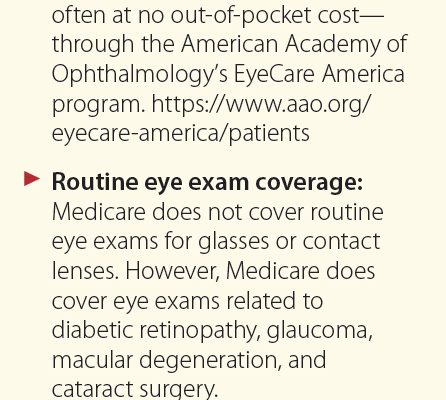
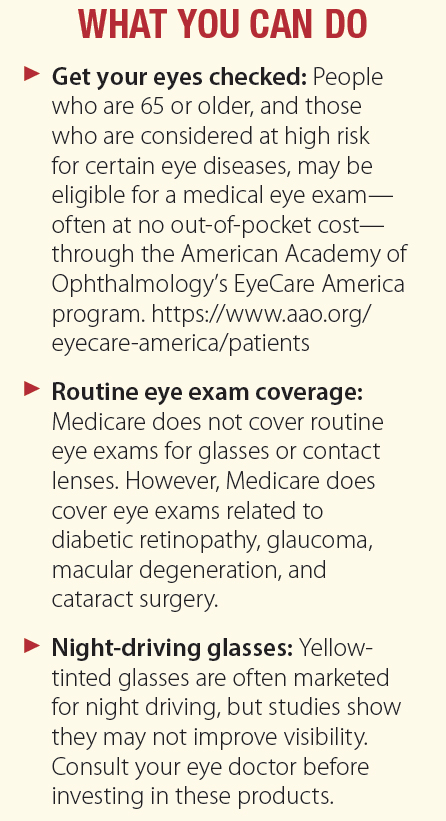
There are steps you can take to improve your night-driving experience. The American Academy of Ophthalmology emphasizes the importance of regular eye examinations to detect and address any vision changes that could impact driving safety. Visit your eye doctor annually to check for conditions like cataracts, glaucoma, or macular degeneration. “It’s important for those experiencing night vision problems to thoroughly describe their specific symptoms and when those symptoms occur for the ophthalmologist or optometrist to develop an appropriate treatment plan,” says Dr. Rafla-Demetrious.
Other things you can do to improve night driving include:
Update your eyewear: If you wear glasses, ensure your prescription is up to date. Consider anti-reflective coatings, which can reduce glare from headlights and streetlights.
Minimize glare: Keep your windshield and mirrors clean to prevent light scatter.
Increase your following distance: Putting more space between you and the car in front of you gives you more time to react to unexpected hazards.
Avoid driving when tired: Fatigue can worsen your ability to process visual information. Ensure you’re well-rested before heading out.
Consider cataract surgery: If cataracts significantly affect your vision, consider surgery to replace the cloudy lens with a clear artificial one; this can greatly enhance night driving.
Regular Eye Exams
If night driving continues to be a struggle, make an appointment with an ophthalmologist or optometrist. “Night-driving difficulties can significantly impact independence, especially as we age. Issues like glare sensitivity and slower adaptation to darkness are common, but with regular eye exams and proper vision care, these challenges can be managed to help people stay safe and confident behind the wheel,” says Dr. Rafla-Demetrious.
The post Aging Eyes Face Unique Night‑Driving Challenges appeared first on University Health News.
Read Original Article: Aging Eyes Face Unique Night‑Driving Challenges »
