
If You Drink Alcohol to Cope, Behavioral Therapy Can Help
There’s nothing wrong with enjoying a glass of wine or a cocktail in social situations or when relaxing at home alone. But for women who consistently consume more than one or two drinks a day, a pattern of alcohol overuse can lead to dependency over time, affecting behavior, relationships, and health. Read on to learn how much is too much, and how behavioral therapy can help replace overuse with moderation.
When considering the physical and mental implications of drinking alcohol, it’s important to understand what “moderate drinking” means, and how alcohol can affect you as you age. The Centers for Disease Control and Prevention (CDC) recommends that women limit alcohol consumption to one standard drink per day.
A standard drink is about 5 ounces of wine, 12 ounces of beer, or 1.5 ounces of distilled spirits like vodka or whiskey. How does this compare to what women in the U.S. actually drink? Research shows that while many women fall comfortably within these guidelines, a significant number exceed them, with studies suggesting that up to 20 percent of women report occasionally drinking four or more drinks in a single sitting—which is considered binge drinking, according to the CDC.
Aging and Alcohol
As women age, our bodies process alcohol differently. Factors like lower body water content, slower metabolism, and hormonal changes can make alcohol more potent and its effects longer lasting. Over time, habitual alcohol consumption can lead to serious health problems. One major risk is liver damage, as the liver becomes less efficient at metabolizing alcohol with age. Alcohol is also a significant factor in heart health. Overuse can increase blood pressure, cause irregular heart rhythms, and raise the risk of heart failure. Additionally, heavy drinking weakens bones, increasing the likelihood of fractures, and can impair cognitive function, contributing to memory loss or dementia.
Drinking as a Coping Mechanism
Drinking tends to start as a social activity, but may escalate into a coping mechanism for stress, loneliness, or life changes such as retirement or loss of a life partner. “Since the pandemic, I’ve been aware of an uptick in alcohol consumption in all patients, including older women. Alcohol was increasingly used during the pandemic to manage feelings of loneliness, isolation, anxiety, and sadness,” says Susan Evans, PhD, professor of psychology in clinical psychiatry at Weill Cornell Medical College. “While some women may be reluctant to discuss alcohol overuse—or deny it—I am seeing more women presenting with the goal of cutting down on drinking.”
One approach that is helpful for women who want to reduce their alcohol use is cognitive behavioral therapy (CBT). “CBT brings increased awareness to maladaptive thinking and behavior that relates to patterns of drinking, and helps to develop positive coping strategies,” says Dr. Evans. “Women who are tired of alcohol’s negative effects on mood, sleep, anxiety, and physical health—including weight gain—and want to address the problem benefit from CBT. Generally, the response to therapy is positive because the person experiences an improved sense of control and autonomy over their lives,” Dr. Evans says.
Alcohol-Free for a Month
To gain insight into the impact that alcohol has on you, consider going alcohol free for 30 days. Research shows that going without alcohol for one month can improve sleep, energy levels, and blood pressure, and can contribute to weight loss. If giving up alcohol for 30 days is a struggle, discuss it with your health-care provider. “Your primary care doctor may refer you to a cognitive behavioral therapist who will help you gain further understanding of the adverse effects of over-drinking, explore motivations to reduce or stop drinking, and guide you through a realistic plan,” says Dr. Evans. “Motivational interviewing (MI) is a therapeutic approach that many CBT therapists use to help strengthen motivation and commitment to reduce or stop drinking. Twelve-step programs and moderation management programs can also be enormously helpful,” she says.
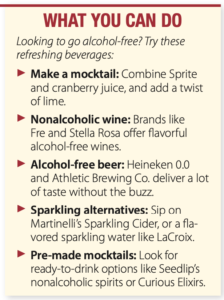
Keeping a journal of how much you drink or swapping alcoholic beverages for “mocktails”can help maintain balance. If you need help modifying your drinking habits, a health-care provider can point you in the right direction.
The post If You Drink Alcohol to Cope, Behavioral Therapy Can Help appeared first on University Health News.
Read Original Article: If You Drink Alcohol to Cope, Behavioral Therapy Can Help »
