
Iron Deficiency May Signify the Presence of a Serious Medical Issue
One of the most common signs of anemia is feeling tired even when you get enough rest. Many women dismiss this as a normal part of aging or a consequence of a hectic lifestyle, but it could indicate something far more serious. For example, iron deficiency anemia (IDA) can signify the presence of colon cancer. IDA can occur when someone doesn’t get enough iron due to blood loss or poor iron absorption. Symptoms of IDA, such as fatigue, paleness, and shortness of breath, warrant a thorough medical evaluation so their cause can be identified, and an appropriate diagnosis and treatment plan can be established.
Colon Cancer Connection
IDA is the most common symptom of colon cancer that occurs outside of the intestines. This cancer can make the body use iron faster than usual, reduce the absorption of dietary iron, and cause bleeding over time. The diagnosis of IDA often begins with anemia detected on a blood test, leading to further investigation into the underlying cause. If a woman presents with IDA and additional gastrointestinal symptoms, doctors will typically perform further diagnostic tests, such as colonoscopy, fecal occult blood test, or imaging scans, to investigate the possibility of colon cancer. “Iron deficiency in any postmenopausal woman should be considered colon cancer until it’s proven that it isn’t colon cancer,” says Keith Roach, MD, associate professor of clinical medicine at Weill Cornell Medicine. “The first step is to review any recent colonoscopy results and order a new one if it has been more than a few years.”
Initial symptoms of IDA include fatigue or weakness, and pale skin, gums, or nail beds due to low red blood cell count. Other symptoms include dizziness or lightheadedness caused by low iron levels; cold hands and feet due to poor circulation because of a lack of hemoglobin in the blood; and unusual cravings (Pica) for non-nutritive substances like ice, dirt, or starch.
Other Causes of Iron Deficiency
Other possible causes of iron deficiency include celiac disease, Crohn’s disease, and pernicious anemia, which all affect nutrient absorption. “Iron deficiency can go one of two ways. You’re not getting enough iron in or you’re putting too much iron out. Not getting enough in can happen to people who are strict vegans or in cases where it’s not being absorbed properly,” says Dr. Roach. “The most common iron absorption problem is celiac disease, but Crohn’s disease can also affect absorption. Crohn’s disease is a double whammy because it can also cause you to lose blood.”
Pernicious anemia is an inability to absorb vitamin B12 efficiently. “It’s an autoimmune disease that affects the cells in the stomach that make a protein called intrinsic factor. Without that, the body can’t absorb vitamin B12,” says Dr. Roach. “When you have vitamin B12 loss it looks different on a blood smear. Two people will have anemia, but in the person who has IDA the blood cells are small and pale, whereas in the person who has pernicious anemia, the blood cells are red and very large. It’s easy to spot the difference on a blood smear.”
Sources of Blood Loss
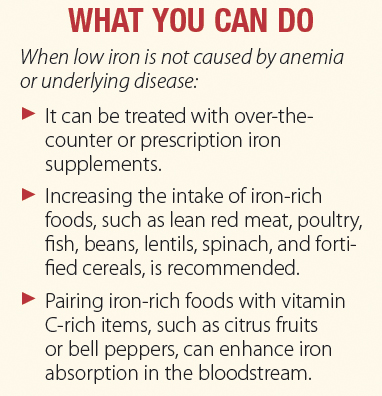
Other sources of chronic blood loss include gastrointestinal bleeding from ulcers or the use of nonsteroidal anti-inflammatory drugs (NSAIDs), or heavy menstrual bleeding in perimenopausal women. Iron deficiency and anemia are also closely linked to diabetes and can have a negative impact on glycemic control and diabetes management. Preventing iron deficiency typically focuses on replenishing iron stores and addressing any underlying causes that might contribute to the deficiency. The first line of treatment for iron deficiency usually involves taking oral iron supplements, such as ferrous sulfate, ferrous gluconate, or ferrous fumarate. If oral iron supplements are not well tolerated, are ineffective, or if iron deficiency is severe, intravenous (IV) iron therapy may be prescribed. This method delivers iron directly into the bloodstream, which can quickly restore levels.
Medical Evaluation
If you feel tired even though you get sufficient rest, schedule a visit with your health-care provider. A thorough evaluation will result in a clean bill of health, a plan for iron supplementation, or a diagnosis that can be the first step on the path to necessary treatment and, ideally, recovery.
The post Iron Deficiency May Signify the Presence of a Serious Medical Issue appeared first on University Health News.
Read Original Article: Iron Deficiency May Signify the Presence of a Serious Medical Issue »
