

Keep Your Mind Vibrant with Brain Exercises and Games
As we age, safeguarding our brain health becomes crucial, especially as diminishing estrogen levels can heighten the risk of cognitive decline in postmenopausal women. Engaging in brain exercises can be an enjoyable and effective way to maintain mental sharpness. From online games that enhance memory, concentration, and problem-solving skills to real-life activities such as puzzles and educational classes, there are numerous ways to keep your mind active and alert. This article presents a variety of options from which to choose to help maintain cognitive fitness.
Virtual Brain Exercises
Brain exercises can be an excellent way to maintain and enhance cognitive function. For instance, the Advanced Cognitive Training for Independent and Vital Elderly (ACTIVE) study found that older adults who engaged in cognitive training activities showed improvements in memory, reasoning, and processing speed that lasted up to 10 years.
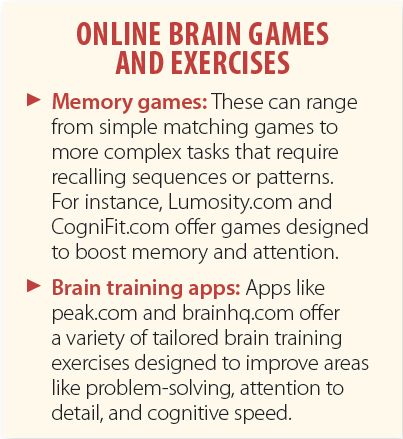
There are numerous online brain games and exercises, such as Lumosity and BrainHQ, that are designed to help keep the aging brain limber. They are user friendly and allow people to track their progress over time, which can be motivating and rewarding. Most offer free games and puzzles, with an option to upgrade to additional activities for a fee.
Real-Life Brain Exercises
Challenging fine motor skills through hobbies like knitting or assembling jigsaw puzzles can keep the brain active. These pursuits also require hand-eye coordination, which strengthens neural connections. “These activities can improve concentration, which can be associated with improved memory. The better someone can attend to a task and acquire information, the more likely they will remember it later on,” says Lisa D. Ravdin, PhD, associate professor and director of the Weill Cornell Medicine Neuropsychology Service. Taking up painting is another example of an endeavor that bolsters creativity and aids in maintaining focus and precision. “These activities have the added benefit of reducing stress and promoting relaxation, which can also be beneficial to memory,” says Dr. Ravdin.
Learning and Socialization
Learning a new language can enhance cognitive flexibility and memory and enhance problem-solving abilities. “Continuous learning and problem-solving can enhance cognitive reserve and promote brain function,” says Dr. Ravdin. Online platforms like Duolingo https://www.duolingo.com/ or Rosetta Stone https://www.rosettastone.com/ make it easy to learn a new language at your own pace. “Learning new skills and techniques provides a cognitive challenge, which helps keep the brain active and engaged,” says Dr. Ravdin. “That said, learning a new language can be overly challenging and may not be for everyone. Studies show our ability to acquire a second language is strongest during early developmental stages when the brain is primed for learning language.”
Another great way to strengthen memory skills is by playing cards— either online (cardsmania.com) or at your local senior center. “Participating in activities with others has the added benefit of socialization, which can significantly enhance quality of life and cognitive health,” says Dr. Ravdin.
Online or Pencil and Paper
Brain exercises are a fun and engaging way to promote overall mental agility. Online games and puzzles are popular and appeal to people who are comfortable using computer websites and smartphone apps. However, easily accessible pencil-and-paper crossword puzzles and Sodoku games also offer excellent opportunities to stimulate memory skills and invigorate your mind. Whether you opt for virtual brain exercises or real-life activities, Dr. Ravdin says, “choose games and exercises that you find enjoyable and engaging, as this will encourage consistent practice.”
The post Keep Your Mind Vibrant with Brain Exercises and Games appeared first on University Health News.
Read Original Article: Keep Your Mind Vibrant with Brain Exercises and Games »
