
Embrace a Healthy Lifestyle and Your Mind May Benefit
Chronic inflammation is associated with brain-related health issues, including Alzheimer’s disease, dementia, and cognitive decline. Studies show that persistent inflammation can damage brain cells, disrupt communication between them, and slow down the creation of new brain cells, leading to a decline in cognitive function. Choices you make in your lifestyle, like what you eat, how active you are, and how you manage stress, can impact inflammation levels and may help keep your brain sharper longer.
What Is Inflammation?
Inflammation is a natural bodily response that can be beneficial. For instance, if you accidentally prick your finger on a rose bush while gardening, your immune system triggers inflammation to aid healing. However, there are instances where inflammation starts without a clear reason and persists; this is known as chronic inflammation. “Chronic inflammatory responses can develop when immune or nonimmune cells in the body start to release bioactive molecules that can promote hallmarks of inflammation including swelling, redness, and heat,” says David Artis, PhD, director of Weill Cornell Medicine’s Friedman Center for Nutrition and Inflammation and Director of its Jill Roberts Institute for Research in Inflammatory Bowel Disease.
Inflammation and Brain Function
Scientists have discovered a connection between inflammation in the body and how well our brains work. When markers of inflammation—like C-reactive protein (CRP) and interleukin-6 (IL-6)—are elevated, studies show an escalation in memory loss and dementia. Research also shows that inflammation plays a role in disrupting the blood-brain barrier—a protective wall in the brain that controls what can enter and exit. When inflammation weakens the wall, it allows harmful immune cells in, thereby provoking further inflammation.
Diet and Cognition
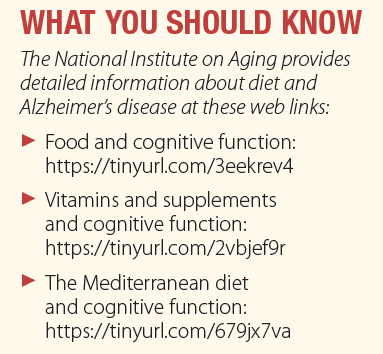
Consuming a diet abundant in processed foods and saturated fats can trigger inflammation, and there is growing scientific evidence of a link between a high intake of sugar and processed foods and an increased risk of Alzheimer’s disease and cognitive decline. Conversely, studies show that embracing a nutrition plan rich in fruits, vegetables, grains, fish, nuts, lean protein, and low-fat dairy can counteract inflammation and potentially safeguard against cognitive deterioration. The MIND diet, which stands for Mediterranean-DASH Intervention for Neurodegenerative Delay, is a hybrid of the Mediterranean and DASH diets, and is specifically designed to promote brain health. The MIND diet emphasizes anti-inflammatory foods such as leafy greens, berries, nuts, and whole grains, while discouraging the intake of red meat, butter, and sweets. It has been shown to lower the odds of developing conditions like Alzheimer’s disease and dementia. In fact, one study found that those who followed the MIND diet strictly cut their chances of developing Alzheimer’s by more than half.
“Adopting a diet rich in certain fibers and grains, vitamin C, beta-carotene, and lycopene, while limiting foods high in fat, salt, and sugars, can contribute to limiting the magnitude of chronically inflammatory responses,” says Artis. A cup of strawberries or broccoli provides enough vitamin C for the day. The recommended daily amount of vitamin C for women is 75 milligrams. There is no official recommendation for daily lycopene or beta-carotene intake, but some studies suggest that 8 to 21 milligrams of lycopene per day and 6 to 15 milligrams of beta-carotene per day may be beneficial. Foods rich in beta-carotene include carrots and sweet potatoes, and those high in lycopene include tomatoes and watermelon.
Exercise and Stress
Regular physical activity enhances blood flow to the brain and promotes the release of chemicals such as brain-derived neurotrophic factor (BDNF) that support brain health. BDNF plays a crucial role in neuroplasticity, or the brain’s ability to adapt and form new connections, and this is essential for maintaining cognitive function. Exercise also helps diminish chronic inflammation by decreasing the production of cortisol in your body. Elevated cortisol can trigger inflammatory pathways, leading to detrimental effects on cognitive health.
Healthy Choices for Brain Function
Recognizing the connection among lifestyle choices, inflammatory processes, and cognitive function may be the incentive needed to welcome healthy nutrition, exercise, and stress reduction behaviors into your life.
The post Embrace a Healthy Lifestyle and Your Mind May Benefit appeared first on University Health News.
Read Original Article: Embrace a Healthy Lifestyle and Your Mind May Benefit »
