
Hormone Replacement Therapy May Be Less Risky Than You Think
Hormone therapy (HT) works well to ease common menopause symptoms such as hot flashes, night sweats, mood swings, and vaginal dryness. But safety concerns and misconceptions about this type of therapy can make weighing the pros and cons confusing. This article aims to clarify the risks and benefits of HT and assist you in deciding if it aligns with your needs.
Hormone Therapy Tips
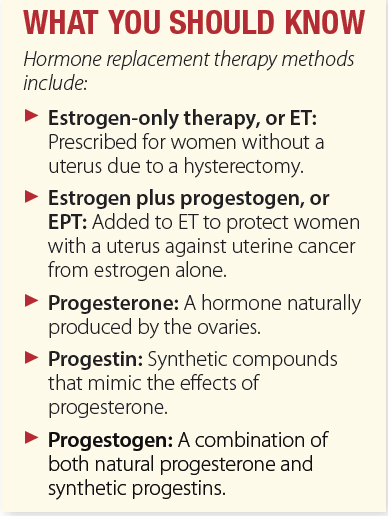
The principal reason women use HT is to treat hot flashes and night sweats, which occur because hormone levels— mainly estrogen and progesterone— drop as women approach menopause. HT works by giving these hormones back to the body, which is why it’s also sometimes referred to as hormone replacement therapy (HRT). “Hormone therapy is the most effective treatment for severe and bothersome hot flashes and night sweats, and its use may improve sleep, mood, and cognition,” says Susan Loeb-Zeitlin, MD, Assistant Professor of Clinical Obstetrics and Gynecology, Weill Cornell Medicine.
HT also treats vaginal dryness and painful sex associated with menopause. “For vaginal dryness alone, hormone therapy can be given topically,” says Dr. Loeb-Zeitlin. Topical hormone therapy is given as a vaginal ring, insert, or low-dose estrogen cream.
A Fresh Look at HRT
Despite HRT’s benefits, many women are reluctant to consider it. This is largely due to findings from a decades-old Women’s Health Initiative (WHI) study that suggested women who took a combination of estrogen and progestin had an increased risk of breast cancer, heart disease, and stroke. Years later it was revealed that there were problems with the WHI research that could have affected its accuracy.
Subsequent research has provided a clearer understanding of the breast cancer risk associated with HRT, and in 2022 the North American Menopause Society (NAMS) released a statement noting that HRT is the most effective treatment for hot flashes, night sweats, and vaginal changes, and that it has been shown to prevent bone loss and fracture. The statement also noted that the benefits of HRT outweigh the risk for most women if they are healthy and under 60 (or within 10 years of menopause). “Studies show that while an increased risk of breast cancer exists, it is not as great as it was thought to be. We start to see an increased risk of breast cancer after five years of estrogen and progesterone use and after seven years of estrogen use alone,” says Dr. Loeb-Zeitlin.
Basically, when it comes to safe and effective use of HT, timing is everything. FDA recommendations state that HT should be used at the lowest doses for the shortest time needed to achieve treatment goals, and that postmenopausal women who use or are considering using HT should discuss the possible benefits and risks with their health-care providers.
HRT in the Medicare Years
In a 2024 study evaluating HT use in women ages 65 and over, researchers reported that their results align with current recommendations that HT use early in menopause is better than later, but say their findings indicate that women may experience positive effects with HT usage in Medicare years, as well. The study was published in April in Menopause, the journal of the Menopause Society. Given that these findings are very new, it is critical to discuss their relevance to your particular situation with your health-care provider if you consider using HT.
The study also revealed that progestin usage resulted in significant risk reductions in endometrial cancer, ovarian cancer, ischemic heart disease, congestive heart failure, and venous thromboembolism. Dr. Loeb-Zeitlin stresses that,“HT is not indicated for primary cardiac prevention, but it may be beneficial when started within the first 10 years of menopause and before age 60. Generally using non-oral estrogen (in the form of a patch, topical gel, or vaginal ring) is thought to decrease the risk of blood clots and therefore decrease the risk of stroke.”
Make an Informed Decision
If you are considering HT, pose these questions to your health-care provider:
- Are hormones right for me?
- What are the risks and side effects?
- How long should I use HT?
- What is the lowest dose that will work for me?
HT offers significant benefits, but is not suitable for everyone. Discuss HT usage with your doctor to learn if it is appropriate for you.
The post Hormone Replacement Therapy May Be Less Risky Than You Think appeared first on University Health News.
Read Original Article: Hormone Replacement Therapy May Be Less Risky Than You Think »
