

Urinary Leakage After Menopause Is Prevalent, but Treatable
Incontinence, or urine leakage, is no laughing matter, but laughing—as well as sneezing, coughing, and even exercising—can trigger this condition that affects nearly half of postmenopausal women. Hormonal changes associated with menopause can contribute to changes in the pelvic floor muscles and tissues, and this can lead to urinary incontinence. While urine leakage is common, it is not an inevitable part of aging, and treatment options, including pelvic floor exercises, medications, and in some cases, surgery, can manage or alleviate symptoms.
More than half of women between ages 65 and 80 experience incontinence. Despite this, research shows only one in three affected women seek advice from their doctor.
Some women neglect to discuss episodes of incontinence with their physician because they are embarrassed. Another reason this topic goes unmentioned is that many women consider it an unavoidable part of aging, but that is a misconception. “Urinary incontinence is not normal by any means. If a woman is experiencing urine leakage, she should make an appointment with her physician to be evaluated,” says Tirsit S. Asfaw, MD, Director, Female Pelvic Medicine and Reconstructive Surgery/ Urogynecology, Weill Cornell Medicine.
In some cases, urine leakage could be a temporary situation resulting from a urinary tract infection. In most cases the causes of urine leakage are stress incontinence (leakage during activities that increase abdominal pressure, such as coughing or sneezing), urge incontinence (sudden, intense urge to urinate followed by involuntary loss of urine), and mixed incontinence (a combination of both stress and urge incontinence). “While stress incontinence and urge incontinence may be initially treated the same by fluid and behavior modifications and exercises, they diverge in treatment after that,” says Dr. Asfaw.
Nonsurgical Treatment Options
Treatment options for incontinence depend on the type and severity of the condition. Here are some common approaches:
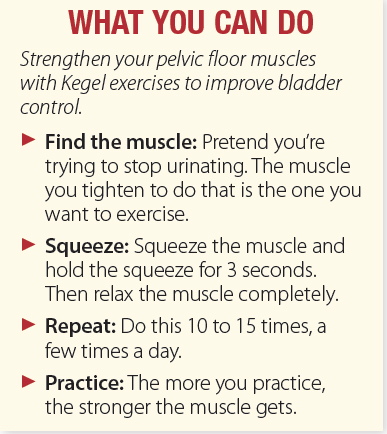
Pelvic Floor Exercises (Kegel exercises): These exercises help strengthen the pelvic floor muscles, which can improve urinary incontinence.
Bladder Training: This involves scheduled and controlled urinating to help improve bladder capacity.
Lifestyle Changes: They may include managing fluid intake, avoiding bladder irritants (such as caffeine and alcohol), and maintaining a healthy weight.
Medications: Prescription medications such as mirabegron, vibegron, oxybutynin, tolterodine, and solifenacin are often prescribed to manage urge incontinence. Topical estrogen may be recommended for postmenopausal women to improve urinary symptoms such as urgency and frequency.
Pessaries: A pessary is a plastic ring inserted into the vagina to support the bladder and reduce symptoms of stress incontinence.
Surgical Interventions
In some cases, surgical interventions may be recommended for urinary incontinence, especially if conservative measures are not effective. Here are some common surgical interventions:
Midurethral Sling Procedure: This is a minimally invasive surgical option for stress incontinence. A sling, often made of synthetic mesh material, is placed under the urethra for support, helping to prevent leakage during activities that increase abdominal pressure. “The midurethral sling procedure remains one of the most effective surgical options for stress urinary incontinence,” says Dr. Asfaw.
Injectable Bulking Agents: Filler type materials, such as collagen or hyaluronic acid, can be injected into the tissues around the urethra to reduce stress incontinence.
Prolapse Surgery: In cases where pelvic organ prolapse contributes to incontinence, surgery to repair the pelvic structures may help alleviate incontinence symptoms.
Common but Not Inevitable
Urine leakage may be temporary due to a urinary tract infection, or it may be ongoing due to stress or urgency incontinence. These common causes of urine leakage can be managed with lifestyle changes, pelvic floor exercises, medications, or surgery.
If you are experiencing urinary incontinence, discuss it with your doctor so a personalized treatment plan based on your specific symptoms and circumstances can be established.
The post Urinary Leakage After Menopause Is Prevalent, but Treatable appeared first on University Health News.
Read Original Article: Urinary Leakage After Menopause Is Prevalent, but Treatable »
