

Working Up a Sweat
Staying active is essential to our health. But trying to walk, run, bike, or play in the heat is at best unpleasant and at worst dangerous. Without taking the proper measures to keep cool, you risk developing dehydration, heat exhaustion, or life-threatening heatstroke. Let’s explore some ways to keep active—and cool and hydrated—on summer days.
Your Body in the Heat.
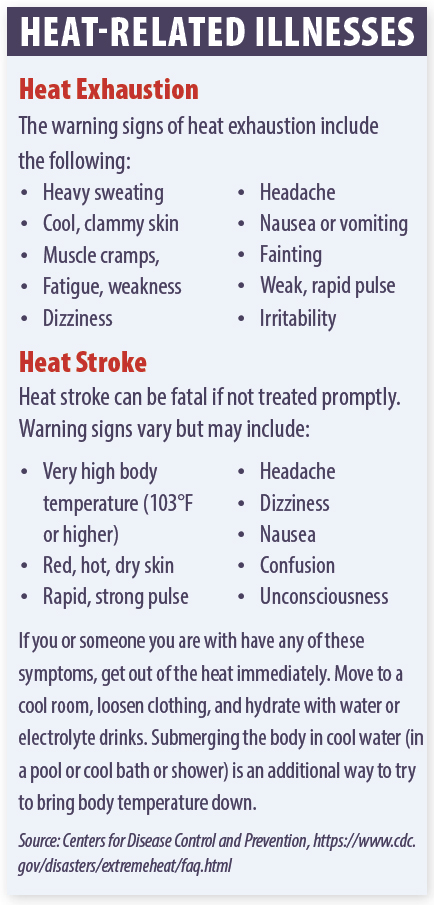
When your body temperature rises, two important things happen: you begin to sweat, and blood flow to the vessels just under the skin increases. As sweat evaporates, it helps cool the body. In dry heat, sweat evaporates quickly, but if you live in areas where it is humid, be aware that the already moist air has less room to accept water molecules from your skin. The higher the humidity, the slower the sweat will evaporate and greater your chance of overheating. Overheating (hyperthermia) can lead to heat exhaustion or heat stroke (see Heat-Related Illnesses).
Increased blood flow to the skin allows heat to dissipate through your pores. People with cardiovascular disease (like atherosclerosis or heart failure) may not be able to shift their blood flow effectively. This makes them more likely to overheat—and the existing cardiac problems make them more susceptible to serious consequences of hyperthermia. Carrying excess body fat can also increase risk for overheating.
Beating the Heat.
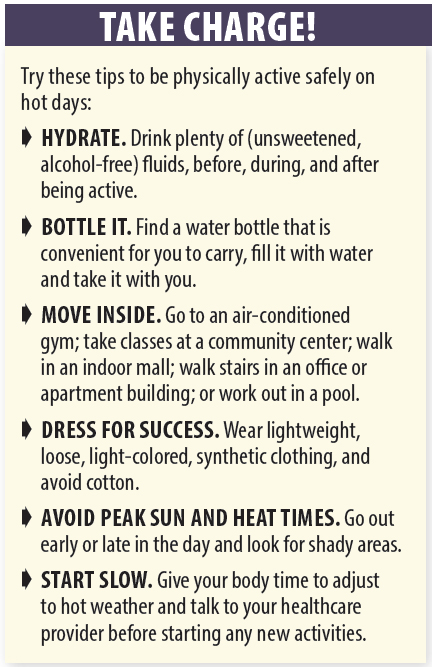
If you live in a part of the country where the temperature varies dramatically in different seasons, keep in mind that it can take one or two weeks for your body to adapt to the heat. If you typically participate in outdoor activities (including walking), spend less time outside and reduce the intensity of your activity until your body adjusts.
Take advantage of cooler temperatures in the morning and evening hours and shady areas. Going to an air-conditioned gym, taking exercise classes at a community center, walking in an indoor mall, trekking the stairs in an office or apartment building, and working out in a pool are great ways to stay active while keeping cool.
Be sure to dress appropriately.
Sweat evaporates more easily from lightweight, loose-fitting clothing. Light colors absorb less heat than dark colors, and synthetic fabrics (like polyester or nylon) help draw water away from your body, aiding in evaporation (as opposed to cotton, which holds water and gets saturated.)
The best way to avoid heat-related illnesses is to hydrate. Make sure you drink plenty of fluids and include extra servings of fruits and vegetables on hot days so you are fully hydrated before you go out into the heat. Bring plenty of water with you when you exercise, and make sure you drink it. If you sweat a lot, sports drinks can be helpful for replacing lost sodium and other electrolytes. Stay away from sugar-sweetened beverages and alcohol, as these can actually promote fluid loss.
According to the Centers for Disease Control and Prevention, oIder age, youth (age 0-4), obesity, fever, heart disease, mental illness, poor circulation, sunburn, and prescription drug and alcohol use can limit the ability to regulate temperature. Talk to your health-care provider if you think you may be at increased risk for heat-related illnesses or if you are planning to become more active than you have been in the past.
Don’t let the heat stop you from being active! Your heart and your brain are counting on you to find creative ways to keep moving to keep them healthy.
The post Working Up a Sweat appeared first on University Health News.
