
Hereditary Cancer Syndromes: Should You Be Tested?
Thanks to advances in medicine, we now know much more about the factors that raise our risks of various diseases. For example, cancer researchers have identified many genetic mutations that increase cancer risk, including those that are hereditary.
Hereditary cancer syndrome (HCS) is inherited from one or both parents. For example, if either parent has a mutation in a cancer predisposition gene, such as BRCA1 or BRCA2, their children have a 50 percent chance of having the mutation.
“This is why we encourage women to be tested for cancer genes: Unless you test, you will not know if you have inherited it,” says Maira Pires, PhD, MS, CGC, a certified oncology genetic counselor at Weill Cornell Medicine.
If a woman has inherited a cancer gene mutation, it means her risk of cancer is higher; it does not mean that she will definitely get cancer.
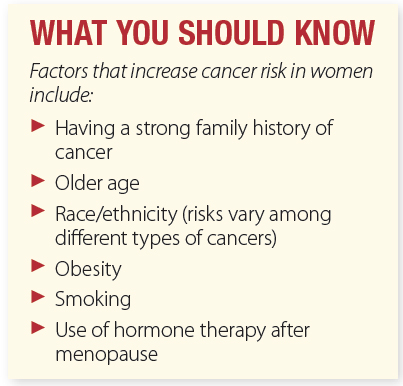
“Cancer is a multifactorial disease, which means that other risk factors also influence whether or not a woman will develop cancer,” explains Dr. Pires. (See What You Should Know for more information on risk factors.)
Common Genetic Mutations
The most common HCS is hereditary breast and ovarian cancer linked to a mutation in either the genes BRCA1 or BRCA2. The risk is even higher if one is of Ashkenazi Jewish descent; in this population, the incidence of having a BRCA1/2 mutation is one out of 40 versus one in 500 in the general population.
“However, hereditary breast cancer, which accounts for 5 to 15 percent of all breast cancers diagnosed, is not caused only by mutations in the genes BRCA1/2. Other newly identified breast cancer genes include CHEK2, PALB2, ATM, and TP53,” explains Dr. Pires. “If a woman was tested for BRCA1/2 genes 10 or more years ago, it is time to get updated testing for the more recently discovered breast cancer genes.”
The proportion of ovarian cancers that are hereditary is about one in five, or 20 percent. Dr. Pires says that, since this is a high percentage, every woman diagnosed with ovarian cancer should be tested, and anyone with a family history of ovarian cancer should request testing.
Who Should Get Genetic Testing?
Current guidelines recommend genetic testing if you:
- Are of Ashkenazi Jewish heritage
- Have a strong family history of breast cancer (a family member diagnosed under age 50 or with triple negative breast cancer, or multiple family members with breast cancer on one side of the family)
- Have been diagnosed with breast, ovarian, colon, pancreatic, or other cancer
- Have had a breast biopsy that identified a high-risk lesion (an abnormal cell growth that is not cancerous but is associated with an increased risk of breast cancer), such as lobular carcinoma in situ (LCIS), atypical ductal hyperplasia (ADH), or atypical lobular hyperplasia (ALH)
“Guidelines for who should be tested for cancer genes change all the time, so it is best to discuss this with your doctor,” advises Dr. Pires. She also suggests seeing a genetic counselor if there are multiple cancers in your family history and you’re wondering if you should be tested.
The Importance of Genetic Counseling
If you think you may be a good candidate for genetic testing, consult a genetic counselor who specializes in oncology.
“Having a cancer risk assessment includes an in-depth review of your personal medical history and your family history of cancers, as well as other risk factors, followed by a discussion of pros and cons of having genetic testing,” explains Dr. Pires. “This includes an explanation of how a positive test result could help reduce your risk for cancer. The most important purpose of a consultation with a genetic counselor is a thorough assessment of each woman’s situation that will help the woman reach the decision that is best for her.”
Dr. Pires adds, “Genetic testing is also not a simple ‘yes or no’ decision: There are lots of options today for how much testing to do, and how that information can be used in beneficial ways.”
What a Positive Test Result Means
If genetic testing produces a positive result, it means that the lab identified a pathogenic variant, or a change, in one of the genes that was tested, and this change has been shown to increase the risk for certain cancers.
Having a cancer predisposition does not mean a person will get cancer. However, if cancer does develop, adding more and/or earlier screening will help catch it in the early stages.
“For example, if a woman has a mutation in the genes BRCA1/2, screening is recommended to start at age 25 with annual breast MRI and then alternate with annual mammograms once she is 30. But if a woman has a mutation in other breast cancer genes, such as ATM, PALB, or CHEK2, she is advised to start with breast MRI between the ages of 30 and 35 and alternate with mammograms at age 40,” explains Dr. Pires.
High Risk But No HCS
A woman may still be at higher-thanaverage risk of cancer even if no genetic mutation is identified.
“If a woman has a strong family history of breast cancer (for example, a first- or second-degree relative with breast cancer diagnosed before age 50, or multiple female relatives with breast cancer), or she has had a highrisk breast lesion, she should have an assessment of her lifetime risk of breast cancer. This type of assessment can be provided by a genetic counselor,” notes Dr. Pires. “Women with a 20 percent or higher lifetime risk for breast cancer may be advised to have breast MRI screenings in addition to mammograms.”
The post Hereditary Cancer Syndromes: Should You Be Tested? appeared first on University Health News.
Read Original Article: Hereditary Cancer Syndromes: Should You Be Tested? »
