
Improve Your Diet with Smart Snacking Strategies
When you’re making your grocery list and focusing on breakfast, lunch, and dinner, you might not think about what you’ll have for snacks. But if you don’t plan ahead, those bags of potato and tortilla chips and packages of cookies and cakes might end up in your cart.
When choosing snack foods, select a variety of vegetables, fruits, whole grains, legumes (beans, peas, and lentils), nuts, and low-fat yogurt and cheese (if you consume dairy foods). Steer clear of products that contain added sugar, salt, or fat, or are made with enriched flour (refined flour that’s lost a lot of nutrients during processing).
A Guide to Good Snacks
The three macronutrients that make up all foods are protein, fat, and carbohydrates. Each macronutrient serves several different purposes, and all of them are essential for optimum functioning.
Protein foods, including nuts and nut butters, beans and peas (think dips like hummus or black bean dip), Greek yogurt, and reduced-fat cheese, can satisfy your appetite and help you reach and maintain a healthy weight. Protein is an essential component of bones and muscles, and it is needed for enzyme and hormone production.
Unsaturated fats (monounsaturated and polyunsaturated) are plentiful in plant foods such as nuts and nut butters, seeds, and avocados. Dietary patterns higher in unsaturated fats and lower in saturated fat are linked with lower risks of cardiovascular disease, heart attacks, strokes, and cognitive impairment. Pairing healthy fats with vegetables and fruits is a smart choice, since your body needs fat to absorb certain nutrients, including vitamins A, D, E, and K.
Carbohydrate-rich foods include grains, legumes, vegetables, and fruits. Carbohydrates are broken down into glucose, the main fuel source for your body and brain. Many whole foods that contain carbohydrates are also high in fiber, which can help keep you feeling full longer and prevent big spikes in blood glucose.
Go for Combos
Try to include at least two of the three macronutrients in each snack. Here are some combinations for well-balanced snacks:
 Whole grains and protein (legumes, nuts, low-fat dairy)
Protein and vegetables or fruit
Unsaturated fats and carbohydrates (grains, vegetables, or fruit)
To make healthy snacking easier, keep plenty of options stocked in your refrigerator and pantry. Wash fruits and vegetables, and cut up foods such as celery, carrots, broccoli, peppers, pineapple, and melons so they are ready to eat when the urge to snack hits you.
Hummus and bean-based dips can be healthy options, but stick to products that don’t contain a bunch of additives. (In general, with any prepared food products, the shorter the ingredients list, the better.) If you’re a dairy lover, go for plain, low-fat yogurt (add herbs and seasonings to make your own delicious dips) or single-serving low-fat cheese.
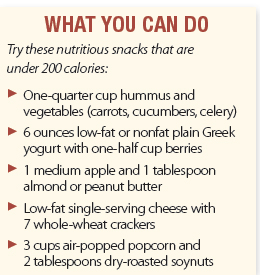
Create grab-and-go “snack packs” with shelf-stable foods, including whole-grain crackers (skip those with added sugar, flavorings, and preservatives), nuts, and dried fruit; portion them out into small storage containers or bags to prevent overeating. Aim for snacks that provide 200 calories or less (see What You Can Do for examples).
“Junk Food” Really Is Junk
Avoid heavily processed snack foods that are pre-packaged; most are “emptycalorie” foods, meaning they‘re high in calories and low in nutrients. A glance at the ingredients list usually reveals added sugar, fat, and/or salt. The main ingredient in many grain-based snack foods is refined flour, a prime example of empty calories
Many processed food products also contain chemical additives and/or preservatives, which is why they can sit on the supermarket shelf (or in your cupboard) for months without going bad.
Some of the most popular but poorest snack choices include:
Pretzels, crackers, and snack “mixes”
Potato chips, tortilla chips, and “veggie” chips (many are made with powdered vegetables)
Dips based on sour cream, cream cheese, or mayonnaise
Cookies, brownie bites, snack cakes, and other baked goods
Granola and protein bars (they may contain oats, but many are nutritionally similar to candy bars, due to their added sugar content).
The post Improve Your Diet with Smart Snacking Strategies appeared first on University Health News.
Read Original Article: Improve Your Diet with Smart Snacking Strategies »
