
Hearing Loss Can Be Harmful to Your Health
About 37.5 million American adults report some degree of hearing loss, according to the National Institute on Deafness and Hearing Disorders—that’s about 15 percent of the total adult population in the U.S.
Usually, hearing loss occurs gradually over a number of years. As you grow older, hair cells in your inner ear that pick up sound waves become damaged or die, and the cells do not regenerate; this type of age-related hearing loss cannot be reversed. Sadly, the majority of people who could benefit from hearing aids don’t use them.
“The biggest mistake people make is to do nothing about their hearing loss for a long time,” says Joseph Montano, EdD, associate professor of audiology at Weill Cornell Medical College. “If you wait several years before seeking treatment, you are more likely to have increased hearing loss by that time, and you’ll probably have more difficulty adjusting to hearing aids. The earlier you begin the process of having your hearing level checked, the easier it will be to live with hearing loss.”
Signs of Hearing Loss
You probably are experiencing some degree of hearing loss if you have difficulty hearing when in restaurants, in groups, while watching television or movies, or when talking on the phone.
If your friends and family have to repeat themselves frequently when talking to you, that’s also a good indicator that you may have hearing loss.
Medications are the culprits behind some hearing loss; studies have shown that more than 200 medications can affect hearing and balance. These medications include some antibiotics, diuretics (“water pills”), chemotherapy drugs, nonsteroidal anti-inflammatory drugs, and opioids, among others.
Hearing Loss and Health Risks
The consequences of hearing loss can extend far beyond your ears.
“People with hearing loss may become more socially isolated or stop engaging in conversations. In addition, they might experience anxiety, insecurity, or depression,” explains Dr. Montano.
In addition, research has shown that people with mild hearing loss were more likely to have fallen than those with no hearing loss, and the number of falls increased as the degree of hearing loss increased. Studies have also found associations between hearing loss and a higher incidence of dementia.
Have Your Hearing Evaluated
If you have hearing loss, the first step is an evaluation by a qualified professional. Make an appointment with an audiologist or an ear, nose, and throat (ENT) specialist.
An audiologist is educated in hearing loss, assessment, and rehabilitation. While he or she is not a physician, most hold a doctoral degree, such as a PhD or AuD (Doctor of Audiology). The audiologist will do a thorough evaluation of your hearing ability. Be sure to check credentials before you are evaluated. Some businesses that sell hearing aids may not adhere to the testing standards required of audiologists.
Not everyone with hearing loss needs a hearing aid. People with mild hearing loss can get personal sound amplification devices that make it easier to hear phone conversations, television, or movies.
Hearing Aids
Among people who do require a hearing aid, only one in five actually uses one, probably because of the stigma associated with hearing aids. However, the newer hearing devices are smaller and more powerful, and some are nearly invisible. Some hearing aids can now be connected to your television via your smartphone, so you can hear the television without subjecting others to a loud volume.
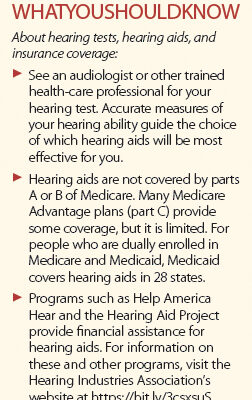
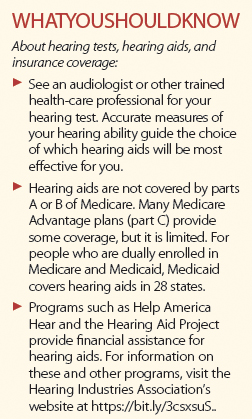
Hearing aids can be expensive: Some cost more than $2,000. But most hearing evaluations are covered by insurance, and some insurers cover some of the cost of hearing aids. Contact your insurance company to find out what your policy covers. Also, many states mandate a trial period for hearing aids during which you may return them for a refund, so try them—you have nothing to lose, and possibly, a great deal to gain.
The post Hearing Loss Can Be Harmful to Your Health appeared first on University Health News.
Read Original Article: Hearing Loss Can Be Harmful to Your Health »
