
An Irregular Heartbeat May Be a Sign of Atrial Fibrillation
Atrial fibrillation (A-fib), an abnormal heart rhythm, is estimated to affect as many as 6 million Americans, and there is evidence that it can be more dangerous for women than for men.
“Women can sometimes have more severe A-fib symptoms if the condition is left untreated,” explains Joy Gelbman, MD, a cardiologist at Weill Cornell Medicine. “Without treatment, A-fib can lead to heart failure, stroke, and other cardiovascular complications.”
What Is A-fib?
Your heart rate is controlled by an electrical signal that travels through your heart along a certain pathway and stimulates the upper chambers (atria) and lower chambers (ventricles) to contract in harmony. But with A-fib, the heart’s electrical activity becomes chaotic, and the atria beat very rapidly in an irregular rhythm. Because of these irregularities, the atrial beat is no longer effective in pumping blood to the ventricles. Instead, blood may pool in the atria, raising the risk of blood clots. A blood clot that dislodges can block circulation in an artery that carries blood to the brain, potentially causing a stroke. In fact, having A-fib increases the risk of stroke by a factor of five.
Abnormalities in the heart’s structure can cause A-fib. Other causes of A-fib include damage to the heart caused by a heart attack, hypertension, aging, or some other medical condition such as thyroid disease.
Women Are at Higher Risk
It’s unclear why women with A-fib have increased rates of heart disease and stroke, but experts think it may have something to do with the fact that women are older and tend to have multiple medical issues when they are diagnosed with A-fib. Where stroke is concerned, there is evidence that women with A-fib are 50 percent less likely than men to be prescribed anticlotting drugs.
Women also tend to have different risk factors precipitating A-fib. For example, high systolic blood pressure (the top number in a blood pressure reading) is a significant risk factor for A-fib among women, while men who have a higher body mass index, diabetes, a heart murmur, or a history of heart attack are more likely to develop A-fib than women with these risk factors.
Symptoms and Diagnosis
“The most common symptoms of A-fib are palpitations, which manifest as a feeling of skipping or racing heartbeat, shortness of breath, and chest discomfort,” Dr. Gelbman explains. “A-fib also can cause weakness or lightheadedness.” However, some people with A-fib have no symptoms.
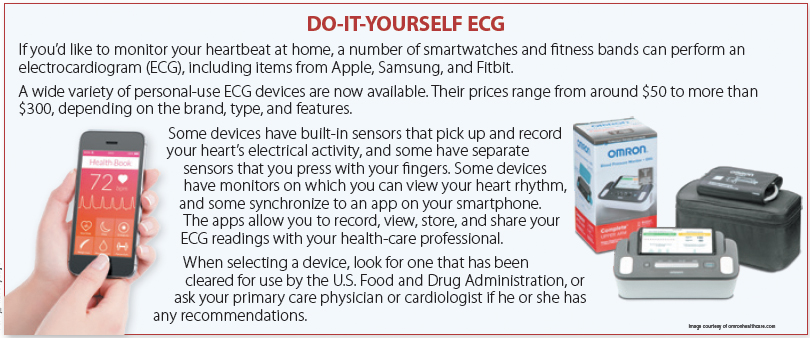
An electrocardiogram (ECG or EKG) monitors the heart’s electrical activity; your doctor will order this test if he or she suspects you have A-fib. However, if your heart is not in A-fib during the screening, the test won’t detect it. You may have to wear a Holter monitor, which continuously records your heart’s electrical activity, for a day or two, or have a small implantable monitor placed under your skin.
Other possible tests include a stress test, which evaluates heart function during physical activity, and echocardiography, which uses sound waves to create moving images of the heart’s valves and chambers.

Treatment Options
The first-line treatment for A-fib is medication. Some drugs help control heart rate, while others help the heart maintain a normal rhythm. You’ll also be given a blood-thinning medication to help prevent blood clots (see What You Should Know).
If your A-fib does not respond to drug treatment, more invasive therapies will be considered. “There is a procedure called a cardioversion, which is essentially a ‘shock’ to the heart that resets it to a normal rhythm,” Dr. Gelbman explains. “If symptoms persist and are bothersome, another procedure, called ablation, can be done.”
Ablation involves having a catheter with a special tip inserted through a vein and threaded to the heart, where it is used to burn (ablate) the area of tissue that is disrupting the heart’s electrical signal. Ideally, this enables the signal to travel along the proper pathway, but some patients need more than one ablation procedure to achieve a normal, stable heart rhythm.
Lifestyle Changes Can Help
A healthy lifestyle can help prevent A-fib and contribute to an improved outcome if ablation is performed.
“Eat healthfully, exercise regularly, and maintain a healthy weight,” advises Dr. Gelbman. “Limiting caffeine and alcohol also can be helpful, since these sometimes trigger A-fib. And take steps to reduce your stress level.”
Dr. Gelbman adds that if you have sleep apnea, it should be treated, since untreated sleep apnea can sometimes lead to heart arrhythmias. Also, follow your doctor’s instructions to control other stroke risk factors, such as high blood pressure and diabetes.
The post An Irregular Heartbeat May Be a Sign of Atrial Fibrillation appeared first on University Health News.
Read Original Article: An Irregular Heartbeat May Be a Sign of Atrial Fibrillation »
