
“Healthy” Chips?
The snack aisle is packed with a confusing array of chip options. We’ve got some smart strategies to help you choose more healthful yet satisfying chips.
Don’t be misled.
Chip packages are crowded with big, bold claims to convince you they are healthy choices to take home. Front-of-package claims and pictures are not always reliable, so be sure to look at the ingredients list and the Nutrition Facts label. Here are some tricky terms to look out for:
- All Natural: This term has no legal definition and no relation to the healthfulness of a product. Refined grains, added sugars, and salt are all natural—but unhealthy—ingredients.
- Multigrain: Multigrain does not mean whole grain. It’s common for products to be made with multiple refined grains.
- Vegetable: Some “veggie chips” are made with few real vegetables. Watch out for potato-flour based chips colored with vegetable powder or extract. A quick scan of the ingredients will call this out.
- Sea Salt: Sea salt is still salt—and doesn’t contain iodine (a protective nutrient added to regular salt). Compare Nutrition Facts labels to find the brands with the lowest sodium—and also the highest potassium, which helps protect against high blood pressure.
- Fiber: Fiber can be natural (from ingredients like whole grains, vegetables, or beans) or added to refined products by manufacturers. Different fibers have different health-promoting qualities. Keep in mind that the benefits of fiber can be offset by too much refined starch and sugars. (See the November issue of Tufts Health & Nutrition Letter for more details on added fibers.)
- Low Fat/Baked: In the 1990s we were told to reduce our fat intake, but low-fat foods have not improved our health or waistlines. We now know that eating plenty of unsaturated fats from plant oils (like those used to make most chips) actually supports heart health. Baked and low-fat chips have less of these heart-healthy fats (and therefore proportionally more refined grains and salt).
What to Do.
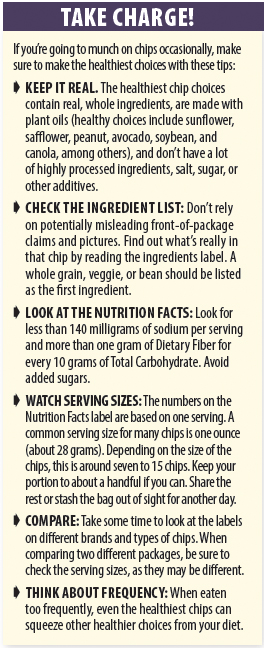
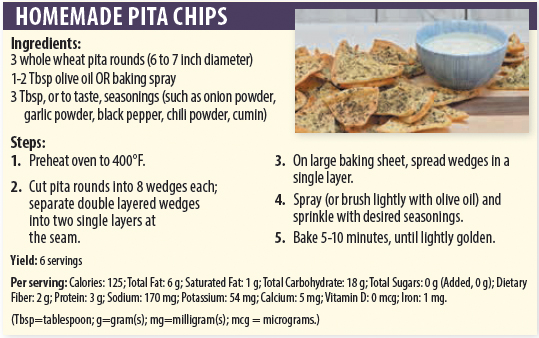
When snacking between meals, it is best to reach for healthy choices like nuts, fruits, veggies, and unsweetened or reduced sugar yogurt. But if you’re looking for a healthier chip, ignore the front-of-package marketing, and flip right to the back. See the Take Charge! box for our tips on making the healthiest choices. Better yet, make chips at home so you can choose your own ingredients. We’ve provided you with two simple recipes to get you started!
The post “Healthy” Chips? appeared first on University Health News.
