
Flavor!
If you equate healthy dietary choices to eating like a rabbit or you’re simply tired of the same old veggies, take heart! Open that spice drawer, stock up on tasty (and nutritious) toppings, and get ready for easy, delicious dishes.
Science Says. There’s no question that vegetables are a health-promoting choice. “Dietary patterns rich in fruits and vegetables are associated with optimal health outcomes,” says Alice H. Lichtenstein, DSc, director of the Cardiovascular Nutrition Laboratory at the Jean Mayer USDA Human Nutrition Research Center on Aging and executive editor of Tufts Health & Nutrition Letter. “One reason for this is the vitamins, minerals, phytochemicals, and fiber that come with most fruits and vegetables. Another is that putting more fruits and vegetables on your plate tends to squeeze out less healthy foods. We also should not ignore the fact that research suggests people who choose to eat diets high in fruits and vegetables tend to adhere to other healthy lifestyle behaviors, like being physically active and avoiding tobacco products.”
But knowing all of the reasons veggies are good for you won’t get you to eat them if you don’t like them! Research has found that, for many consumers, making veggies like broccoli, cauliflower, cabbage, and kale taste better is more important than touting their health benefits. Unfortunately for our palates, some of the components that make vegetables like these healthy may make their flavor less than appealing. Many phytochemicals (plant compounds that are active in our bodies) give vegetables a bitter taste or unpleasant odor. That said, if you love broccoli but it makes your partner gag, genes can also play a role. Scientists have identified genetic markers that contribute to differences in vegetable preference— and overall vegetable intake.
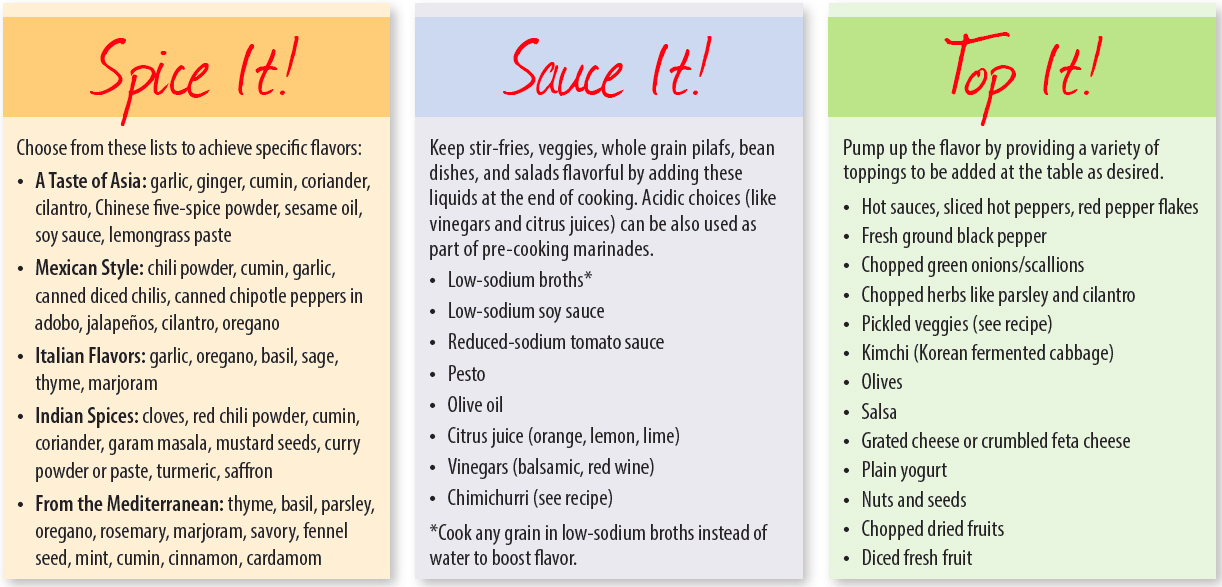
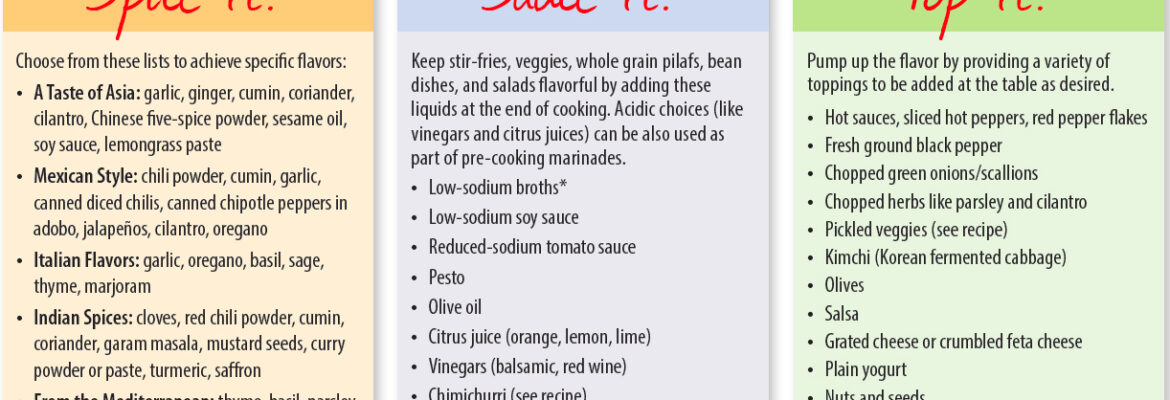
Luckily, bitterness and other potentially objectionable tastes can be masked. When it comes to vegetables, research shows that, given a choice, consumers prefer them when they are seasoned. A 2018 study suggested “overall liking of vegetables could be improved by incorporating spice and herb seasonings that are specifically formulated for each vegetable” (they used garlic powder, onion powder, dill, and ground black pepper for broccoli and ground ginger, garlic powder, and cayenne pepper powder for carrots), but you can simply adjust flavors to meet your individual tastes. (See Spice It! and the herb/spice pairing chart on page 8 for inspiration.)
Punch it Up! Flavor, aroma, and visual appeal are all important to enjoyment of food, and flavor becomes even more important with age. In some, the sense of taste (and smell) diminishes as we get older, and research suggests preference for sweet and salty increases. Even if you are a strong taster, spare the saltshaker and don’t skimp on the herbs and spices.
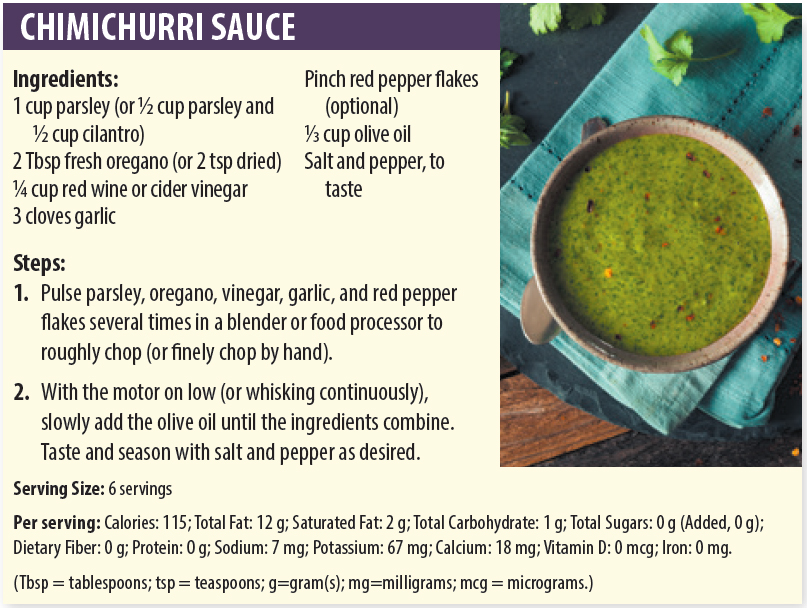
“Adding spices to vegetable dishes increases liking, and liking increases intake, something that would benefit most of us,” says Lichtenstein. “Similarly, adding sauces can increase interest and liking. It is just important to avoid those with lots of salt or sugar.” See Sauce It! to find those that fit the bill.
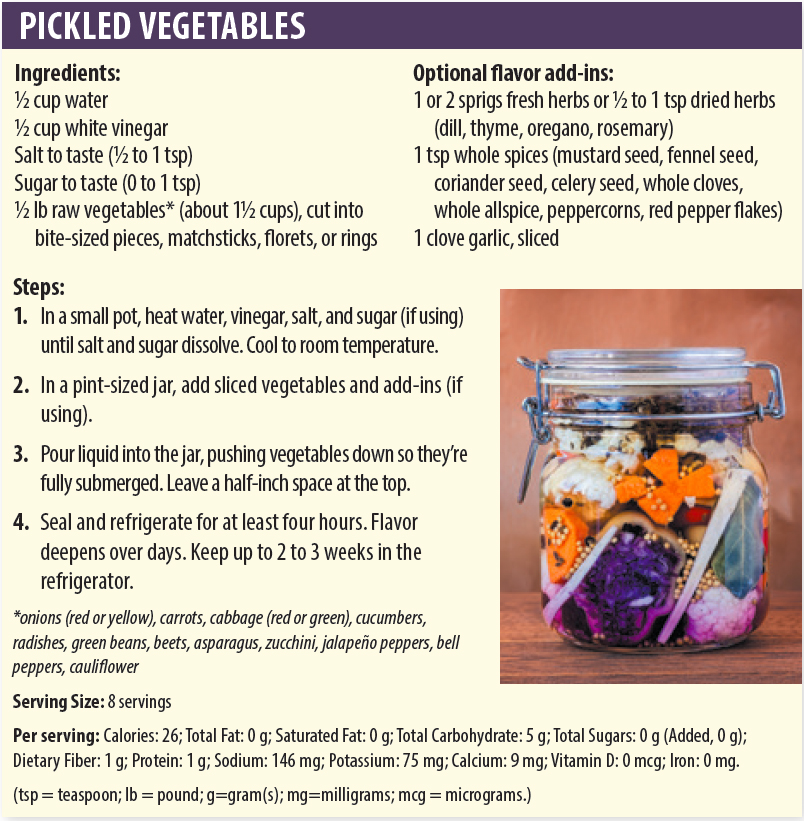
Toppings are often overlooked as a way to boost flavor, as well as texture and visual appeal, of vegetables. And they’re a great way to adapt one meal to a variety of tastes. Keep a jar of pickled red onions or jalapeños (see Pickled Vegetables recipe), a tub of plain yogurt, and containers of chopped scallions and grated parmesan cheese on hand to let everyone at the table adjust their meal to meet their taste for pungent, spicy, creamy, or sharp.
With their vivid colors, variety of textures, and endless flavoring potential, vegetables are just waiting to brighten your plate, and your palate!
The post Flavor! appeared first on University Health News.
