
Processed Food Do’s and Don’ts
You’ve probably heard advice to avoid processed food—but not all processing is a bad thing. “Processing refers to any alteration that is done to food during packaging or manufacturing,” explains Rachel Lustgarten, registered dietitian nutritionist from Weill Cornell Medicine. “Some processing can be neutral or beneficial to health— for example, dairy is processed to be pasteurized or to make yogurts, and vegetables can be canned, frozen, or chopped for bagged salads.”
The U.S. government defines “processed food” as “any food other than a raw agricultural commodity that has been subject to processing, such as canning, cooking, freezing, dehydration, or milling.” That covers anything that is altered from its original state beyond simple cleaning, brushing off dirt, or removing leaves and stems. Even polished apples might be considered “processed,” and peeled or pre-cut fruits are definitely processed, although minimally. Any food that contains added salt, sugar, fat or additives or that has been mixed with other ingredients is considered processed, too.
Processing’s Benefits
“Some processing can make food safer, increase shelf life, and allow for longer transit times and increased accessibility for different regions of the world,” says Lustgarten. Processing may remove contaminants, such as in prewashed salad greens, or destroy pathogens, as in pasteurized milk.
Cutting and chopping produce can make nutrients more available to the body (“bioavailable”) by doing some of the work of breaking down cell walls. So can heating, including the heat of canning, although heat destroys other vitamins. The lycopene in canned tomatoes and tomato sauces is more accessible than in fresh, uncooked tomatoes, for example.
The freezing process acts like a “pause” button on food deterioration. Picked at their peak, frozen vegetables and fruits can be more nutritious than fresh, though their texture may suffer. Similarly, seafood frozen on ship is often fresher than “fresh” fish that’s many days away from the sea. Unless you live near a coast, flash-frozen seafood is the best way to meet recommendations to eat two fish meals per week.
Ultraprocessed? Uh-oh
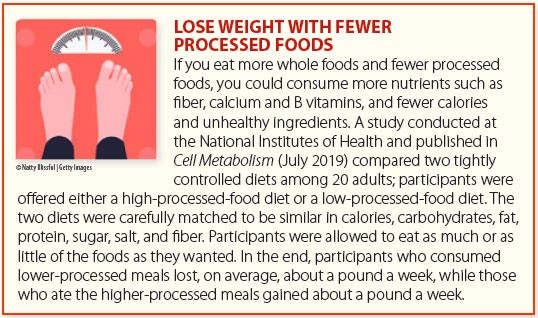
Nonetheless, there’s plenty of reason to be wary of processed foods. Food that has been highly modified, which has lots of added calories, including saturated fat, sugars, and starches, has helped fuel the obesity epidemic and Americans’ worst eating habits.
One French study of more than 44,000 adults ages 45 and older linked consumption of “ultraprocessed” foods to greater mortality risk. Researchers defined ultraprocessed foods as those that “contain multiple ingredients and are manufactured through a multitude of industrial processes.” Examples include packaged snacks and baked goods, candy, energy bars, processed meats, and ready-made meals. Over seven years, each 10 percent increase in the share of ultraprocessed foods in the diets was associated with a 14 percent greater likelihood of dying.
Check the Ingredients
To avoid unhealthy processed foods, “read the ingredients label to check for additives,” Lustgarten advises. “Additives such as sodium, fat, and sugar—as well as calories—are likely increased when foods are highly processed. Note their long ingredient lists. Highly processed foods contain preservatives for longer shelf life.”
Instead, choose more whole foods and those processed only for convenience (such as baby carrots and frozen foods) or safety. “Nonprocessed and minimally processed foods such as fresh fruit, vegetables, nuts, and beans are easy to spot,” Lustgarten says. “Protein products like whole chicken or fish are minimally processed, while deli meats and sausages have been more heavily processed and should be limited.”
There is no maximum number of ingredients beyond which a food becomes overly processed. A food with more ingredients because it has small amounts of many different herbs and spices, for example, is not less healthy. But no need to avoid all artificial preservatives or additives. Some additives protect you against dangerous bacteria, mold, and fungus growth, and they are safe.
The post Processed Food Do’s and Don’ts appeared first on University Health News.
