
EN on Foods: Pecan Power
The Folklore.
Whether it’s pronounced PEE-can or puh-KAHN, pecans are a truly American nut, the only major tree nut that grows naturally in North America. In fact, its name comes from the Algonquin Indians for all nuts requiring a stone to crack. Native tribes relied on pecans as a staple food, as well as for trading. Annual pecan festivals continue to be held in many U.S. states, commemorating the nut in fun events like baking contests— pecan pie, anyone? Packed with powerful, health-promoting plant compounds, pecans are not only a flavorful, but healthful addition to our plates.
The Facts.
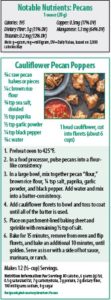
Pecans (Carya pecan, also C. illinoinennes), kin to the walnut tree and hickory tree, can live more than 1,000 years and one tree can produce over 400 pounds a year. There are more than 1,000 varieties of pecans, many of them named for Native American Indian tribes. A oneounce serving (about 19 halves) has 64% DV of bone-healthy manganese, 17% DV of essential nutrient copper, helpful for iron absorption, 11% DV dietary fiber to help satisfy appetite, and heart-healthy mono- and polyunsaturated fats.
The Findings.
According to a study published in a 2019 European Heart Journal, eating nuts two or more times per week was associated with a 17 percent lower risk of death from heart disease compared with consuming them once every two weeks. A pecan-rich diet (1.5 ounces per day) improves heart disease risk factors, including fasting blood glucose and insulin levels in older overweight or obese adults with abdominal fat, according to a 2018 study in the journal Nutrients.
The Finer Points.
Available raw or roasted, shelled or unshelled, as well as in a variety of products, like pecan milk, oil, butter, and meal—the first thing to look for is the freshness date on the label. Pecans should look plump, golden brown, and uniformly sized. Due to their high fat content, store pecans in a cool, dry place, out of direct sunlight to prevent rancidity. Refrigerated in airtight packaging, they’ll keep about nine months and up to two years frozen. Add pecans— whole, chopped, ground, pureed, raw or toasted—to any type of dish from desserts and soups and salads to smoothies and sides, like pilaf or risotto.
The post EN on Foods: Pecan Power appeared first on University Health News.
