
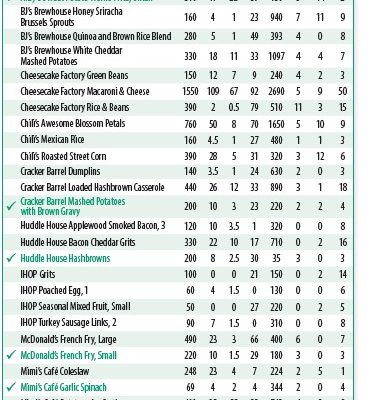
Restaurant Guide: Restaurant Sides
Though they are not the main course, side dishes can play an important part in the nutritional impact of your meal. Some choices send the meal over the top in terms of calories, sodium and/or fat. Others add to the fiber, vitamins, and minerals. It used to be the side dish list wasn’t much more than French fries, rice pilaf, and an overcooked veggie of the day. But in many restaurants, the list has grown to include an assortment of vegetables, different cooking methods, as well as more exotic finds. In fact, to give yourself a smaller meal, you could choose two sides, in which portions are usually smaller, instead of an entree.
With the addition of more options for side dishes, the choices really run the gamut from a simple baked potato or fries to vegetables prepared with a variety of seasonings and sauces and small portion casseroles. The good news is many of the more recent additions to side dish offerings are filled with wholesome ingredients, such as vegetables and beans. This makes meeting your nutritional goals when dining out a bit easier. However, you still want to look out for options with creamy or cheesy sauces that can bump up the calories, sodium, and fat in the dish.
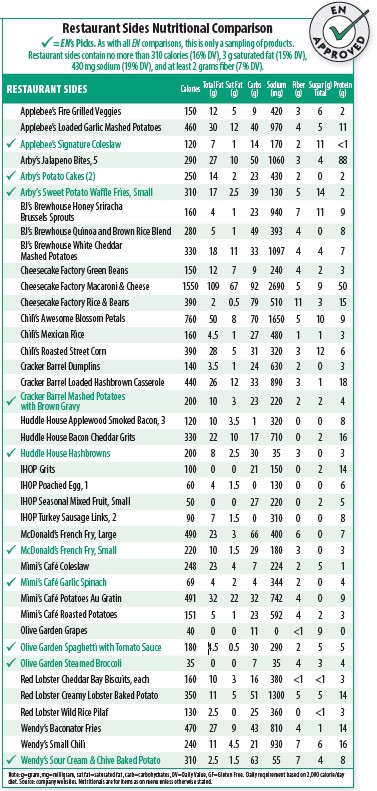
Helpful Hints. Here are a few hints to help you get more from your side dish selection.
- Word-ology. Use the names and descriptions to help make healthier choices. Go for roasted and grilled instead of crispy and loaded.
- Have a plant. Many restaurant meals are lacking in fruits and veggies. Choosing one as your side will help you get more fiber and other assorted nutrients. The same can be said for bean-based sides.
- Share. Sometimes even side dishes tend to be a bit on the large side. You can get the same enjoyment by sharing. This is especially beneficial with those that are higher in calories, fat, and sodium.
The post Restaurant Guide: Restaurant Sides appeared first on University Health News.
