
Maintain Strong Legs for Total Body Support
Your legs include some of the biggest, strongest muscles you have. They help you walk, climb stairs, sit and stand, and bear the weight of the rest of your body. Most importantly, however, they help you absorb shock when doing all of these daily activities, which help resist wear and tear on your joints. All of these attributes are critical to help prevent falls, injury from falls, and frailty (being physically weak), which can greatly affect your independence.
Aerobic Exercises Strengthen Legs
Walking, running, dancing, swimming, riding a bike (stationary or moving) and even mowing the lawn is good for your legs. It keeps them limber, warms your muscles, and can help reduce the risk of pulling or tearing a cold muscle. But start out slowly to let your legs warm up.
Is walking better than running for women over 50? “It depends on your health,” says Aaron Karp, exercise physiologist at the Weill Cornell affiliated Hospital for Special Surgery. “Running exclusively, especially for women over 50, could lead to injury. If you run, complement that with a basic, but comprehensive strength-training program.”
But, walking alone won’t suffice as your only form of exercise. “It doesn’t allow you to achieve high enough exertion levels to meet your weekly activity needs,” Karp says. Healthy adults should complete 150 to 300 minutes of moderate physical activity per week. Women over 50 should include some form of bone-loading resistance training as well, to reduce the risk of issues like osteoporosis, Karp recommends.
Build Muscle with Resistance
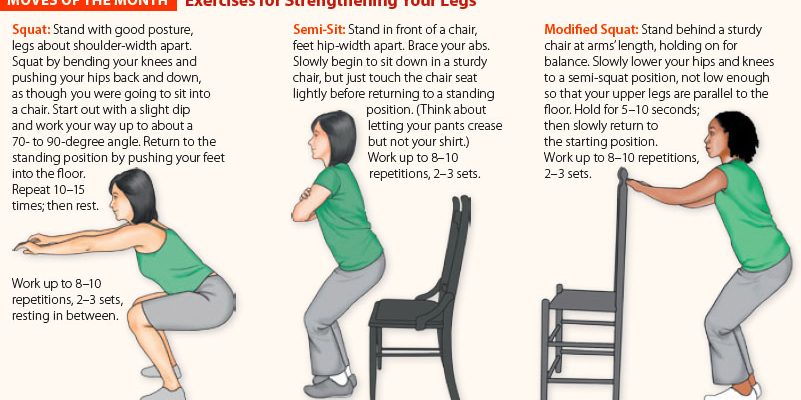
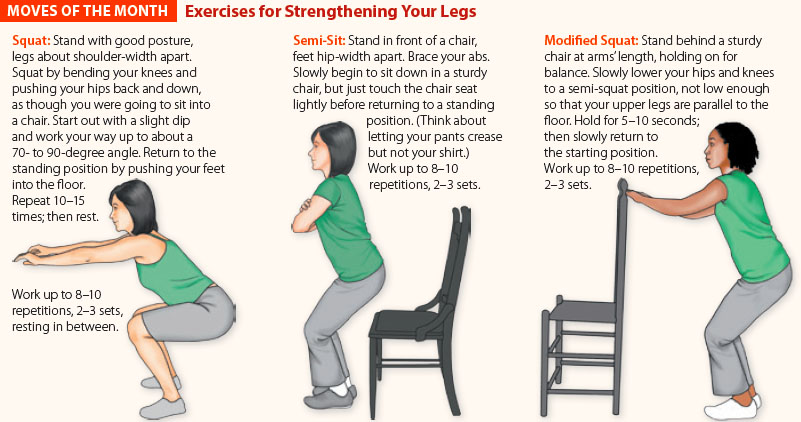
Any exercise that pushes muscles against gravity is considered a resistance exercise. One of the best resistance exercises for strengthening your legs is the squat. If squatting causes pain in your knees or other joints, modify your technique such as with a chair, or by reducing how low you go. Karp suggests consulting with a qualified exercise physiologist if you’re unsure whether squatting is safe for you.
Another great exercise for strengthening your legs is the bridge. Lie on your back, squeeze your glutes (buttocks) and lift your hips in the air.
Tips for Preventing Injuries
“People tend to overload their knees when they are working on their legs,” Karp says. “When squatting, sit back like you are sitting into a chair. This will help take pressure off of your knees and help strengthen the muscles on the back of your legs, your glutes and hamstrings. Also, remember to move laterally—from side to side—as well as front to back.”
The post Maintain Strong Legs for Total Body Support appeared first on University Health News.
Read Original Article: Maintain Strong Legs for Total Body Support »
