
Handling Your Heartburn
It’s a safe bet that antacids have a permanent place in your medicine cabinet. That’s because more than 60 million Americans experience heartburn, also known as acid indigestion, at least once a month, and some studies suggest that 15 million Americans experience symptoms daily. While antacids and other over-the-counter medications are often the quick fix for relief of occasional symptoms, why not avoid the issue altogether? Simple diet and lifestyle changes can help you manage or avoid symptoms.
What Causes Heartburn? Heartburn is caused by acid reflux—the movement of stomach acid up into the esophagus (the tube that carries solids and liquids from the mouth into the stomach). A valve at the end of the esophagus closes when food enters the stomach. When this valve is not functioning properly, food and acid can leak back through the valve, irritating the esophageal lining and causing the symptoms of heartburn. Typical symptoms include a mild burning sensation in the chest that may move upward into the neck and throat, perhaps accompanied by a bitter, sour taste.
Heartburn is not a cause for concern when it occurs occasionally. Frequent heartburn episodes— two or more times a week—may indicate a more serious problem, such as gastroesophageal reflux disease (GERD). GERD affects about 20 percent of U.S. adults. Alicia Romano, MS, RD, LDN, CNSC, a dietitian at the Tufts Frances Stern Nutrition Center recommends anyone experiencing persistent symptoms seek medical attention. “Additional GERD symptoms, including difficulty swallowing, coughing or wheezing, and chest pain, are all signs you should seek medical attention,” she says. Untreated, GERD can damage the lining of the esophagus and increase risk for esophageal cancer.
Romano strongly advises against self-diagnosing. “Reflux symptoms can be similar to those of a heart attack,” she says. “If you feel that you are experiencing constriction or pressure, not a burning sensation, it is important to call your doctor.”
Putting Out the Fire: “Diet and lifestyle changes are often enough to minimize heartburn symptoms,” according to Romano. For basic heartburn prevention (and general gastrointestinal wellness) research supports following a high-fiber diet that is rich in vegetables, fruits, and whole grains. If you suffer from heartburn, eliminating or cutting back on common dietary triggers such as mints, spicy or greasy foods, and citrus may help (see “Potential Triggers”). Work with a Registered Dietitian or other healthcare professional to identify your personal dietary triggers and help avoid unnecessary dietary restrictions.
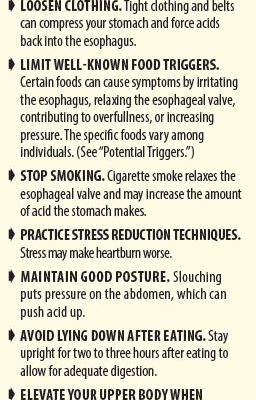
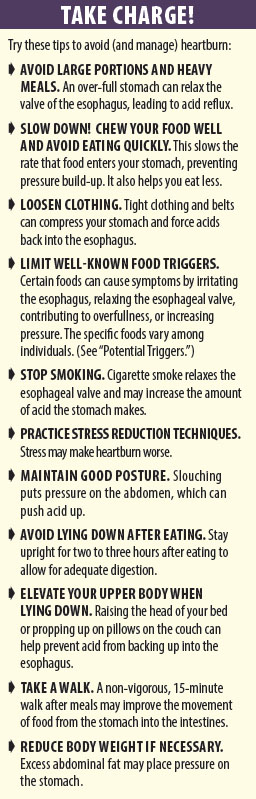
If you suffer from periodic heartburn, the tips in the “Take Charge!” box may be all you need to put out the fire.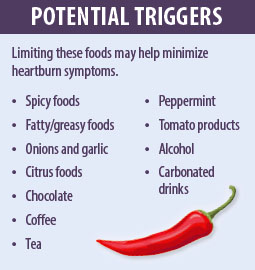
The post Handling Your Heartburn appeared first on University Health News.
