
Beating Depression: Dietary Supplements Offer Little Value
Evidence on the effectiveness of specific supplements for the treatment of depression is mixed, according to Robin Kanarek, PhD, John Wade Professor, Emerita, at Tufts University. “There are no consistent results in the literature regarding the effectiveness of dietary supplements for treating depression,” Kanarek says.
Depression—the number one cause of disability worldwide— is a common mood disorder that causes feelings of sadness often accompanied by loss of interest in activities one once enjoyed. Whether symptoms are mild or serious, depression is treatable. Conventional treatment combines antidepressant medication with counseling or psychotherapy. Many people with depression turn to alternative remedies like dietary supplements, alone or in conjunction with traditional treatment. Rising incidence of depression worldwide has helped fuel a multibillion-dollar dietary supplement industry.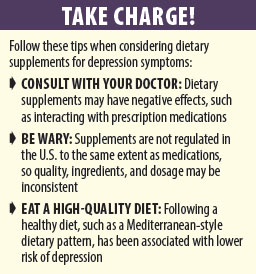
Supplements are not regulated by the Food and Drug Administration, which means the quality and ingredients can vary. Manufacturers don’t have to prove product consistency or purity of ingredients, and the dosage listed on labels may not reflect actual concentrations of ingredients.
“It’s a real problem that they’re not regulated,” says Kanarek. “Supplements from different companies may have the same name on the label, but what’s in a bottle can be different from one company to another, or even from one batch to another,” she says. Some supplements may interfere with prescription medications. St. John’s Wort, an herbal supplement popular for attempting to combat depressive symptoms, interacts negatively (and sometimes dangerously) with many medications, including some antidepressants, the antianxiety medication Xanax, birth control pills, and the heart medicine Digoxin. It’s always important to check with your doctor before beginning to take any supplement.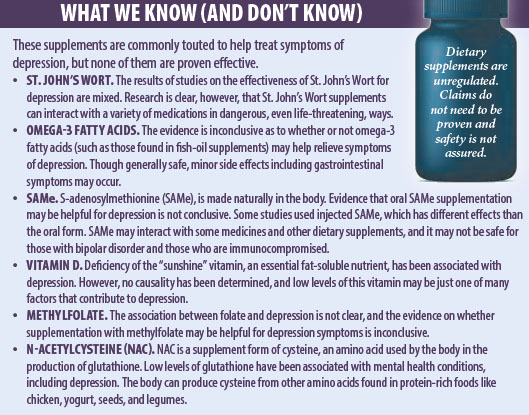
Diet Connection: While the effectiveness and safety of dietary supplements for the treatment of depression are questionable, research strongly suggests an association between diet quality and depression. A randomized controlled trial published recently in the journal PLOS ONE found a significant drop in depression symptoms in young adults who switched from a low-quality diet to a Mediterraneanstyle eating pattern (which included fruits, vegetables, whole grains, and lean proteins including fish) for three weeks. Participants who continued to consume low-quality diets (with low intake of fruits and vegetables and high intake of refined carbohydrates and processed/ sugary foods and beverages) did not report a change in depression symptoms. While this study is by no means conclusive, it adds to a body of evidence that consuming a healthy diet may help fight depression (in addition to supporting overall health).
The post Beating Depression: Dietary Supplements Offer Little Value appeared first on University Health News.
Read Original Article: Beating Depression: Dietary Supplements Offer Little Value »
