
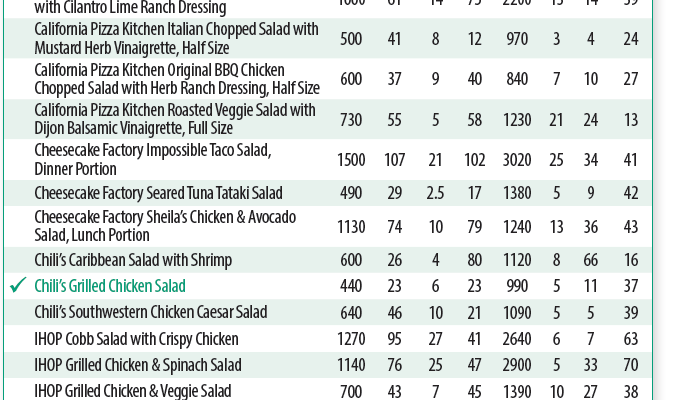
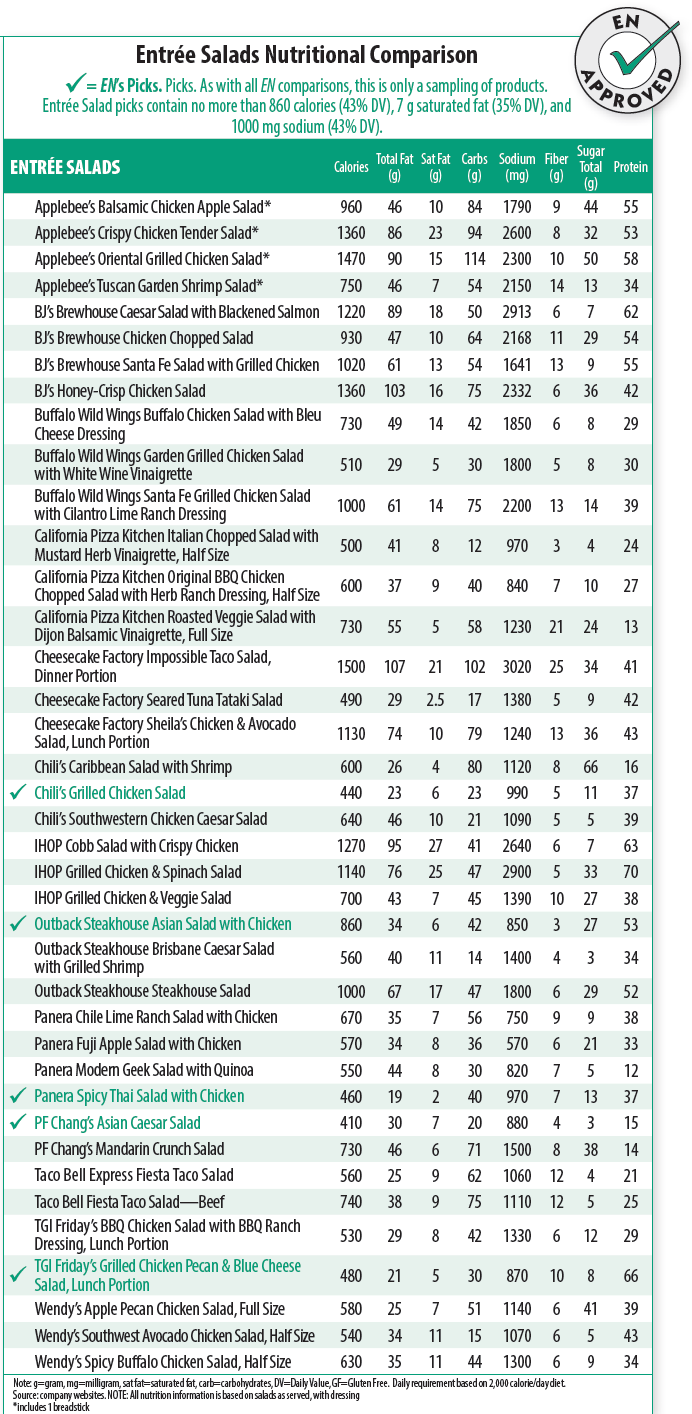
Restaurant Guide: Entrée Salads
Salads come in various shapes and sizes, from simple side salads to gigantic entrée salads and everything in between. The perception is that salads are automatically healthy. Think about it—they typically provide more vegetables than other common restaurant entrees that are primarily meat and grain or potato. And veggies are one food group many Americans fall short on. Unfortunately, today’s entrée salads also often have extras that, while not negating the benefits of eating more vegetables, provide substantial calories, fat, and sodium. In addition, like most restaurant foods, entrée salad portions are often large enough for two meals, at least.
Choosing a salad as your meal when dining out can still be a healthy choice as long as you order wisely. Be sure to include a source of protein, like chicken, fish, eggs, or beans. Protein keeps you feeling full, so you don’t find yourself hungry an hour or so after eating. Pay attention to descriptive words like crispy or crunchy—they’re clues that at least some ingredients are probably fried. Look for words like grilled or broiled instead. If you can, add extra veggies to your salad to boost fiber and vitamins. Spinach, carrots, and peppers are all nutrient dense salad filling ideas.
Helpful Hints. Next time you’re choosing salad for a “light” meal, keep the following in mind.
- Dress it up. Restaurants can be heavy-handed with dressing, contributing significant calories, fat, sodium, and sugar. Ask for it on the side and use sparingly.
- Downsizing. If possible, order the lunch- or half-portion. They still provide an adequate meal without greatly overdoing the calories, fat, and sodium.
- Balancing act. Even the healthier restaurant salads are often high in sodium. To help offset that, choose lower sodium foods throughout the rest of the day.
The post Restaurant Guide: Entrée Salads appeared first on University Health News.
