
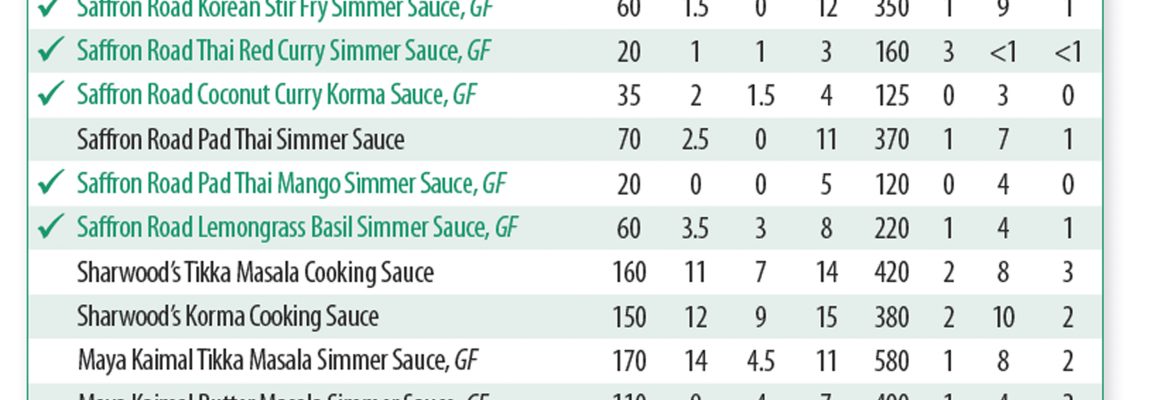
Meal Starters and Simmer Sauces
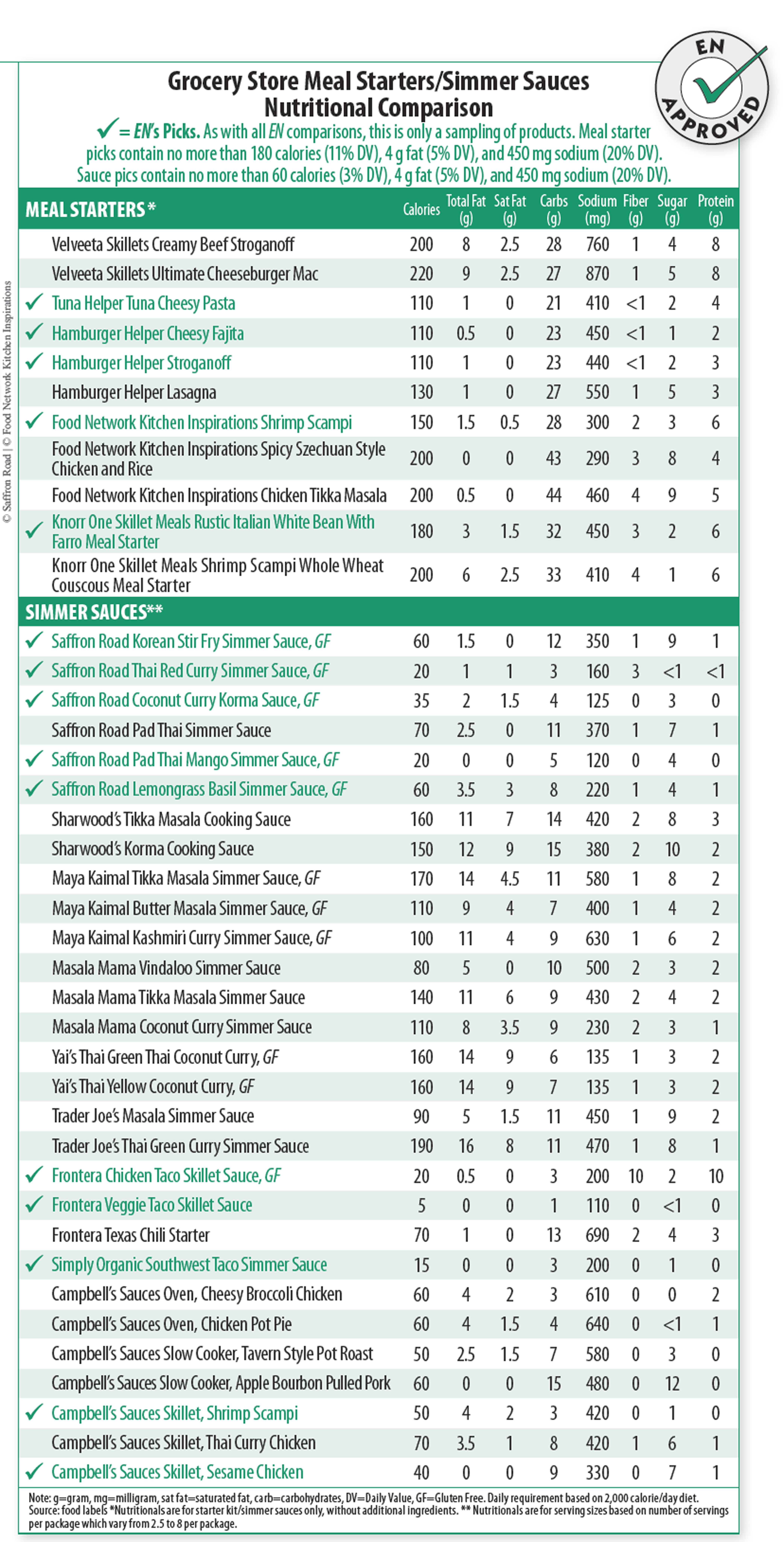
Cooking from scratch is a great way to have complete control over what you’re feeding your family, but some nights that’s just not in the cards. It takes time that you don’t always have to shop for ingredients as well as to wash, chop, and measure. Fortunately, several companies are helping consumers create “semi-home-cooked” meals. The idea is simple— they gather all the spices or liquids, and sometimes even the grain in one package. Simply chop up your protein and cook it all together in one pot The protein component of a meal can contribute a substantial amount of fat and calories, therefore, by controlling the type and amount of protein you choose, you can positively impact the total fat and calories in your meal.
Another area of concern with many premade foods is the sodium content. Thankfully, some of these meal helpers are fairly low in sodium but pay attention to the ingredients you’re adding to be sure that the meal still fits in your sodium-conscious eating plan.
Helpful Hints. When you need help getting dinner on the table, keep the following tips in mind.
- Protein Power. Often, the directions may call for a specific type of protein. However, since you have the final decision, you can choose leaner options like skinless chicken breast, shrimp, or tofu.
- Veggie Time. Some of these kits suggest the addition of extra veggies. But, even for those that don’t, it’s a great opportunity to boost veggie intake. When you make a meal, add steamed, frozen, or even leftover vegetables.
- Great Grains. While most meal starter kits include a grain, the simmer sauces don’t. To round out the meal, consider serving it with a whole grain source such as brown rice, whole grain pasta, or quinoa.
—Heidi McIndoo, MS, RD
The post Meal Starters and Simmer Sauces appeared first on University Health News.
