
Resistance Bands Offer a Versatile Exercise Option
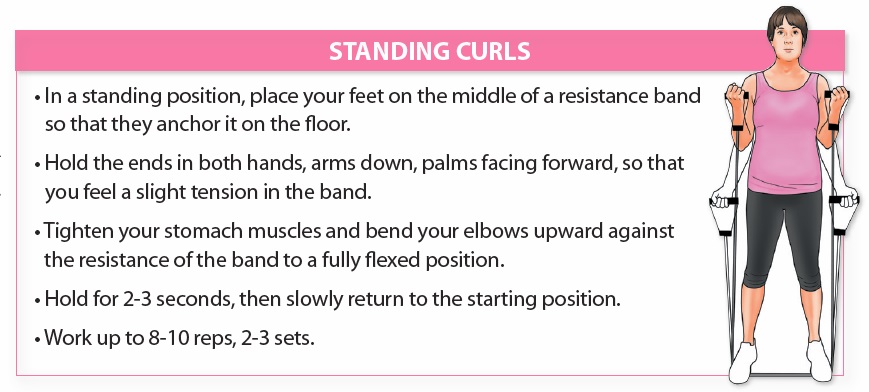
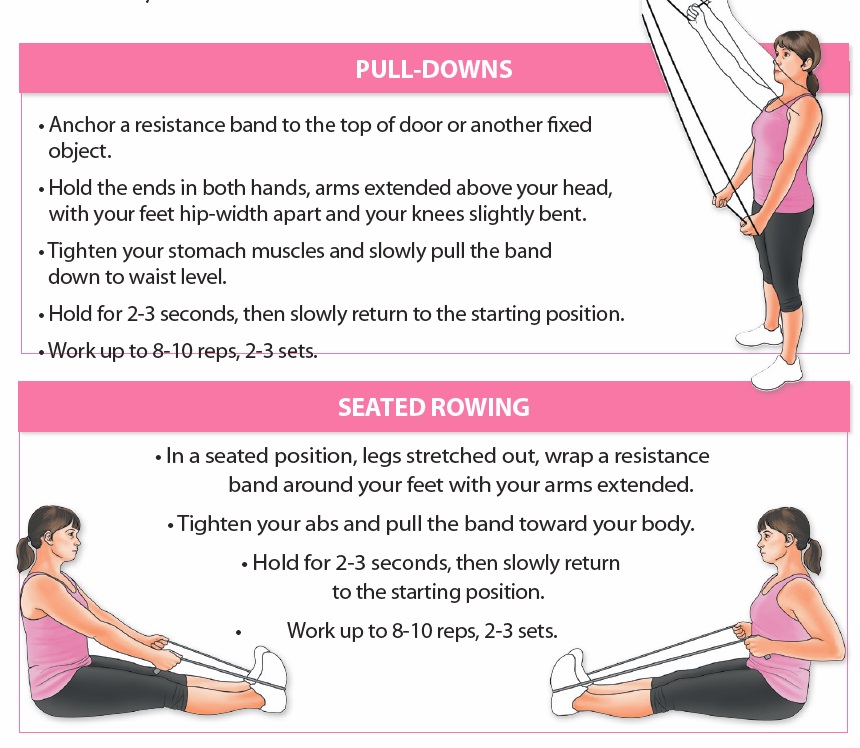
Resistance bands are one of the most versatile exercise tools you can purchase, offering many options for strengthening your muscles and improving your flexibility. Made from natural or synthetic rubber, resistance bands are available as simple strips, loops (which resemble large rubber bands), or molded rubber tubes with handles. Like weights, the bands come in a range of different resistance levels, which are indicted with colors. The colors vary among manufacturers, but with all of them the force is directly related to the percentage of elongation. The amount of resistance ranges from about 3 pounds to about 22 pounds, and changes throughout the exercise (i.e., at the beginning of a stretch there will be less resistance, but at full stretch there will be more).
David Thomas, MD, professor of medicine and rehabilitation medicine at Mount Sinai, recommends that you check with your doctor before starting an exercise regimen, especially if you’ve previously led a sedentary lifestyle. “Assuming you get the all-clear, choose light-resistance bands if you’re not used to exercising, are rehabilitating after an injury or surgery, or are frail,” he advises. “If you’re reasonably fit, start out with medium-resistance bands and work your way up to heavy-resistance bands.”
Bands gradually lose their resistance, so expect to replace them every three to four months. “Check them before every workout for nicks and tears, and don’t wear rings while using them,” says Dr. Thomas. “If you prefer the tube variety, look out for options that have a woven rope running through the tube—this prevents you from overstretching the band.” More expensive resistance band kits include special anchors so that you can safely attach the bands to a doorknob to provide extra resistance as you stretch.
The post Resistance Bands Offer a Versatile Exercise Option appeared first on University Health News.
Read Original Article: Resistance Bands Offer a Versatile Exercise Option »
